Blog Tour/Extract: Stories We Tell Ourselves by Sarah Françoise

I’m delighted to be co-hosting today’s stop on the blog tour for Stories We Tell Ourselves by Sarah Françoise, alongside the lovely people at the ChickLit Club.  Described as being ‘written with a rare precision and insight’, Stories We Tell Ourselves explores ‘the thorniness of familial love and its capacity to endure with warmth, wit and disarming honesty.’

Follow my blog with Bloglovin


Stories We Tell OurselvesAbout the Book

Frank and Joan’s marriage is in trouble. Having spent three decades failing to understand each other in their unfinished house in the French alps, Joan’s frustrations with her inattentive husband have reached breaking point. Frank, retreating ever further into his obscure hobbies, is distracted by an epistolary affair with his long-lost German girlfriend. Things are getting tense. But it’s Christmas, and the couple are preparing to welcome home their three far-flung children.

The children, though, are faring little better in love themselves. Maya, a gender expert mother-of-two, is considering leaving her family and running off with a woman; Wim is considering leaving his girlfriend; and Lois, who spends her time turning war documentaries into love poems, is facing a change of heart.

Format: ebook, hardcover (240 pp.) Publisher: Apollo, an imprint of Head of Zeus Published: 5th April 2018                    Genre: Contemporary Fiction

Purchase Links*
Publisher (buy direct and save 25%) ǀ Amazon.co.uk ǀ  Amazon.com  ǀ Hive.co.uk (supporting UK bookshops)
*links provided for convenience, not as part of any affiliate programme

Find Stories We Tell Ourselves on Goodreads


Extract from Stories We Tell Ourselves by Sarah Françoise

In September 2015, Frank started frequenting an inexpensive restaurant behind the train station called Chez Josée. The restaurant had a white formica bar, a Pacman pinball machine out front, and a small, windowless dining room in the back. It also had Wi-Fi and beef heart on the menu. The beef heart was served braised, with a garnish of green beans or lamb’s lettuce.

Frank started frequenting the restaurant not because of the heart, but because of the Wi-Fi, and because they tolerated the dog. The heart came later.

Every Wednesday, he sat at the back of the restaurant and opened his laptop to work on one of two projects: 1) the ‘bor’ project, or 2) the Caspar David Friedrich project.

The ‘bor’ project was an exhaustive compilation of French place names derived from the aforementioned pre-Indo-European root. Its purpose was to settle once and for all the toponymic debate surrounding the precise meaning of the syllable ‘bor’, itself a rare derivation of the root ‘bar’. Many etymologists espoused the theory that the inclusion of ‘bor’ in a place name suggested a protruding geographical formation. There was a certain degree of discord even within this group, and a broad spectrum of interpretation of the word ‘protruding’, which included everything from escarpments to huts, copses to knolls, via good old-fashioned hills. A smaller number of fantasists on the fringes of the field pretended that ‘bor’ meant apiary, citadel, etc. – opinions that were refuted in unison by the other camps.

It seemed that ‘bor’ was all things to all people – the kind of generous imprecision that kept Frank awake at night. And so Frank took it upon himself to resolve the issue once and for all, through exhaustive, map-based research of the Hexagon.

To do this, he combed through the country inch by inch, circling ‘bor’ hamlets, villages, hills and plateaux on blue French ordnance survey maps. He travelled an average five miles per hour, walking his index finger and tiring his eyes over the blue-green 1:25,000-ratio atlas. Sometimes his eyelid would start to twitch, and Joan was called to squirt artificial tears into Frank’s feverish eyes. He organised the place names he stumbled upon in a sophisticated maze of Excel spreadsheets, and highlighted some of his breakthroughs in online cartography forums under the alias Borax.

The Caspar David Friedrich project was a dissertation on the topography of Romanticism that was now twenty years in the making. Forty, if you counted the research. Sixty, if you took into account the conditioning of Frank’s childhood. About a year ago, Frank had started publishing instalments of his thesis on a blog, which was followed by a handful of scholars, and almost as many webcam models in the US and Eastern Europe.

Frank saw these projects as his service to humanity – his humble contribution to the keeping of mankind’s history. After all, what was geography if not history in relief? Mountains pushed up out of the earth’s crust, and then eroded. Their names, too, erupted from language, over time picking up letters and syllables which might later be shed.  As for his interest in German Romanticism, it too was born of a seismic vibration.


Sarah FrancoiseAbout the Author

Sarah Françoise is a French-British writer and translator currently living in Brooklyn, NYC. Her writing has appeared in Joyland, Bone Bouquet, Hobart and Poor Claudia.

Connect with Sarah

Goodreads

Stories We Tell Ourselves blog tour


Blog Tour/Review: The Black Earth by Philip Kazan

I’m delighted and honoured to be kicking off the blog tour for The Black Earth by Philip Kazan ahead of its publication on Thursday 19th April.  You can read my review of this wonderful novel set in wartime Greece below.

Do check out the tour schedule at the bottom of this post to see the other great book bloggers taking part in the tour over the next ten days.
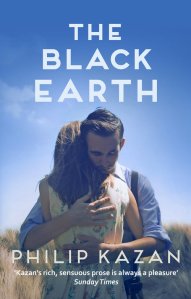

The Black Earth CoverAbout the Book

1922: When the Turkish Army occupies Smyrna, Zoë Haggitiris escapes with her family, only to lose everything. Alone in a sea of desperate strangers, her life is touched, for a moment, by a young English boy, Tom Collyer, also lost, before the compassion of a stranger leads her into a new life.

Years later when war breaks out, Tom finds himself in Greece and in the chaos of the British retreat, fate will lead him back to Zoë. But he will discover that the war will not end so easily for either of them.

Format: ebook, hardcover (350 pp.)       Publisher: Allison & Busby
Published: 19th April 2018                        Genre: Historical Fiction

Pre-order/Purchase Links*
Amazon.co.uk ǀ  Hive.co.uk (supporting UK bookshops)
*links provided for convenience, not as part of any affiliate programme

Find The Black Earth on Goodreads


My Review

The theme of chance encounters, connections and convergence has featured in quite a few books I’ve read recently.  Whether that’s the working of fate, such as in From a Low and Quiet Sea by Donal Ryan, or the concept of quantum entanglement – the idea that entangled particles remain connected and that actions performed on one affect the other even when separated by great distances – as in Oliver Loving by Stefan Merrill Block and Entanglement by Katy Mahood.  (Three great books, by the way.)

Following their first brief, chance encounter as young children in the chaos of Piraeus harbour, the reader follows the lives of Zoë and Tom through childhood until fate or destiny throws them together again in another chance meeting.  They will each in turn act as rescuer of the other but face separation, loss and traumatic experiences.   The connection they feel will help them make sense of the chaos around them, finding in it something pure and true amongst the horrors of war.

The Black Earth convincingly portrays the chaos and breakdown of society in time of war.   Particularly memorable is the depiction of the terrible suffering of the people of Athens, including near starvation, during the occupation by the Nazis during World War 2, and in the aftermath when the area descends into civil war.  I know the author drew on his own family history as inspiration for many of the events and some of the characters in the book which no doubt accounts for its sense of authenticity.

Amongst all the horror, however, the book shows that there are still opportunities for random acts of kindness, even in time of war, including the one that will change the course of Zoë’s life.  I was particularly moved by part three of the book in which the story is told partly through Tom’s letters describing his experiences and hopes for the future.  Reflecting what must have been the experience of many in wartime, the letters are written and sent more in hope than expectation of being received by the intended recipient; the correspondent not knowing, even, if the recipient is still alive to read them.

I absolutely loved this book, even though it put me through the emotional wringer.  The author kept me hoping and fearing, fearing and hoping right up until the last page.  I’m not ashamed to admit I shed a little tear at the end.   The Black Earth is highly recommended for fans of historical fiction who love a strong story based around real life events with engaging and believable characters.   I’m so glad to have been introduced to the writing of Philip Kazan and I can safely say The Black Earth won’t be the last book of his I read.

My sincere thanks to publishers, Allison & Busby, Emma Finnigan and Anne Cater at Random Things Tours for my uncorrected proof copy in return for an honest and unbiased review.

Follow my blog with Bloglovin

In three words: Powerful, emotional, heart-breaking

Try something similar…The Good Doctor of Warsaw by Elisabeth Gifford (click here to read my review)

Philip KazanAbout the Author

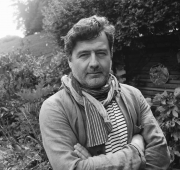
Philip Kazan was born in London and grew-up on Dartmoor in south west England. He is the author of two previous novels set in fifteenth-century Florence: Appetite, about the adventures of an early celebrity chef and The Painter of Souls, an imagining of the early career of the artist Fra Filippo Lippi.  As Pip Vaughan-Hughes, he also wrote the Petroc series – Relics, Vault of Bones, Painted in Blood and The Fools’ Crusade – following a thirteenth-century adventurer.

After living in New York and Vermont, Philip is back on the edge of Dartmoor with his wife and three children.

Connect with Philip

Website  ǀ   Twitter  ǀ  Goodreads

The Black Earth FINAL BT Poster