#BlogTour #BookReview The Philosopher’s Daughters by Alison Booth @RedDoorBooks

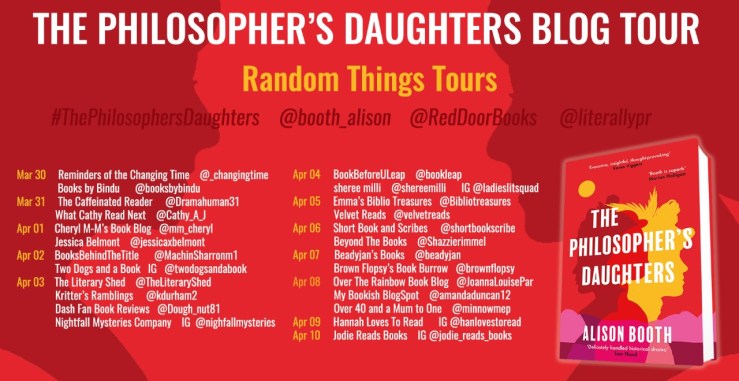
The Philosophers Daughters BT PosterWelcome to today’s stop on the blog tour for The Philosopher’s Daughters by Alison Booth. My thanks to Anne at Random Things Tours for inviting me to take part in the tour and for organising my review copy. Be sure to check out the post by my tour buddy, Haley at The Caffeinated Reader.


About the Book

A tale of two very different sisters whose 1890s voyage from London into remote outback Australia becomes a journey of self-discovery, set against a landscape of wild beauty and savage dispossession.

London, 1891: Harriet Cameron is a talented young artist whose mother died when she was barely five. She and her beloved sister Sarah were brought up by their father, radical thinker James Cameron. After adventurer Henry Vincent arrives on the scene, the sisters’ lives are changed forever. Sarah, the beauty of the family, marries Henry and embarks on a voyage to Australia. Harriet, intensely missing Sarah, must decide whether to help her father with his life’s work or devote herself to painting.

When James Cameron dies unexpectedly, Harriet is overwhelmed by grief. Seeking distraction, she follows Sarah to Australia, and afterwards into the Northern Territory outback, where she is alienated by the casual violence and great injustices of outback life. Her rejuvenation begins with her friendship with an Aboriginal stockman and her growing love for the landscape. But this fragile happiness is soon threatened by murders at a nearby cattle station and by a menacing station hand seeking revenge.

Format: Paperback (356 pages)     Publisher: RedDoor Press
Publication date: 2nd April 2020 Genre: Historical Fiction

Find The Philosopher’s Daughters on Goodreads

Pre-order/Purchase links*
Waterstones | Hive (supporting UK bookshops) | Amazon UK
*links provided for convenience, not as part of any affiliate programme


My Review

The deceptively attractive sounding Dimbulah Downs, to which Sarah and Henry – and later Harriet – travel, is in fact an isolated farm in the Northern Territory of Australia. The author gives the reader a vivid depiction of daily life in the remote outback – basic facilities, unrelenting heat, burning sun and mail deliveries only every six weeks.

However, even in these harsh surroundings, the sisters find things to appreciate. I liked the way in which the author shows how Sarah, a gifted pianist, sees things in musical terms. For example, she observes the water flowing into a series of pools used for bathing as altering its tempo ‘from adagio to allegro’ and varying its volume ‘from pianissimo to fortissimo’. She compares telegraph wires, humming and vibrating ‘with the lives of others’, to the vibrating strings of a piano as the hammers strike them. Later she conjures up thoughts of ‘savage music’ such as Tchaikovsky’s 1812 Overture to give her courage to tackle difficult tasks.

For Harriet, the harsh beauty of the landscape re-awakens her enthusiasm for painting, helping quell her initial feelings of displacement. ‘She didn’t belong here, even as a visitor. She no longer had any reference points against which to measure her own sense of worth… What she thought she was good at had no value here.’ When she finds someone with whom to share her interest in painting, her outlook changes. It also marks the beginning of an important, if unconventional, relationship that will have dramatic consequences.

Both Sarah and Harriet have their eyes opened to the denial of the rights of the aboriginal people, the disregard for their cultural heritage and, in the worst cases, their savage treatment by neighbouring farm owners. As Sarah realises, ‘I’ve been sheltered all my life…despite my education. Sheltered by Father. Sheltered by Harriet. Sheltered by Henry. Hiding behind my music. Escaping into my music. And blind to what’s happening around me.’

I liked the book’s quirky chapter headings made up of phrases plucked from the text of the chapter, such as ‘A Little Ingenuity and Some Scraps of Wood’. (You’ll have to read the book to find what is constructed using those items.)

The Philosopher’s Daughters sees two young women who have been taught to believe in equality, independence and universal suffrage required to transform theory into practice and tackle challenges of a sort they could never have imagined. It’s a well-crafted story about change, widening your horizons and finding out what’s really important in life.

In three words: Absorbing, insightful, engaging

Try something similar: The Moral Compass by K. A. Servian
Follow my blog via Bloglovin


FB_IMG_1583681063126About the Author

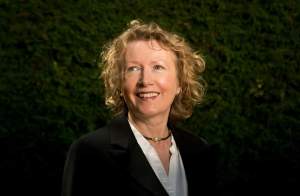
Born in Melbourne and brought up in Sydney, Alison spent over two decades studying, living and working in the UK before returning to Australia some fifteen years ago.

Her debut novel, Stillwater Creek, was Highly Commended in the 2011 ACT Book of the Year Award, and afterwards published in Reader’s Digest Select Editions in Asia and in Europe. Alison’s also written The Indigo Sky (2011) and A Distant Land (2012). Alison wrote an article for The Guardian on domestic violence; a major theme in her last book, A Perfect Marriage (2018).

Alison is Emeritus Professor of Economics at the Australian National University. In November 2019, Alison was made Fellow of the Econometric Society, a prestigious international society for the advancement of economic theory in its relation to statistics and mathematics.

Connect with Alison
Website | Facebook | Twitter


#BlogTour #BookReview On Earth We’re Briefly Gorgeous by Ocean Vuong #SUDTP20 @dylanthomprize @midaspr

Blog-Tour-Begins

Welcome to today’s stop on the mega blog tour celebrating the authors on the longlist for the Dylan Thomas Prize 2020. I’m delighted to bring you my review of one of the longlisted books – On Earth We’re Briefly Gorgeous by Ocean Vuong. My thanks to Martina at Midas PR for inviting me to take part in the tour and for organising my review copy.

Look out for my review of another of the books on the longlist – The Far Field by Madhuri Vijay – on 2nd April and for the announcement of the books that have made the shortlist on 7th April. To ensure you don’t miss a thing, follow the hashtag #SUDTP20 on Twitter.

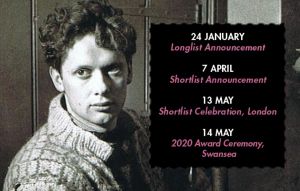
CTA-Dylan-Thomas-Image-with-Dates-for-homepage-BLACK-ENGLISHAbout the Dylan Thomas Prize

Launched in 2006, the annual Swansea University International Dylan Thomas Prize is one of the most prestigious awards for young writers, aimed at encouraging raw creative talent worldwide. It celebrates and nurtures international literary excellence. The £30,000 Prize is awarded to the best published literary work in the English language, written by an author aged 39 or under.


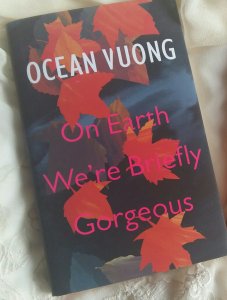
20200214_125432-1_kindlephoto-138190928About the Book

On Earth We’re Briefly Gorgeous is a letter from a son to a mother who cannot read. Written when the speaker, Little Dog, is in his late twenties, the letter unearths a family’s history that began before he was born – a history whose epicentre is rooted in Vietnam – and serves as a doorway into parts of his life his mother has never known, all of it leading to an unforgettable revelation.

At once a witness to the fraught yet undeniable love between a single mother and her son, it is also a brutally honest exploration of race, class, and masculinity. Asking questions central to our American moment, immersed as we are in addiction, violence, and trauma, but undergirded by compassion and tenderness, On Earth We’re Briefly Gorgeous is as much about the power of telling one’s own story as it is about the obliterating silence of not being heard.

With stunning urgency and grace, Ocean Vuong writes of people caught between disparate worlds, and asks how we heal and rescue one another without forsaking who we are. The question of how to survive, and how to make of it a kind of joy, powers the most important debut novel of many years.

Format: Hardcover (256 pages)      Publisher: Jonathan Cape
Publication date:  4th June 2019   Genre: Literary fiction

Find On Earth We’re Briefly Gorgeous on Goodreads

Purchase links*
Amazon.co.uk | Amazon.com | Hive (supporting UK bookshops)
*links provided for convenience, not as part of any affiliate programme


My Review

They say nothing lasts forever and I’m writing to you in the voice of an endangered species.’

As a letter written to someone who may never read it (his illiterate mother, Rose) the whole book has a confessional quality. It’s just as much an un-burdening as an attempt at communication. Indeed, at one point, Little Dog writes, ‘the very impossibility of your reading this is all that makes my telling it possible’.

Amongst Little Dog’s memories of his childhood are happy ones such as trips to the shopping mall with his mother but also her acts of occasional cruelty towards him. Both his mother and grandmother, Lan, bear the psychological scars of their experiences during the Vietnam War. In the case of his mother, this is manifested in a desire to make her son more American. Often her attempts to achieve this are quite bizarre such as her insistence that he consume large quantities of milk to build him up physically, ‘both of us hoping the whiteness vanishing into me would make more of a yellow boy’. Unfortunately, Little Dog still experiences bullying by his schoolmates because of his ethnicity and less than perfect knowledge of English.

In fact, Little Dog finds himself caught between two worlds as far as language is concerned. His English may be rudimentary to begin with but it is better than his mother’s, which is almost non-existent, and he appoints himself the family’s interpreter. At the same time, his knowledge of Vietnamese is limited by his mother’s poor education, interrupted by war. ‘Our mother tongue, then is no mother at all – but an orphan.’ He learns, however, that in Vietnam not everything that needs to be communicated has to be spoken. Non-verbal gestures can convey just as much. ‘Care and love, for us, are pronounced clearest through service.’ The reader sees this played out through Little Dog’s tending of his grandmother.

Readers should be aware the book contains graphic descriptions of a sexual nature and one scene involving animal cruelty. However, there are also poignant moments of tenderness such as Little Dog gathering flowers for his grandmother and his mother giving a pedicure to an old lady.

As the author is a poet, it’s no surprise the book contains some striking imagery. Travelling by Greyhound bus through the night, Little Dog observes the outside ‘surge by like sideways gravity’. Lying on the ground alongside a friend, he compares the stars in the night sky to ‘a vast smudge on a hastily-wiped chalkboard’.

A sort of literary kaleidoscope, the book embraces a number of different styles. One chapter near the end resembles poetry with paragraphs containing seemingly random thoughts. At the same time, there are sections in which Little Dog talks about events as if he was a witness to them rather than a participant, referring to himself as ‘the boy’. There are sections which impart information on subjects as diverse as the migration habits of butterflies, the golfer Tiger Woods and the scourge of painkiller addiction in the US.

As an aspiring writer, Little Dog spends quite a bit of time considering the nature of writing and language. (One suspects much of this reflects the author’s own point of view.) For example, pondering what it means to be a writer he protests, ‘I never wanted to build a “body” of work, but to preserve these, our bodies, breathing and unaccounted for, inside the work’. For Little Dog, even punctuation has meaning beyond merely its grammatical purpose. Learning of the death of a friend, he observes ‘the saddest thing in the world…a comma forced to be a period’ (or as we would say in the UK, a full stop).

Storytelling is another theme and the way in which tales are passed from one person to another, often changed in the retelling. The nail salon where his mother works, for example, is ‘a place where folklore, rumours, tall tales, and jokes from the old country are told, expanded…’.

As well as the story of a family, On Earth We’re Briefly Gorgeous is an exploration of identity, race, sexuality and the legacy of war. It contains some complex ideas (including references to the work of Roland Barthes which gave me flashbacks to my MA English study and my struggle to grasp the concept of intertextuality) meaning it is by no means an easy read. However, it’s a book of startling literary imagination and originality.

In three words: Reflective, complex, thought-provoking

Try something similar: The Long Take by Robin Robertson

Follow my blog via Bloglovin


Ocean-VuongAbout the Author

Ocean Vuong is the author of the critically acclaimed poetry collection Night Sky with Exit Wounds, winner of the Whiting Award and the T.S. Eliot Prize. His writings have also been featured in The AtlanticHarper’sThe NationNew Republic, The New Yorker, and The New York Times. In 2019 he was awarded a MacArthur Foundation Fellowship.

Born in Saigon, Vietnam, he currently lives in Northampton, Massachusetts, where he serves as an Assistant Professor of English at UMass-Amherst. On Earth We’re Briefly Gorgeous is his first novel. (Photo credit: Tom Hines/Dylan Thomas Prize website)