
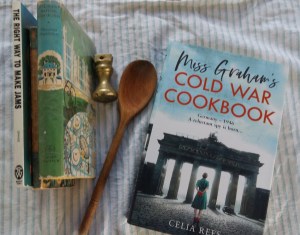
 Welcome to today’s stop on the blog tour for Miss Graham’s Cold War Cookbook by Celia Rees which was published on 23rd July 2020. I’m delighted to be co-hosting today’s stop with the lovely Nicola at Short Book & Scribes. My thanks to Anne at Random Things Tours for inviting me to get involved and to HarperCollins for my review copy.
 About the Book
An ordinary woman. A book of recipes. The perfect cover for spying…
Sent to Germany in the chaotic aftermath of World War II, Edith Graham is finally getting the chance to do her bit. Having taught at a girls’ school during the conflict, she leaps at the opportunity to escape an ordinary life – but Edith is not everything she seems to be.
Under the guise of her innocent cover story, Edith has been recruited to root out Nazis who are trying to escape prosecution. Secretly, she is sending coding messages back to the UK, hidden inside innocuous recipes sent to a friend – after all, who would expect notes on sauerkraut to contain the clues that would crack a criminal underground network?
But the closer she gets to the truth, the muddier the line becomes between good and evil. In a dangerous world of shifting loyalties, when the enemy wears the face of a friend, who do you trust?
Format: Hardcover (480 pages) Publisher: HarperCollins
Publication date: 23rd July 2020 Genre: Historical fiction
Find Miss Graham’s Cold War Cookbook on Goodreads
Purchase links*
Amazon UK| Hive (supporting UK bookshops)
*links provided for convenience not as part of an affiliate programme
My Review
Of the many things I loved about Miss Graham’s Cold War Cookbook, the standout was Miss Graham herself. Edith is smart, shrewd and eager to do good, to make a difference. Her family don’t see it that way, but her decision to work for the Control Commission in Germany is not an excuse to shirk family responsibilities, it’s out of a desire to do something. “All through the war, she’d seen others leave to join the forces, do useful work. She’d done nothing. She felt wasted and unfulfilled, as though she’d missed an important experience.”
Edith has a keen sense of justice and shows empathy towards those whom others ignore. For example, the German maids employed in the house where she is billeted are treated as mere skivvies, symbols of a defeated nation, by some of the other girls who live there. Edith treats them as equals, listens to their stories and tries to help them where she can. However, Edith is no straight-laced prude; she’s not averse to the occasional amorous adventure.
I also loved Edith’s friends, Adeline and Dori, equally remarkable women with their own very personal missions to undertake, whether that’s exposing the realities of war to the wider public or learning the fate of wartime comrades. (In respect of the latter, I liked the inclusion of references to real-life heroines who served with the Special Operations Executive, such as Noor Inayat Khan.) Both Adeline and Dori will prove to be true friends to Edith in a way I found especially moving.
There are so many clever touches in the book. Not just the recipes and menus at the beginning of each chapter, or the central idea of using a cookery book to send coded messages, but the use of cooking as a metaphor. For example, the process of collecting intelligence is described as “a patient gathering. A foraging, a nosing up of morsels” and, at one point, Edith fears she’s “following a breadcrumb trail of duplicity”. Other clever elements include Edith’s invented friend who provides her with convenient excuses for trips away, reminding me of Algernon Moncrieff’s invalid friend Bunbury in Oscar Wilde’s The Importance of Being Earnest, and the intriguing prologue which I simply had to reread – with fresh insight – once I’d finished the book.
The gap between “the conquerors and the conquered” is vividly brought home in the contrast between the generous portions of food enjoyed by the Allies in their messes or billets and that of the German citizens and thousands of displaced people “caught like a feather on the great gusting breath of war, picked up and put down again”. Not for the British or Americans pancakes made of potato peelings or ‘tea’ made from pine needles, but copious quantities of toast and jam, and homely dishes such as spotted dick. The period detail about food, clothing and so on, and the descriptions of the bomb-damaged German cities with their “churned streets carved through ruins and rubble” is clearly the result of impeccable and lengthy research.
Although there are delicious sounding recipes for cakes and pastries, Miss Graham’s Cold War Cookbook is definitely not all sweetness. Far from it. There are sour and bitter flavours as well, and moments of real darkness that may shock and surprise you. For example, the testimonies of some of the people Edith encounters; tales of suffering, displacement and wartime atrocities that are a “black muster roll of monstrous perversions”. Like the reader, Edith awakens to the growing realisation that no side has the monopoly on right and – like that hotel dinner menu staple, the Vienna steak – not everything is exactly what it claims to be. The warning “There’s a darker side of life in the Zone” proves all too true.
The final chapters are full of drama and tension, keeping me completely gripped. If you’ll pardon the pun, Miss Graham’s Cold War Cookbook contains all the ingredients I look for in great historical fiction. I loved everything about it and it’s definitely in the running to be one of my favourite books of the year.
In three words: Compelling, moving, dramatic
Try something similar: Then We Take Berlin by John Lawton
Follow this blog via Bloglovin
 About the Author
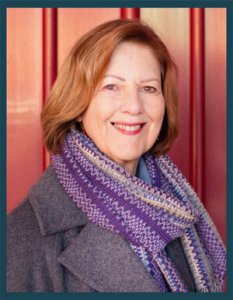
Celia Rees was born in Solihull, West Midlands, UK. She studied History and Politics at Warwick University and has a Master’s degree from Birmingham University. She taught English in city comprehensive schools for seventeen years before beginning her writing career.
She is the author of over twenty acclaimed books for young adults and has won various prizes both in Britain and abroad. Her work has been translated into twenty-eight languages. Celia lives in Leamington Spa, Warwickshire, with her husband. Miss Graham’s Cold War Cookbook is her first adult novel.
Connect with Celia
Website | Twitter | Facebook | Instagram | Goodreads

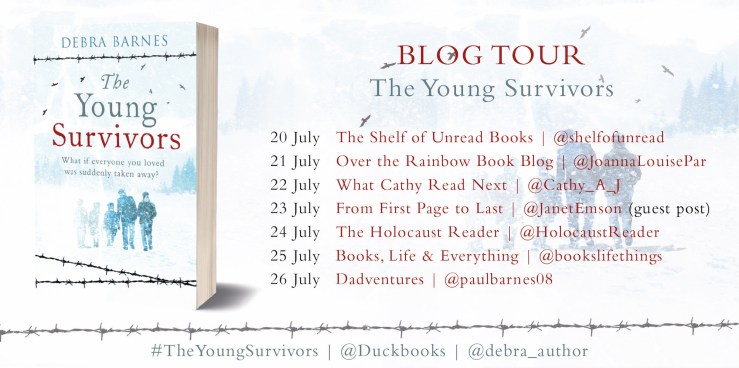 Welcome to today’s stop on the blog tour for The Young Survivors by Debra Barnes which will be published on Thursday 23rd July 2020. My thanks to Fanny at Duckworth for inviting me to take part in the tour and for my proof copy.
 About the Book

 What Cathy Read Next...