
I’m delighted to be co-hosting today’s stop on the blog tour for Hattie’s Home by Mary Gibson. I have a wonderful, absolutely fascinating Q&A with Mary that will be of interest to all fans of historical fiction, local history and, most of all, to biscuit lovers! Do be sure to check out the review by my co-host, 23 Review Street.
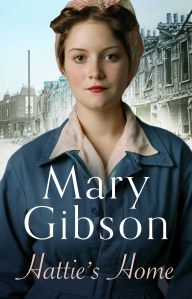 About the Book
January 1947: The war is over, but London is still a wasteland.
After eight years in the ATS, Hattie Wright returns to a Bermondsey she doesn’t recognise. With so few jobs, she reluctantly takes work at the Alaska fur factory – a place rife with petty rivalries that she vowed never to set foot in again. But while she was a rising star in the ATS, Hattie’s work mates are unforgiving in her attempts to promote herself up from the factory floor.
After journeying across the world to Australia to marry her beloved, Clara is betrayed and returns penniless, homeless and trying to raise a child in the face of prejudice. While war widow, Lou, has lost more than most in the war. Her daughter and parents were killed in an air raid bomb blast and her surviving son, Ronnie, is fending for himself and getting into all kinds of trouble.
The lifelong friendship these women forge while working in the fur factory will help them overcome crippling grief and prejudice in post-war Britain and to find hope in tomorrow.
Praise for Hattie’s Home
‘This wonderfully descriptive book…is a must-read’ [OK! Magazine]
‘A fabulous, fascinating read.’ [Vanessa Feltz]
Format: Hardcover, eBook (464 pp.) Publisher: Head of Zeus
Published: 11th January 2018 Genre: Historical Fiction
Purchase Links*
Amazon.co.uk ǀ Amazon.com
*links provided for convenience, not as part of any affiliate programme
Find Hattie’s Home on Goodreads
Interview with Mary Gibson, author of Hattie’s Home
Without giving too much away, can you tell me a bit about Hattie’s Home?
In the harsh winter of 1947 Hattie, Clara and Lou, three very different women, return to their pre-war jobs at the Alaska fur factory in Bermondsey. But none of them want to be there. Hattie has flourished in the ATS and resents being once more relegated to the factory floor. Clara, betrayed by her serviceman husband returns penniless, homeless and trying to raise a child in the face of prejudice. Lou has lost most of her family to the war. By day she works at the factory, by night she roams the bombsites half mad with grief. Scarred by their war time experiences, the women are forced to stay and rebuild their lives in a borough reduced to a wasteland by bombs. They forge an unlikely bond which sees them overcome crippling grief, harsh prejudice and post-war deprivation to find hope in a better tomorrow for themselves and their children
Your books are mainly set in Bermondsey, in South-East London, where you grew up. What is it about that area that has made you want to feature it so prominently in your novels?
Although I moved away in 1996, the Bermondsey of the first half of the twentieth century is the place that is still most vibrant in memory for me. Isolated in many ways, it was like a village at the exact geographical heart of London, a close-knit working class area, very poor but with a great community spirit. Because people could walk out of their doors to work at the factory on the corner, or to the pub on the other corner for their entertainment or the church on the other corner for spiritual sustenance, for many of my grandparents generation there was little need or opportunity to go elsewhere and they could live their entire lives without ever leaving Bermondsey. Life was all centred around the Docks, the food factories; the smelly leather and fur trades that grew up along the river. In fact, there were so many food factories in the area, it was known as the Larder of London. But then in the seventies when the docks closed, the area underwent a massive change, and within a generation the Bermondsey of my childhood had vanished and this was the lost world that I wanted to capture in my novels.
Many of the women in your books are factory girls. What interests you about depicting the lives and experiences of these women?
I suppose I wanted to tell the unsung stories of women who seem to be missing from early twentieth century literature, unless it’s in the odd footnote. Women, like my grandmother who worked at Pearce Duffs custard factory all her life, as well as doing office cleaning in the city offices before dawn. These women lived through extraordinary times, world wars, depressions, strikes and social unrest. And it was their point of view I thought should be heard. There were literally hundreds of factories packed into Bermondsey’s 1300 acres and all of my heroines are inspired by women relatives so I had a great fund of stories to draw on. Both of my grandmothers, my mother and my aunts were all factory girls and I too worked briefly as a Saturday girl at the Alaska fur factory which I feature in Hattie’s Home. My description of the horrendous ‘bambeater’ – a series of flailing bamboo rods that bashes the dirt and dust out of fur skins and into the workers’ lungs – comes from personal experience!
What do you think is the key to creating an authentic picture of a particular historical period?
Details! Particularly sensory and this is where I draw on personal experience or reminiscence as much as I can. For example, in Custard Tarts the detail came from an elderly relative who worked at Pearce Duffs custard factory and still remembered the sticky residue of custard powder in her hair which was impossible to get out! Smells are very important, especially in Bermondsey, where within the same street you could have the foul stink of Young’s glue factory battling with the sweet smell of California Poppy perfume from Atkinson’s cosmetic factory next door.
How do you approach the research for your books? Do you enjoy the process of research?
I love doing research for the books. I usually start with personal memorabilia – my parents left a very rich archive of photos, recorded and written reminiscences. I read general histories of the period to get a broader view then search out contemporary documents and newspapers at the wonderful Southwark Local Studies Library.
You’ve featured a variety of periods in your books but if you had to choose one to be transported back to, which would it be?
The Elizabethan age, but not as a poor person!
Do you have a special place to write or any writing rituals?
I’m fortunate to have a small study where I can shut myself away. I always start with a short meditation, which helps to silence the everyday chatter and focus my mind into the place where the stories arise.
Which other writers of historical fiction do you admire?
I grew up loving Rosemary Sutcliff and I’m a great admirer of Hilary Mantel’s Wolf Hall novels. [Great choices, I love those too!]
What are you working on next?
The next book is set in late nineteen thirties Bermondsey. In many ways, as in today’s world, radicalisation was the response of young people to poverty and disadvantage. And I am following my heroine, who works at Crosse & Blackwell’s, from the soup kitchens of the South London Mission to the fight against Mosley’s fascists as she tries to make a better life for herself, her family and friends. [Gosh, that really sparks my interest!]
With book titles like Custard Tarts and Broken Hearts and Bourbon Creams and Tattered Dreams, I’m tempted to ask what your favourite biscuit is. However, that would be far too obvious! Instead, what biscuits do you think would best represent the characters in Hattie’s Home – Hattie, Lou and Clara?
As a biscuit connoisseur I love this question! The heroine, Hattie, has spent the last years of the war in Belgium as a sergeant in the ATS, where her horizons have expanded and she stands out as being different to the other Alaska factory girls when she returns. She is definitely a Belgian dark chocolate biscuit – slightly exotic, with a hint of bitterness and a definite snap to her character! Clara is like a Custard Cream. With a sweet, melting heart, she’s had to develop a tough outer shell in order to protect her child and survive a devastating betrayal. Lou, who has lost most in the war, can only be a broken biscuit! In white paper bags available from Peak Frean’s factory outlet to staff or those who couldn’t afford a proper packet. They were assorted, jumbled up bits and pieces – but sometimes you would get a surprisingly undamaged biscuit among the wreckage – and this is Lou, who flits in and out of lucidity throughout the story. [Brilliant! I think I may include a biscuit-related question in all my Q&As from now on!]
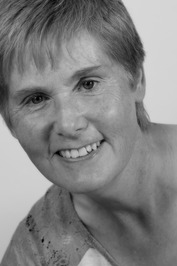 About the Author
Mary Gibson was brought up in Bermondsey, London. In 2009, after a thirty year career in publishing, she took the opportunity of early retirement to write a book of her own! Her début novel, Custard Tarts and Broken Hearts, was inspired by the lives and times of her grandparents in World War One Bermondsey and went on to become a top ten Kindle best seller. It was selected as one of twenty titles for World Book Night 2015. Her second novel, Jam and Roses, about three sisters living in the Dockhead area of Bermondsey during the nineteen-twenties and her third novel, Gunner Girls and Fighter Boys, set in Bermondsey during World War Two, are available in e book, hardback and paperback, as is her fourth novel, Bourbon Creams and Tattered Dreams.
Connect with Mary
Website ǀ Facebook ǀ Twitter ǀ Goodreads


 About the Book (previously published as Learning to Fly)
 About the Author

 What Cathy Read Next...