Book Review – A Monster in the Ash by Susie Gordon

Welcome to today’s stop on the blog tour for A Monster in the Ash by Susie Gordon which will be published on 15th October 2026. My thanks to Kelly at Folk PR for inviting me to take part in the tour and to Claret Press for my review copy.

About the Book
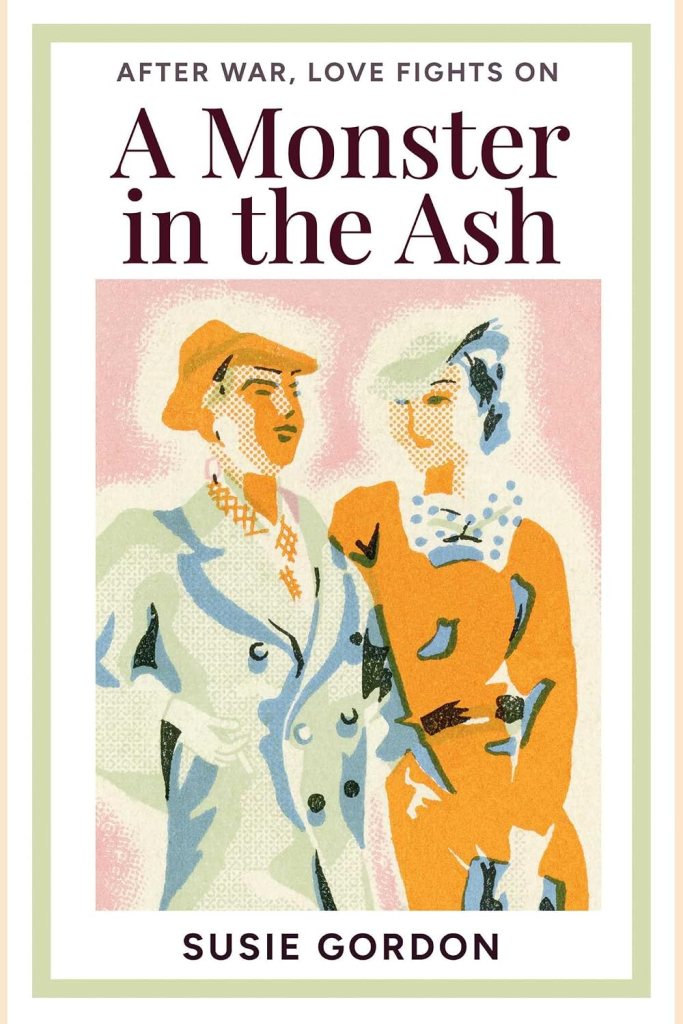
Sadie Shaposnick spent the war running a black-market racket out of her husband Leon’s East End butcher shop. Now Leon has returned from a German POW camp, traumatised and dismayed to find Fascism rising once again, only ten years after Cable Street. With the authorities turning a blind eye, Leon joins a vigilante gang formed by Simka Reubens, a charismatic former street-fighter with ties to Sadie’s late mother Rosy Gold—a local anti-fascist icon who died fighting Franco in Spain. At first, Sadie resists being drawn into the gang, but as the violence escalates she realises that fighting back is the only way to protect her neighbours and hopefully repair her faltering marriage.

Meanwhile, Sadie’s widowed sister Karla has to raise her daughters alone in her grief-stricken in-laws’ mansion. When her late husband’s younger brother Rafi returns from fighting with armed partisans in Mandatory Palestine, Karla must decide how far she’ll go to feel alive again. But when Rafi crosses paths with Sadie, he is drawn into the struggle as well, sending the gang into even greater peril.

With Oswald Mosley gaining power, the only option is resistance, even if it means facing the ghosts of the past while fighting the monsters that are rising from the ashes of the war.

Format: Paperback (235 pages) Publisher: Claret Press
Publication date: 15th October 2026 Genre: Historical Fiction

Find A Monster in the Ash on Goodreads

Purchase A Monster in the Ash from Bookshop.org [Disclosure: If you buy books linked to our site, we may earn a commission from Bookshop.org, whose fees support independent bookshops]

My Review

The Shaposnick family are already bruised and battered by war. They’re mourning the loss of loved ones, coping with the strains that separation can place on a marriage, trying to keep the family business going. Even seemingly miraculous returns don’t come without problems because there are some things that once broken cannot so easily be mended.

What Jewish ex-servicemen like Leon weren’t expecting to be confronted with was a resurgence of fascism directed at the Jewish community. Antisemitic speeches in public places designed to whip up hatred that brand Jews as ‘aliens’ despite the fact many Jews fought and died for Britain, as well as attacks on Jewish businesses and synagogues

The “monster” of the book’s title is Oswald Mosley, interned for much of the Second World War, but now seeking to revive the fascist movement in Britain and still a formidable figure. ‘He had his claws in every corner of society: rich folk to put up the cash for his campaign, the anxious middle classes to listen to his minions, and common thugs to do his dirty work.’ A few contemporary parallels spring to mind…

The novel describes how the Jewish community of London’s East End sought to fight back, mobilising themselves into a group known in the book as the Gold Gang (inspired by the real life 43 Group) to take direct action: disrupting meetings and marches, even eventually infiltrating fascist groups. Some, like Leon, are prepared to use violence, arguing that it is the only way to defeat the fascists, nothing having come of more peaceful methods. Others, like Leon’s brother Raymond, want nothing to do with it, either because they fear the repercussions or simply believe it is futile.

The novel depicts how these differences play out within the Shaposnick family, some of whose relationships are already complicated by their wartime experiences. There is conflict and betrayal, moments of violence and fear. But there are also touching reconciliations. Even when things calm down, not everyone is confident they have a future in Britain. Towards the end of the book we get quick glimpses of what the future holds for some of the characters. Personally I would have liked a little more detail how some of the things mentioned came about.

The book immerses you in the life of London’s East End Jewish community, its customs and religious practices giving a real sense of authenticity. I made frequent use of the Glossary to help with terms I was unfamiliar with.

A Monster in the Ash is a fascinating, emotionally involving insight into an aspect of life in post-WW2 Britain that was completely new to me.

About the Author

Susie Gordon is a Liverpool-based author, poet and journalist. Her first poetry collection, Peckham Blue, was published in London by Penned in the Margins, and her second collection, Harbouring, was published through Math Paper Press. A Monster in the Ash is her first novel. (Photo: Instagram profile)

Connect with Susie
Website | Instagram

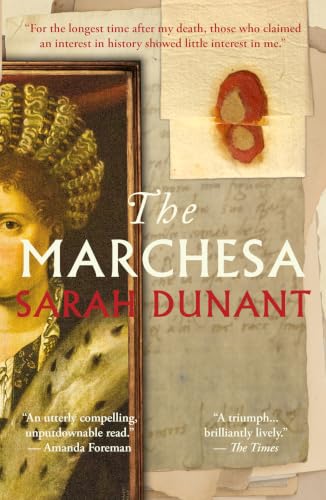
Book Review – The Marchesa by Sarah Dunant

Welcome to the first day of the blog tour for The Marchesa by Sarah Dunant which will be published in paperback on 7th October 2026. My thanks to Kelly at Folk PR for inviting me to take part in the tour and Weatherglass Books for my review copy.

About the Book

Inside the opulent world of the Italian Renaissance, Isabella d’Este ruled not just by birth-right, but by wit, will, and an unquenchable thirst for power.

In The Marchesa, Isabella tells her own story: a girl transcending a loveless marriage to become both the first and greatest female art collector of her time and its most formidable woman political operator, navigating an unstable Italy of fragile alliances, high art and brutal warfare.  

Through her eyes, the vanished splendour of Mantua and the great Renaissance courts are brought back to life, contrasting their surface beauty and artistic brilliance with an underbelly of infighting, treachery and sexual transgression.

Vividly imagined and utterly immersive, Sarah Dunant’sThe Marchesa is a masterful portrait of one of history’s most remarkable women and a revelatory journey into the very soul of the Renaissance.

Format: Paperback (350 pages) Publisher: Weatherglass Books
Publication date: 7th October 2026 Genre: Historical Fiction

Find The Marchesa on Goodreads

Purchase The Marchesa from Bookshop.org [Disclosure: If you buy books linked to our site, we may earn a commission from Bookshop.org, whose fees support independent bookshops]

My Review

I’ve read and loved many of Sarah Dunant’s novels set in the Renaissance – Sacred Hearts, In the Company of the Courtesan and In the Name of the Family – and now she’s returned to that period in The Marchesa, shining a spotlight on the life of noblewoman Isabella d’Este.

From the very beginning Isabella places herself front and centre of the story. She watches from what she describes as ‘this endless afterlife’ as scholars scour documents from the archives in an effort to research her life. She has one particular favourite scholar whose research she eavesdrops upon and even attempts to guide, for example creating a gentle draught so that a particularly interesting, possibly previously overlooked, document flutters to the floor. Others less favoured receive a blast of cold air.

However, as she points out, historical documents can’t tell the whole story. Documents may have been destroyed or discarded as unimportant. And there are aspects of life that would never be captured on paper: scents, sounds and tastes. As imagined by the author, Isabella sets out to put that right with her own narrative of events.

As in many noble families of the period, Isabella’s marriage to Francisco, Marquis of Mantua, was arranged at an early age as a form of strategic alliance. It was a successful marriage if not one born of love. Isabella found no pleasure in conjugal relations with her husband whose earthy scent and hirsute body repulsed her. As she tartly observes, she had felt more pleasure translating Cicero or Ovid. However she bore him eight children (only six of whom survived beyond infancy) although the longed for male heir took many years to arrive. Francisco was happy to seek sexual pleasure elsewhere, a situation Isabella accepted, but which came back to haunt the family years later.

With Francisco often away on military campaigns, this being a period in which it seemed every state was periodically in alliance with or in conflict with each other, Isabella was left to take over the reins of government. It was something she relished and, frankly, was much more skilful at than her husband. Whereas Francisco often put his foot it in it, Isabella was skilled in the art of diplomacy, exemplified by her carefully crafted letters. She also knew when, in her words, to ‘gild the lily’, marking an event in a way which would flatter. In something of an understament, she observes, ‘Ours was an age when most rulers considered themselves exempt from modesty.’

An entertaining aspect of the book is the contrast between public pronouncement and private thought. An example is in Isabella’s venomous relationship with her sister-in-law, the infamous Lucrezia Borgia, whom she addresses as her ‘sweet sister’ in her letters but in private refers to as ‘this upstart illegitimate Spanish nobody.’ Isabella also gleefully recounts how she deliberately upstaged Lucrezia at her wedding.

Isabella was an avid collector of works of art, the rarer the better, and proved a tough negotiator. She also commissioned works from well-known artists of the day and was quite prepared to lure them away from others. However, she frequently expresses impatience at the slow speed of their work. The book is illustrated with portraits of people mentioned in the book. Isabella herself was unhappy with most of the attempts to capture her likeness.

Isabella absolutely leaps off the page, from her love of fashion to her weakness for sweet things, marzipan fruits being a favourite. In summing her up I can’t do better than Isabella’s favourite scholar’s description of her. ‘Clever, greedy, competitive, imperious, bloody-minded, cunning. She can behave so badly when she wants something, then lie barefacedly about it. Yet she is also, well glorious.’

In her Acknowledgments Sarah Dunant describes The Marchesa as a ‘hybrid of novel, biography and art.’ I think that demonstrates the breadth of appeal of this book. Whether you’re interested in the history and culture of the Renaissance period or want a compelling historical novel that reveals the life of a fascinating woman in an entertaining way, you’ll find it in The Marchesa. It’s also a thought-provoking exploration of how we construct the past. As Isabella observes, ‘It is a slippery idea, this thing called history.’

Isabella d’Este is also the subject of five original BBC Radio 4 talks by Sarah entitled “Unearthing the past”.

In three words: Fascinating, spirited, colourful
Try something similar: For more Borgias, Blood & Beauty by Sarah Dunant

About the Author

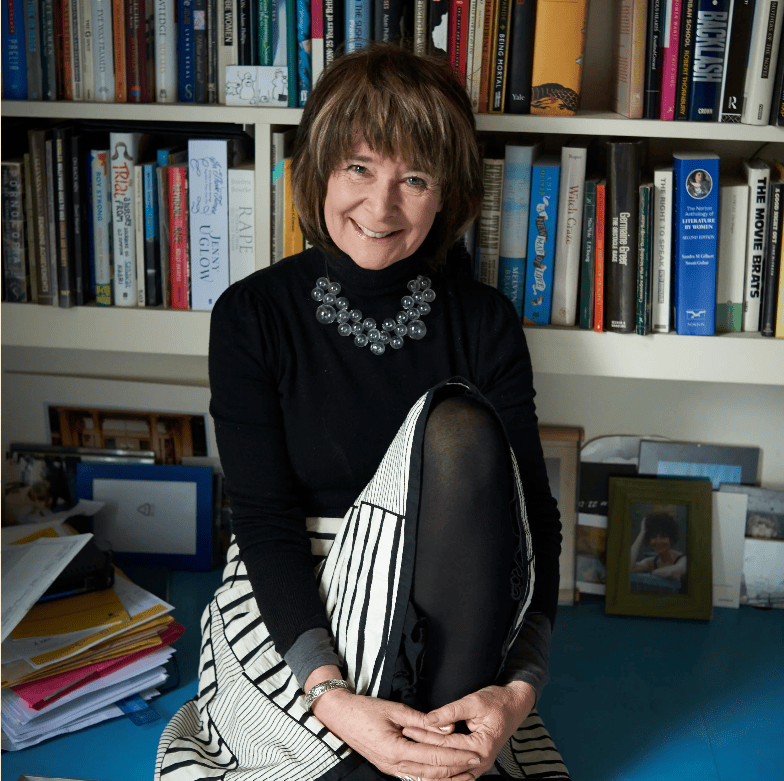
Sarah Dunant has written twelve novels, four of which have been short-listed for awards, and edited two books of essays. She worked for many years for the BBC in radio and television. She featured as an expert in the BBC2 drama-documentary series ‘Renaissance: the Blood and the Beauty’ broadcast in December 2024.

Her most recent five novels, set within the Italian Renaissance, weave cutting edge historical scholarship into fiction, have become international bestsellers and have been translated into thirty languages. (Photo: Author website)

Connect with Sarah
Website