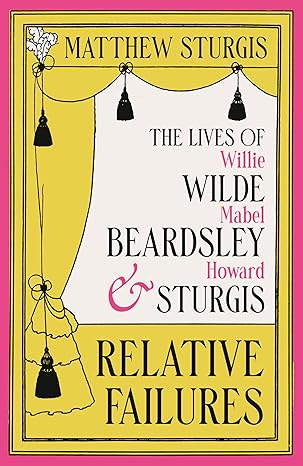
Book Review – Relative Failures: The Lives of Willie Wilde, Mabel Beardsley and Howard Sturgis by Matthew Sturgis @HoZ_Books

About the Book

History remembers the greats – but what about those who lived alongside them?

In the cultural ferment of late nineteenth-century London, three fascinating but often overlooked figures navigated the world in the shadow of their celebrated brothers. Willie Wilde, the hapless yet charming older sibling of Oscar, never quite matched his brother’s literary genius. Mabel Beardsley, the striking and ambitious sister of Aubrey, played a crucial role in his artistic ascent before forging her own path on the stage. And Howard Sturgis, a minor novelist with a sharp wit, watched as his brother Julian achieved the success he himself never quite grasped.

Moving through bohemian clubland, West End theatres, literary salons, and the pages of The Yellow Book, these siblings were more than just footnotes to history. Their lives – filled with ambition, scandal, devotion, and missteps – offer a fresh perspective on the glittering world of the 1890s.

Drawing on family history, sharp storytelling, and original research, Matthew Sturgis reveals the vibrant, overlooked figures who shaped their era. For lovers of literary and cultural history, it is an invitation to explore the road less travelled – a sidelight that, as Mabel Beardsley knew well, can sometimes be the most illuminating.

Format: Hardcover (320 pages) Publisher: Apollo
Publication date: 16th April 2026 Genre: Nonfiction, Biography

Find Relative Failures on Goodreads

Purchase Relative Failures from Bookshop.org [Disclosure: If you buy books linked to our site, we may earn a commission from Bookshop.org, whose fees support independent bookshops]

My Review

The concept of exploring the lives of three siblings of more famous individuals is an interesting one. As the author argues in the Introduction, ‘There is, of course, a curious attraction about ‘minor’ figures: they offer the excitement of discovery; they are alive with possibility; they lead one down the road less travelled. The very fact that they are so little known ignites our curiosity.’

What must it be like to grow up as ‘the brother of…’ or ‘the sister of…’? Does that allow you to bask in their reflected glory or act as a constant reminder that you will always be in second place? Do you ride on their coat-tails in an attempt to make a name for yourself or devote yourself to promoting their work or preserving their legacy? The three lives the author has chosen display elements of all these but also reveal some fascinating characters who enjoyed a particular kind of lifestyle and common social connections.

Although as equally gifted as his younger brother Oscar, Willie’s is a story of someone never able to fulfil his potential, drifting from one thing to another. However, he always took pleasure in Oscar’s success, promoting his work in whatever way he could. Always the life and soul of the party, as the author notes, ‘A fatal sort of indolence was beginning to make itself apparent as perhaps Willie’s most distinctive characteristic, just ahead of his capacity for food and drink.’ He wasn’t good at managing money either, being declared bankrupt in 1881. However, he never wavered in his support for his brother, even after the disgrace of Oscar’s trial and imprisonment.

Mabel Beardsley was also a passionate advocate of her brother Aubrey’s artistic talent, including after his early death. She herself harboured ambitions as an actress but was destined never to be more than second-rate, often cast in roles that reflected her off-stage persona. Mabel’s real forte was as hostess, at first presiding over the family’s Thursday afternoon tea parties attended by musicians, artists and writers, and later her own soirees. A striking rather than beautiful woman, she had plenty of admirers and a wide circle of friends. Always beautifully attired and never one to turn down an invitation, I think Mabel would have been a lot of fun to be around. I found her courage during her final illness rather moving.

The author admits he chose to include Howard Sturgis partly because he was a distant relation – a great-great-uncle. Yet while most people will have heard of Oscar Wilde and many of Aubrey Beardsley, I doubt whether pretty much anyone today has heard of Howard’s brother Julian or read one of his novels, including me. Therefore in this final part of the book it is Julian who rather fades into the background.

I found Howard an entertaining character. Much like Mabel, he was ‘a host of genius’, albeit a rather laidback one. “No attempt was made to dragoon the houseguests into organized activities or exhausting expeditions. The ‘plans for the day were made on the spur of the moment’ and rarely extended beyond a constitutional walk.” Howard had female friends but showed no romantic interest in them. Instead he had close male friendships that were passionate but probably not sexual in nature. Later in life he formed a friendship with the author Henry James and Edith Wharton. Although he wrote one reasonably successful novel, his later years were overshadowed by money worries and ill health.

It’s clear from the copious footnotes and end notes that a huge amount of research went into the book. There were times when I thought there was a little too much extraneous detail but overall I found Relative Failures an engrossing read with many humorous moments.

I won a proof copy in a giveaway organised by the publisher.

In three words: Detailed, fascinating, lively

About the Author

Matthew Sturgis is the author of acclaimed biographies of Oscar Wilde, Aubrey Beardsley and Walter Sickert, as well as Passionate Attitudes: The English Decadence of the 1890s. He has contributed to the TLS, Harpers & Queen and the Independent.

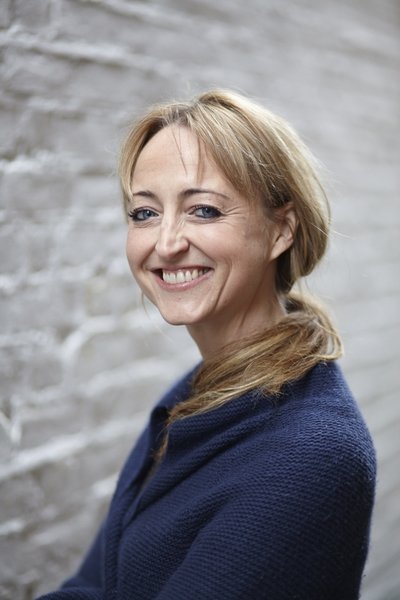
Oscar: A Life – a Sunday Times and TLS Book of the Year – was nominated for the Wolfson History Prize. (Photo: Agent website)

Connect with Matthew
Instagram

#BlogTour #BookReview The Improbable Adventures of Miss Emily Soldene: Actress, Writer, and Rebel Victorian by Helen Batten @AllisonandBusby

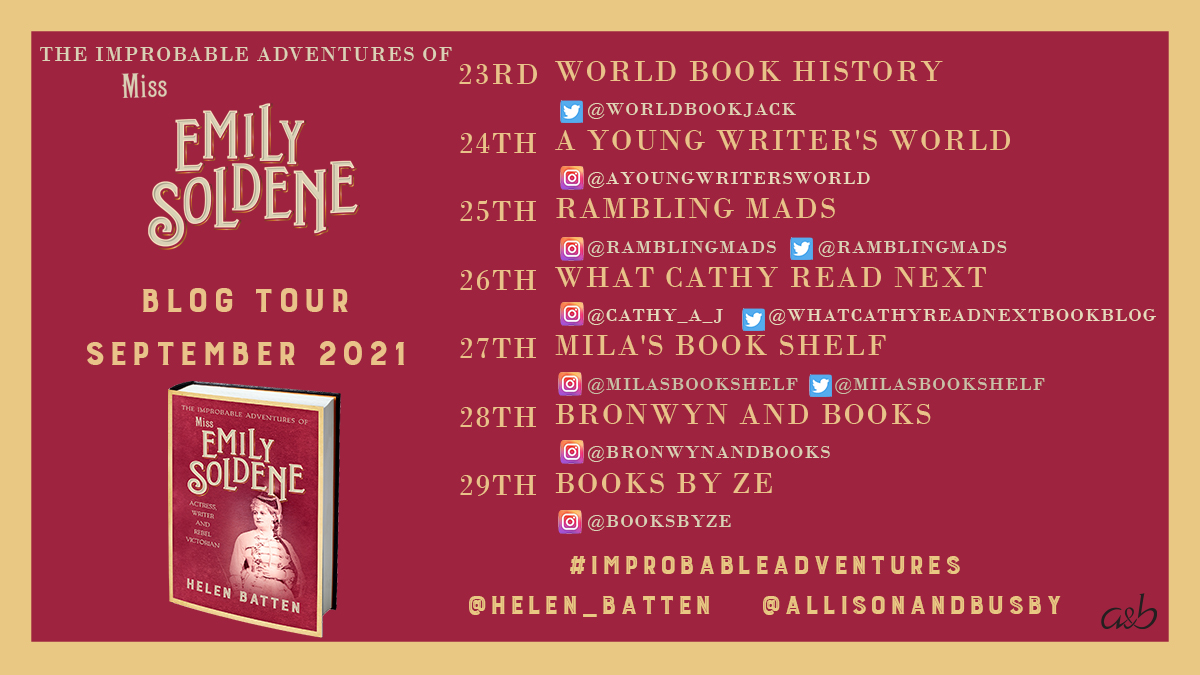
Improbable Adventures Twitter blog tour graphic

Welcome to today’s stop on the blog tour for The Improbable Adventures of Miss Emily Soldene: Actress, Writer, and Rebel Victorian by Helen Batten. My thanks to Helen at Helen Richardson PR for inviting me to take part in the tour and to Allison & Busby for my review copy. Do be sure to check out the reviews by the other book bloggers taking part in the tour.


The Improbable Adventures of Emily SoldeneAbout the Book

‘I rode on the stage in such style, that the men in front forgot I was a girl, and also forgot to laugh.’

From humble beginnings as the daughter of a Clerkenwell milliner, Emily Soldene rose to become a leading lady of the London stage and a formidable impresario with her own opera company. The darling of London’s theatreland, she later reinvented herself as a journalist and writer who scandalised the capital with her backstage revelations.

Weaving through the spurious glamour of Victorian music halls and theatres, taking encounters with the Pre-Raphaelites and legal disputes involving Charles Dickens in her stride, Emily became the toast of New York and ventured far off the beaten track to tour in Australia and New Zealand. In The Improbable Adventures of Miss Emily Soldene, a life filled with performance, travel and incident returns to centre stage.

Format: Hardcover (320 pages)               Publisher: Allison & Busby
Publication date: 23rd September 2021 Genre: Nonfiction, Biography

Find The Improbable Adventures of Miss Emily Soldene: Actress, Writer, and Rebel Victorian on Goodreads

Purchase links
Bookshop.org
Disclosure: If you buy a book via the above link, I may earn a commission from Bookshop.org, whose fees support independent bookshops

Publisher | Hive | Amazon UK
Links provided for convenience only, not as part of an affiliate programme


My Review

Helen Batten’s fascinating book explores Emily’s eventful journey from country girl, to music hall artiste, to doyenne of opera bouffe, to theatrical producer, novelist and journalist.  She also brings out of the shadows Emily’s family – her husband, children, nephews and nieces – who are curiously absent from not only Emily’s memoirs but also largely from her life and career. The exception is the relationship between Emily and her sister, Clara, the dynamics of which the author explores in some detail.

Helen Batten admits in her introduction that there are gaps in Emily’s memoirs – and sometimes downright untruths – which she has filled either with information from other sources or with speculation. The latter is always well-argued and insightful. By the way, in the introduction Helen explains her own very particular connection to Emily Soldene.

Alongside Emily’s story, the author includes fascinating nuggets of social history whether that’s contemporary attitudes to marriage and parenting roles, the Victorian male’s predeliction for saucy postcards, the prevalence of the casting couch in Victorian theatre, or the beginnings of the cult of celebrity journalism. Clearly the product of extensive research, this historical detail is delivered in an accessible way that never feels heavy-handed. Helen Batten also takes the opportunity to bring other female theatrical entrepreneurs out of the shadows, such as Charlotte Cushman, a singer and actress who became the first female theatre manager in the United States.

The author makes judicious use of excerpts from Emily’s memoirs and her newspaper columns. These really allow Emily to come alive, showcasing her keen observational skills and wicked sense of humour. One example is her less than complimentary observations about New York ladies of 1874: ‘They wore diamonds at the breakfast table, and cut through the vast space of the hotel dining-room with elevated, thin, nasal, metallic voices that made one’s skin creep.’ Being thin is something Emily herself could never be accused of.  Many years later attending the Motor Show at Olympia Emily imagines the conversation in the salon set aside for members of the Ladies’ Automobile Club: ‘Tea and transmissions, coffee and clutches, macaroons and magnetos, discussed with ardour and zest’.   As the author rightly observes of Emily’s journalism, ‘Her joie de vivre bubbles up in her prose like the literary equivalent of Offenbach’s champagne bounce’.

There is a great cast of secondary characters with walk-on parts for, among others, Charles Dickens, Oscar Wilde (‘unconvential, not to say impertinent’ remarks Emily) and aristocratic figures such as Lord Dunraven, whom Emily describes admiringly as ‘Gay, bright, clever and full of life; and who after the opera would walk home with us, cut the cold beef, and open the oysters and stout with the unconvential facility of the man who has been everywhere…’  As it happens, oysters and stout feature prominently in Emily’s life.

During her life Emily was also witness to many historic events including the 1908 London Olympics, the Sidney Street siege, the opening of the Central Line of the London Underground, and even the invention of the mobile phone. Yes, really… okay, an early version of it.  About the latter Emily wonders with uncanny prescience whether it will prove ‘a beneficent boon or a holy terror’.

As well as being a fascinating, impeccably researched and hugely entertaining read, the book contains some wonderful photographs of Emily, members of her family and of locations mentioned in the book. I absolutely loved following Emily’s ‘improbable adventures’ as she criss-crosses the globe. The book is a picture of a woman who lived life at full tilt and on her own terms; an example of girl power in the Victorian age, if you like.

In her introduction to the book, Helen Batten observes that Emily’s memoirs don’t tell the whole story. She writes, ‘I think she left some of the best bits out. So I’ve put them back in’. Helen, you absolutely did.

In three words: Fascinating, spirited, entertaining

Follow this blog via Bloglovin


Helen BattenAbout the Author

Helen Batten is the Sunday Times bestselling author of Sisters of the East End, and of The Scarlet Sisters which told the story of her grandmother’s life. She is also the co-author of Confessions of a Showman: My Life in the Circus, Gerry Cottle’s autobiography.

After reading history at Cambridge, Helen studied journalism at Cardiff University. She went on to become a producer and director at the BBC. She now works as a writer and psychotherapist. She lives in West London with her three daughters.

Connect with Helen
Twitter | Goodreads

Emily Soldene twitter quote