
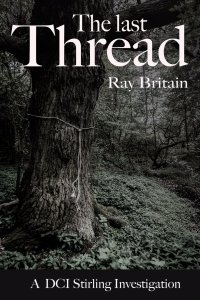
 About the Book
Accused of pushing a boy to his death in a failed suicide intervention, DCI Doug Stirling is suspended from duty. Attacked in the media and haunted by the boy’s smile as he let go of Stirling’s hand, he must look on helplessly as the incompetent Chief Inspector Ballard, intent on destroying him, investigates the boy’s death, supported by the vindictive Deputy Chief Constable, McDonald. Weeks later, an anonymous call leads the police to a remote location and the discovery of a burnt-out car containing the body of an unidentified man who has been savagely murdered. Short of experienced senior investigators, Assistant Chief Constable Steph Tanner has no choice but to take a professional risk. Throwing Stirling the lifeline he needs to restore his reputation, Tanner appoints him to lead the investigation.
But with no witnesses, no forensic evidence and more theories than investigators, Stirling’s investigation has far too many ‘loose threads’ as he uncovers a complex, interwoven history of deception, betrayal and sadistic relationships. Was the victim connected to the crime scene? Is the murder as complex as it appears? Or is there a simpler explanation? Still traumatised by the boy’s death and with time the enemy, does Stirling still have what it takes to bring the killer, or killers, to justice before McDonald intervenes? Things are already difficult enough when DC Helen Williams joins the investigation; a determined woman who seems intent on rekindling their past relationship. And is Ayesha, the beautiful lawyer Stirling has grown fond of, connected to the murder somehow?
Format: ebook (578 pp.) Publisher: N/A
Published: 17th September 2017 Genre: Crime
Purchase Links*
Amazon.co.uk ǀ Amazon.com
*links provided for convenience, not as part of any affiliate programme
Find The Last Thread on Goodreads
My Review
Unbelievably, it’s well over a year since Ray contacted me about reviewing his debut crime novel, The Last Thread. I’d like to thank him for providing me with a review copy of his book and for his patience in waiting for it to reach the top of my pile of author review copies.
When I interviewed Ray on my blog last year (click here to read the full interview), he explained that writing a book had been an unfulfilled ambition for much of his adult life. Ray confided the catalyst for writing the book that became The Last Thread was reading a popular crime fiction novel and being irritated at its many inaccuracies. As a former Senior Investigating Officer, he was well placed to spot them! His objectives for The Last Thread were to create a story that engaged the reader’s attention, kept them guessing and accurately reflected the realities of crime investigation. I’m happy to say that Ray has succeeded on all those counts.
The Last Thread presents a positive view of the Police force, conveying the professionalism and dedication of those involved in investigating crime and bringing culprits to justice. The multi-disciplinary nature of modern policing comes across as Stirling and his team call upon the assistance of specialists in search, forensics, IT and accounting as part of their investigation. The book also provides a realistic insight into the impact on family life of unpredictable and often anti-social hours as well as the psychological effect on police officers of some of the awful things they witness.
What comes across is the meticulous processes involved in modern day policing: documenting actions and decisions, collecting, logging and sifting evidence, creating action lists, developing investigation strategies. All against a background of negotiation for budget and resource, ever-present internal and external scrutiny and uncertain support of senior officers.
The dramatic events of the prologue immediately pull the reader into the story. With the privileged access of a reader, you may make connections between characters and have suspicions about the probable culprit sooner than the investigation team. However, like me, you’ll probably find you didn’t get everything right.
DCI Doug Stirling makes an engaging lead character. Committed to his job albeit with a slightly complicated love life, there are hints of things in his past that I hope the author plans to explore further in subsequent books. As the investigation unfolds, Stirling is faced with a possible conflict of interest between his professional and personal life. However, using his experience, knowledge and dogged determination he eventually discovers that last ‘loose thread’ that reveals the full picture – or does it?
If you’re a fan of crime fiction, and police procedurals in particular, then I think you will love The Last Thread. It’s probably fair to say some readers may find the meticulous attention to the detail of police procedure detracts slightly from the pace of the book. Personally, I loved the sense of authenticity with the footnotes providing all the explanation you might need of technical terms used. Some of the scenes involving pathologists and scenes of crime might be a little graphic for the squeamish. At the very least, I wouldn’t recommend reading them whilst eating your supper.
The Last Thread is an accomplished debut novel and I look forward to reading the author’s next book.
In three words: Authentic, dark, compelling
Try something similar…In the Blood by Ruth Mancini (read my review here)
 About the Author
Gaining promotion to a high rank, Ray built his career in the Midlands region of the UK, working in both uniform and investigative roles, but the investigation of crime and the camaraderie of investigators remained his first love. As a Senior Investigating Officer (SIO) he led many investigations, some of which engaged specialist, national capabilities. For fifteen years he was a Hostage & Crisis Intervention Negotiator and responded to hostage situations, many firearms incidents and numerous suicide interventions, not all of which ended happily. Ray attended the FBI’s hostage negotiator programme at Virginia, USA as a UK police representative and other responsibilities took him to India, Europe and elsewhere. He received several Commendations in recognition of his work. Since leaving the police Ray has worked with other criminal justice sector organisations, including HM Government’s Home Office.
Ray’s idea of a good day out is mountain walking or skiing, but most definitely not at the same time! His interests include rugby, an eclectic taste in music but currently keen on modern jazz. He’s a great Dad dancer too – his family might argue to the contrary – who enjoys reading and occasionally acts as incompetent crew for a friend’s sailing yacht.
Connect with Ray
Website ǀ Facebook ǀ Twitter ǀ Goodreads

 About the Book
 About the Author
 What Cathy Read Next...