
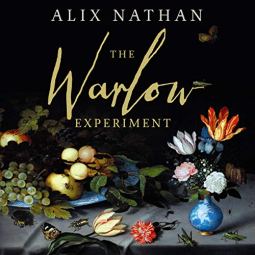
 About the Book
The year is 1792 and Herbert Powyss is set on making his name as a scientist. He is determined to study the effects of prolonged solitude on another human being, though before now Powyss’s sole subjects have been the plants in his greenhouse. He fills three rooms beneath Moreham House with books, paintings and even a pianoforte, then puts out an advertisement, hoping for a gentleman recluse.
The only man desperate enough to apply is John Warlow, a semi-literate farm labourer who needs to support his wife Hannah and their six children. Cut off from nature and the turning of the seasons, Warlow soon begins losing his grip on sanity. Above ground, Powyss finds yet another distraction from his greenhouse in the form of Hannah, with whom he rapidly becomes obsessed. Does she return his feelings, or is she just afraid of his power over her family’s lives?
Meanwhile, the servants are brewing up a rebellion inspired by recent news from across the Channel. Powyss may have set events in motion, but he is powerless to prevent their explosive and devastating conclusion.
Format: Audiobook (10h 31 mins) Publisher: Serpent’s Tail
Publication date: 4th July 2019 Genre: Historical Fiction
Find The Warlow Experiment on Goodreads
Purchase links
Bookshop.org
Disclosure: If you buy a book via the above link, I may earn a commission from Bookshop.org, whose fees support independent bookshops
Hive | Amazon
Links provided for convenience only, not as part of an affiliate programme
My Review
I don’t consume many books in audio format which probably explains the long period between me acquiring this one and actually listening to it. It took me a while to get through it because, although there are only twelve chapters, each is about an hour’s listening time.
Amazingly, the story at the heart of The Warlow Experiment is rooted in historical fact. A Mr Powyss of Moreham in Lancashire really did publish an advertisement offering a reward of £50 a year for life to any man willing to live for seven years underground without seeing another human face. And, as in the novel, the successful applicant was required to “let his toe and fingernails grow during the whole of his confinement, together with his beard”.
John Warlow is a complex character. He is a violent man who physically assaults his wife, Hannah. As a farm labourer living close to poverty the idea of earning £50 a year for life is something like a dream and it is his sole motivation for undertaking the assignment. A man of little imagination, he has no conception of the toll the experiment will take on his physical and mental health.
The social gulf between Warlow and Powyss is illustrated in the accommodation Powyss has prepared for Warlow in the cellar of Moreham House. It’s filled with books but Warlow is barely literate, struggling to make sense of a few pages of Defoe’s Robinson Crusoe, another individual enduring isolation. But there’s no Man Friday to act as a companion to Warlow, unless you count a frog that manages to enter the cellar or, latterly, a cat. Warlow’s accommodation has a bath but he never uses it and he is puzzled by the frequency of the delivery of clean linen. His meals (a replica of what is being served to Powyss) are lowered to him in a dumb waiter but are rarely to his liking. He’s happy with the beer and tobacco, though. Ridiculously, Warlow’s rooms are also furnished with a chamber-organ, Powyss’s thought being, one supposes, that Warlow can while away the time learning to play it – when he’s not reading Voltaire that is.
One of Powyss’s requirements is that Warlow keep a daily journal, expecting it to contain insights into Warlow’s experiences that can be used in the scientific paper he intends to write. The entries Warlow manages, before he gives up keeping it altogether, are brief and definitely not full of insight.
Warlow’s descent into madness is disturbing to witness but unsurprising. He quickly loses track of time. Unable to tell night from day, his only clue is the meals delivered to him. His discovery that Powyss has installed a listening device only increases his sense of paranoia. Ironically, Powyss becomes increasingly disturbed by the noises he hears, contributing to his growing doubts about the morality of his experiment.
I mentioned earlier the gulf between Warlow and Powyss but, in fact, there are similarities. Powyss’s life is one of solitude, albeit luxurious solitude. He appears emotionally repressed, welcoming no visitors to Moreham House. He has little social contact aside from his servants, the exception being occasional visits to a London brothel. He is an obsessive collector of plants and spends much of the day in his study immersed in his books or dreaming of the fame his experiment will attract. Like Warlow, he appears to have no conception of the impact the requirements of his experiment will have on his subject.
No record exists of the outcome of the real life experiment so this element of the book is entirely the product of the author’s imagination. The concept that actions have consequences is dramatically played out as Powyss becomes infatuated with Warlow’s wife, with disastrous consequences. Mayhem, melodrama and murder follow against the backdrop of an age of popular revolution as parts of the citizenry, including some within Powyss’s household, rise up in pursuit of the same rights as their counterparts in France.
I thought Mark Meadow’s narration was absolutely superb. He created distinctive voices for each of the many characters – both male and female – so I was never confused about who was speaking. His voicing of Warlow was particularly memorable, especially during Warlow’s periods of madness, really bringing to life the author’s evocative writing.
The Warlow Experiment explores many issues – social, economic, scientific, psychological – as well as being a really engrossing story. And in case you thought experiments in social isolation were a thing of the past, a Spanish extreme athlete recently spent 500 days in a cave with no human contact in pursuit of a world record.
In three words: Dark, dramatic, compelling
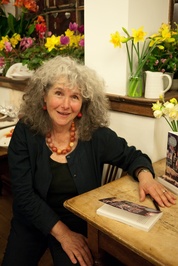 About the Author
Alix Nathan was born in London and educated there and at York University where she read English and Music.
She has lived in Norwich, Munich, Philadelphia, Birkenhead and now in the Welsh Marches where, with her husband, she owns some ancient woodland.
She has published three children’s books and written about Christina Rossetti and the 18th century writer and notorious beauty Mary Robinson. Since 2006 she has been writing adult fiction and her short stories have been published in Ambit, The London Magazine, New Welsh Review and read on BBC Radio 4. (Photo: Goodreads author page)
Connect with Alix
Website | Twitter

 About the Book
 About the Author
 What Cathy Read Next...