
My guest today on What Cathy Read Next is George Alexander, author of historical thriller Twilight of Evil. Published on 10th January 2025, Twilight of Evil is available to purchase as an ebook or paperback from Amazon and other online retailers. Read on as I chat with George about the inspiration for the book and the challenges of writing alternate history.
About the Book

What if Adolf Hitler cheated death in the ruins of Berlin? Did the Fuhrer truly perish in the crumbling capital, or did he evade capture and flee to the distant shores of South America?
Twilight of Evil delves into the controversial and intriguing tale of Adolf Hitler’s escape from Berlin during the closing days of the Third Reich and his post-war life. Join David Hazel, a young Jewish researcher, as he probes into the shocking truth behind Hitler’s disappearance through the work of the renowned American scholar, Dr. Peter Alex.
The novel transports readers to the chaotic final days of the Nazi regime, depicting the crumbling empire and the desperate measures taken by its leaders. The book probes into the dramatic exploration of Hitler’s ultimate fate, revealing the truth behind his disappearance and the people who crossed his path. From secret alliances to deadly betrayals, this novel takes you on a journey through the escape and post-war life of some of history’s most notorious figures.
Find Twilight of Evil on Goodreads
Q & A with George Alexander, author of Twilight of Evil
You’ve published a number of nonfiction books. What made you decide to turn to fiction?
I have authored/co-authored twelve nonfiction books. Most of these were written while I was working with a Christian NGO (Non-governmental organisation) to promote and propagate its objectives, or in the field of social science. When I left the NGO a couple of years ago, I started exploring other areas of interest. I wanted to try my hand at fiction, as I had never done so before. It was a kind of challenge I undertook – something new, something fresh.
How and when did the idea for the novel first come to you?
My first exposure to the topic of Hitler’s fate was in the book Grey Wolf: The Escape of Adolf Hitler by Gerrard Williams and Simon Dunstan. I enjoyed the book immensely due to its presentation style and wealth of information. Subsequently, I watched all episodes of Hunting Hitler on the History Channel, repeatedly. I also watched many YouTube videos on the topic as I was fascinated by the mystery, conspiracy and controversy surrounding Hitler’s fate. During the COVID period, I read Eyewitness to Hitler’s Escape by Peter David Orr, followed by a couple of his other books. After joining his Facebook community and interacting extensively with Peter, the idea of writing a novel sparked in my mind.
You describe Twilight of Evil as a historical thriller. What do you believe are the essential elements of a thriller and how did you incorporate these into the book?
Twilight of Evil is not a purely edge-of-your-seat thriller, but rather a mix of genres. For me, a thriller novel should have suspense, unexpected twists and turns, and good pacing. However, these elements shouldn’t be included gratuitously. When I wrote Twilight of Evil I was careful to ensure any thrilling or suspenseful moments, like chases or gunfights, logically aligned with the premise. So, I had to write and rewrite such aspects until I found them to be logical and matching the flow of the novel. I’ve tried my best, and I leave it to the readers and reviewers to determine the rest.
Your book includes real-life figures. Did this pose particular challenges?
Since Twilight of Evil reimagines the final days of Adolf Hitler, it incorporates historical characters alongside fictional ones. The challenge lay in seamlessly integrating the historical and fictional elements, particularly in constructing the post-war lives of Hitler, Eva Braun, and others. Given their notoriety, portraying these figures was not easy. Twilight of Evil isn’t about rewriting history, but about exploring the enduring fascination with this dark period and the unsettling possibility that even the most monstrous figures can evade accountability.
What are you working on next?
I am in the final stages of completing another historical fiction novel, this time with Jesus of Nazareth as the central character. It will be published in Malayalam, a South Indian language. Also a nonfiction work exploring the identity crisis of the indigenous Malankara Nasrani community of India. I plan to write more fiction in the future.
About the Author
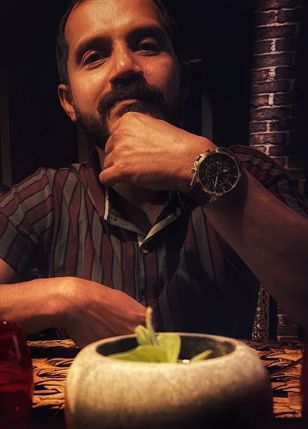
A seasoned writer, orator, and trainer, George boasts a career spanning over 16 years in the dynamic realm of human resources and management. His extensive experience has been honed across various organizations, including corporate, government agencies, academic institutions, and non-profit entities.
Alexander holds two master’s degrees: one in social work specializing in urban and rural community development, and another in philosophy focusing on social transformation and empowerment. This unique blend of academic pursuits has equipped him with a deep understanding of human behavior, societal dynamics, and the power of transformative change. Beyond his professional endeavors, Alexander is a dedicated advocate for social justice and community development.
As a board member of the Occidental Studies Institute (OSI), he actively fosters intellectual discourse and promotes progressive social change.
His prolific literary career has resulted in the authorship and co-authoring over 12 books and numerous articles. His writings explore various topics, including human resources, leadership, social justice, and personal development.
Connect with George
Website | Instagram | Goodreads




 What Cathy Read Next...