#BlogTour #BookReview Tasting Sunlight by Ewald Arenz, trans. by Rachel Ward

Tasting Sunlight Blog Tour BannerWelcome to today’s stop on the blog tour for Tasting Sunlight by Ewald Arenz, translated by Rachel Ward. My thanks to Anne at Random Things Tours for inviting me to take part in the tour and to Orenda Books for my digital review copy.

Do check out the posts by my tour buddies for today, Monika at Monika Reads and over on Instagram Stacey Hammond.
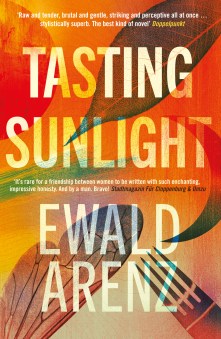

Tasting SunlightAbout the Book

Teenager Sally has just run away from a clinic where she to be treated for anorexia. She’s furious with everything and everyone, and wants to be left in peace.

Liss is in her forties, living alone on a large farm that she runs single-handedly. She has little contact with the outside world, and no need for other people.

From their first meeting, Sally realises that Liss isn’t like other adults; she expects nothing of Sally and simply accepts who she is, offering her a bed for the night with no questions asked.

That night becomes weeks and then months, as an unlikely friendship develops and these two damaged women slowly open up – connecting to each other, reconnecting with themselves, and facing the darkness in their pasts through their shared work on the land.

Format: Paperback (276 pages)    Publisher: Orenda
Publication date: 23rd June 2022 Genre: Contemporary Fiction

Find Tasting Sunlight on Goodreads

Pre-order/Purchase links
Bookshop.org
Disclosure: If you buy a book via the above link, I may earn a commission from Bookshop.org, whose fees support independent bookshops

Hive | Amazon UK
Links provided for convenience only, not as part of an affiliate programme


My Review

Liss lives alone on a farm in a small village in rural Germany. Her days are taken up with tending the crops and livestock, and managing the forest and vineyard that belong to the farm. Her life is a solitary one, partly by choice but also because she is shunned by most of the villagers for reasons that will only gradually become apparent. It’s also a life governed by the rhythm of the seasons. Sally’s unexpected arrival disrupts the settled routine of Liss’s life.

Initially it appears Sally is the damaged individual and Liss a source of strength and calm. Liss seems instinctively to understand how to respond to Sally allowing her to make her own decisions about when to eat, when to talk and when to participate in the life of the farm.  Liss introduces Sally to different aspects of farming life such as harvesting potatoes and grapes or tending bee hives. I was struck by how some of the activities can be seen as metaphors for healing. For example, as Liss marks the trees in the forest that need to be thinned she says, ‘Sometimes you want a sapling to have enough light to grow… Then you have to make space.’ By taking her in, Liss provides Sally with that space but it doesn’t come without personal risk.

We learn that Liss too has been damaged by experiences in her past and discovering her story begins to dominate both Sally’s and the reader’s thoughts. I liked that we see a kind of role reversal with Sally becoming the one to provide support and encouragement. One particular scene that sticks in my mind is when Liss and Sally visit the pear orchard originally laid out in rigid lines by Liss’s controlling father. It’s a place Liss has avoided because of the memories it evokes but Sally’s take on the now overgrown orchard is quite different: ‘It’s like a punishment for trying to force growing things into a mould’. Both Sally and Liss have battled to gain control over their lives from those who want to forge them into a particular shape. Indeed, they have both at some point felt themselves caught in the ‘wrong’ lives, lashing out in anger as a result.

Although there is darkness in the book, there is also a sense of hope inspired by the cycle of nature. ‘The seed was already in the ground. Even when everything looked empty and picked and finished.’  The book’s title brilliantly conveys the process of emerging from darkness into light.

Tasting Sunlight is a beautiful story of friendship, resilience and the healing power of nature.

In three words: Intimate, insightful, poignant

Try something similarThe Offing by Benjamin Myers

Follow this blog via Bloglovin


Ewald ArenzAbout the Author

Ewald Arenz was born in Nürnberg in 1965, studied English and American literature and history and now works as a teacher at a grammar school. His novels and plays have received numerous awards. Tasting Sunlight was shortlisted for the German Independent Booksellers’ Favourite Novel of 2019 and was on the Spiegel bestseller lists both as a hardback and paperback. Ewald lives with him family near Fürth.

Connect with Ewald
Website | Twitter
Tasting Sunlight Graphic 4

#BookReview Seek The Singing Fish by Roma Wells

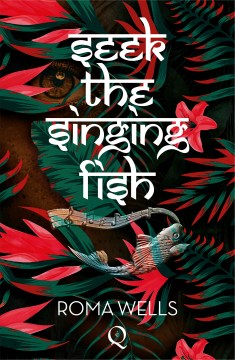
Cover Image Seek The Singing FishAbout the Book

Growing up in the lagoon town of Batticaloa, a young girl, with an unquenchable curiosity and love of the natural world, is entangled in the trauma and turmoil of the Sri Lankan civil war.

Uprooted from everything she holds dear, tragedy and betrayal set in motion an unforgettable odyssey.

Torn from east to west, struggling with what it means to belong, she desperately seeks a way home to the land of the singing fish.

Format: Paperback (320 pages)    Publisher: époque press
Publication date: 23rd June 2022 Genre: Literary Fiction

Find Seek The Singing Fish on Goodreads

Pre-order/purchase links
Bookshop.org
Disclosure: If you buy a book via the above link, I may earn a commission from Bookshop.org, whose fees support independent bookshops

Publisher | Hive | Amazon UK
Links provided for convenience only, not as part of an affiliate programme


My Review

The protagonist of the book is Mila, a young Sri Lankan girl. The fact that Mila directly addresses the reader, whom she has named ‘Shi’ meaning breath of life, gives the book a very intimate feel.

The author confides that she has always been magnetised by the concept of refuge and Mila’s earliest refuge is her father’s library, his ‘inky jungle’, a place crammed full of books, a ‘forest of reworked trees’. The room also contains Mila’s own personal little hideaway. Her father’s stories and the facts he relates from his encyclopedia feed Mila’s curiosity and thirst for knowledge. She develops a passionate interest in animals, both vertebrate and invertebrate, transfixed by the intricacies of their anatomical structure and habits. Comparisons between animal and human behaviour become a key part of how she sees the world. So a shop owner who has set up a line of teddy bear ‘customers’ for her toddler to practice serving reminds Mila of the way meerkats teach their pups to hunt, and a man singing songs that his listeners later find themselves humming calls to mind how humpback whales spread their melodies to other whales far across the ocean.

Although we sometimes talk about people behaving like animals very rarely does animal behaviour descend to the level of cruelty inflicted by humans, as Mila soon discovers. The peace of her childhood is disrupted in the most profound way when the Sri Lankan civil war reaches her home town of Batticaloa.  The comparison between the natural beauty of the country and the ugliness of war is starkly depicted.

Suddenly Mila is alone and forced to fend for herself. ‘War strips and chews away everything you’re sure of and vomits out a perturbing sort of uncertainty.’ Betrayed by someone who preys on Mila’s vulnerability, she finds herself thousands of miles from home, a victim of modern slavery.  The next few years test Mila’s strength of will and resilience. Unwilling to trust any offer of help in case it ends in another betrayal, she lives a hand to mouth existence on the streets where every day is a struggle to survive.

Eventually she finds a refuge, one that neatly echoes her father’s library. It’s a place that not only provides her with a place of safety and a space to heal but offers her literary nourishment. ‘Chunky stewing tomes and spines that flaked away like almond shavings. Old, new, spiced and crumbling fellows, all bustling together; real breathing books.’  Gradually Mila is coaxed out of the shell she has contructed around herself and presented with the possibility of returning home to Sri Lanka.  However, there is a further journey for Mila to make and a discovery that will bring home the terrible cost of war, whilst also demonstrating that with time and patience there is the possibility of healing.

It is impossible to write a review of Seek The Singing Fish without mentioning the beautiful, lush prose that seems to flow effortlessly from the author’s pen. For example, this mouthwatering description of wares displayed in a local market. ‘Cashew apples, avocado, and sweet citrus carambola oozed beside guavas, pineapples and spiky rambutan. Possum purple passionfruit jostled with jackfruit, plump mangos beamed by breadfruit while red lady papayas sang sweetly to passing nostrils.’ Don’t you just love the image of fruit jostling, beaming or singing?

As Mila warns the reader at the beginning of the book, it’s not a ‘polished little tale wrapped neatly in a bow but an untamed eruption’. Mila’s story is harrowing at times, not least because it is based on real life experiences, but it is infused with an appreciation for the natural world.  I thought Seek The Singing Fish was a hugely impressive debut novel.

My thanks to Seán at époque press for my digital review copy.

In three words: Powerful, moving, lyrical

Follow this blog via Bloglovin


Roma WellsAbout the Author

Roma Wells is a Sri Lankan and Irish writer with a family heritage entwined with wild animals and sectarian conflict. Roma studied International Relations at Cambridge University and has worked in journalism, foreign affairs and international development. She is happiest scribbling under trees and at home you will find her bonding with an array of local wildlife. Seek The Singing Fish is Roma’s debut novel.

Connect with Roma
Website | Twitter | Instagram