
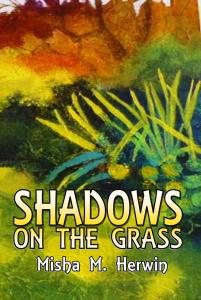
 About the Book
Every family has its secrets. In the nineteen-sixties Bristol, seventeen-year-old Kate is torn between the new sexual freedom and her rigid Catholic upbringing. Her parents have high expectations of her. She, however, is determined to lead her own life. Mimi, her grandmother, is dying. In her final hours, Mimi’s cousin, the Princess, keeps watch at her bedside. Born in the same month, in the same year, the two women are bound by their past and a terrible betrayal.
Meanwhile, caught between the generations, Mimi’s daughter Hannah struggles to come to come to terms with her relationship with her mother, and struggles to keep the peace between her daughter and her husband. She too must find her own way in a land foreign to her, in a new post-war world, where the old certainties have gone and everything she knows has been swept away.
Format: ebook (220 pp.) Publisher: The Penkhull Press
Published: 11th January 2018 Genre: Literary Fiction
Purchase Links*
Amazon.co.uk
*links provided for convenience, not as part of any affiliate programme
Find Shadows on the Grass on Goodreads
My Review
Set in Bristol in 1965, the book focuses on three generations of women who are each in their own way struggling to come to terms with their past, their Polish heritage and the modern day.
Mimi is dying and, as she moves in and out of consciousness, events in the past prey on her mind: memories of bereavement, exile, love, loss and betrayal. The carefree girl she once was has grown into a disappointed, bitter old woman who tests the bounds of family loyalty to the limits with her cruel words and intransigence. Even her old friend, the Princess Marianna, is not spared.
Hannah, Mimi’s daughter, is weighed down by the mental and physical strain of caring for her ailing mother. Yet there is nothing Hannah would not do for her family – her husband Gregor, daughter Kate and young son Peter – putting their needs before her own desires and aspirations, hiding her own fears and worries. Having never experienced affection from Mimi, whose favourite was Hannah’s older brother Jan, Hannah is determined her own family will not want for love or care. ‘Her family was the most important thing in her life. If any of them were unhappy, or in pain, so was she. She wanted nothing but the best for them. And what about you? the demon cried and her stomach lurched, as she saw that to give everything to her husband and children was to leave herself bankrupt.’
Moody and rebellious, Kate is conflicted between the strict Catholic faith she has been brought up in and her desire to explore sexually and venture beyond the expectations of her family. ‘There was no way she was drowning in religion like her mother.’
One of the themes of the book is the convergence of past and present, the idea that a thin veil exists between the two. “I think that maybe,” Kate grappled with the concept, “we’re all part of the universe and sometimes things get muddled and slip through the cracks.” Often characters see or experience things that immediately transport them in their mind’s eye to the past, evoking memories of childhood and adolescence. Some of these memories are happy but many are traumatic – such as the wartime experiences of Mimi and Marianna (the Princess) and their exile from Poland. Other memories are unwelcome, bringing to the surface secrets that were better left buried or feelings of guilt for past actions, even for escaping death.
Marianna’s way of coping with these memories is to transform them into fairy tales, merging fact with fiction, rewriting past events as she would have liked them to happen. ‘The facts of my life are all there, yet how much of what I told her was true and how much was not? I doubt whether even I know, after all this time. Besides, what does it matter? We all do it. We weave our fantasies about ourselves, because the truth is too cruel and constructing our own reality is the only way we can survive.’ It is only Mimi’s impending death that forces Marianna to face the demons from the past.
There is some wonderfully descriptive language in the book. ‘The afternoon sun hung hot and furious above the street; its heat collecting on the small walled courtyard. The only relief was where the shadow of the house sliced across the stone flags bisecting the area into light and dark. Geraniums wilted in their pots, the ivy clung limply to the wall and the climbing rose dropped, its leaves white with dust.’
The writing has a sensual quality to it with evocative descriptions of bodily sensations – scent, touch and taste. ‘Kate sat back and pressed her bare legs against the statue. The bronze flank of the lion was smooth and warm between her thighs. Her dress was so short it scarcely covered her pants. Her sandals were sticky against the soles of her feet. The leather sucked at her skin as she moved. She hooked her hair behind her ears and felt the night air slip in under her arms, sweet as honey over her breasts.’
The author switches from past to present tense in the book with the scenes in the past being in present tense and those in the present in the past tense (I think, because I only noticed it part way through the book). Sometimes this occurred within chapters as events, sights and sounds triggered memories for the characters. Personally, I’m not sure this stylistic device added anything to the book although it didn’t affect my enjoyment.
I found this a fascinating book, full of interesting ideas, rich in detail and characterisation. I received an advance reader copy courtesy of the author in return for an honest review.
In three words: Emotional, intimate, expressive
Try something similar…Letting Go by Maria Thompson Corley (click here to read my review)
 About the Author
Misha M Herwin is a writer of books for adults and (as Misha Herwin) for children. She has had a number of short stories published in anthologies, in UK and US including The Way to My Heart, Voices of Angels, The Darkest Midnight in December, The Yellow Room and Bitch Lit, among others. Misha blogs regularly at http://authorselectric.blogspot.co.uk/ and is available for Q&As and interviews.
Connect with Misha

 About the Book
 About the Author
 What Cathy Read Next...