#BookReview This Mortal Boy by Fiona Kidman @BelgraviaB

This Mortal BoyAbout the Book

‘The offender is not one of ours. It is unfortunate that we got this undesirable from his homeland.’

Auckland, October 1955. If young Paddy Black sings to himself he can almost see himself back home in Belfast. Yet, less than two years after sailing across the globe in search of a better life, here he stands in a prison cell awaiting trial for murder. He pulled a knife at the jukebox that night, but should his actions lead him to the gallows? As his desperate mother waits on, Paddy must face a judge and jury unlikely to favour an outsider, as a wave of moral panic sweeps the island nation.

Fiona Kidman’s powerful novel explores the controversial topic of the death penalty with characteristic empathy and a probing eye for injustice.

Format: Paperback (288 pp.)                 Publisher: Gallic Books
Published: 1st August 2019            Genre: Historical Fiction

Pre-order/Purchase Links*
Publisher | Amazon.co.uk  ǀ  Amazon.com  ǀ Hive.co.uk (supporting UK bookshops)
*links provided for convenience, not as part of any affiliate programme

Find This Mortal Boy on Goodreads


My Review

In This Mortal Boy, the author depicts not just Albert Black’s trial and the events leading up to it but the effect on other people involved. There’s his family back in Belfast naturally, especially his mother, who leads attempts to obtain mercy for her son. But also the jury members, some of whom are more troubled by their role in potentially taking the life of a man than others, the prison staff and governor who must oversee Albert’s final days and hours, and most movingly perhaps Oliver Buchanan, part of Albert’s defence team, with sons of his own. ‘Once, he would have wished them to follow the law, as he has done, but now he hopes they will not. The law, as it stands at this moment, seems cruel and unjust, a carapace for power and revenge, designed by men who have been to war and can’t let the past go; must hunt down enemies for the rest of their lives.’

The author also explores the wider societal and political background to the case: public attitudes towards immigrants and youth culture; the role of the press in forming or even inflaming public opinion. Issues which, sadly, still form part of public discourse today.

As the book is based on real events, there is a sense of inevitability about the outcome. However, the sensitive way the story is told and the way in which the various issues are explored maintains the reader’s interest. The closing chapters of the book detailing Albert’s final days following his conviction and sentencing are poignant, incredibly moving but also chilling.

This Mortal Boy is a compelling story of discrimination, prejudice, closed minds and entrenched attitudes resulting in the waste of a life. Whether or not Albert Black was a victim of a miscarriage of justice is up to each reader to decide but, for me, the author persuasively made the case that this was so.

This is the first book I’ve read by Fiona Kidman. I came to it with high expectations because of positive reviews by other book bloggers; I wasn’t disappointed. There is beautiful writing and I especially liked the way the author captured the rhythms of speech of the various characters. I also loved the inclusion of Irish folk and popular songs.

Fiona Kidman is campaigning for Albert Black’s conviction to be downgraded to manslaughter on the grounds of self-defence. You can read about her campaign here.

I received a review copy courtesy of publishers, Gallic Books.

Follow my blog with Bloglovin

In three words: Compelling, thought-provoking, moving

Try something similar…The Conviction of Cora Burns by Carolyn Kirby (read my review here)
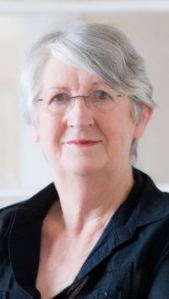

Fiona KidmanAbout the Author

Dame Fiona Kidman is a leading contemporary novelist, short story writer and poet.

Kidman has won numerous awards, and she has been the recipient of fellowships, grants and other significant honours, as well as being a consistent advocate for New Zealand writers and literature.

She is the President of Honour for the New Zealand Book Council, and has been awarded an OBE and a Dame Companion of the New Zealand Order of Merit for her services to literature. (Bio/photo credit: Gallic Books author page)

Connect with Fiona

Website  ǀ  Goodreads

Book Review: The Lost Shrine (Hills & Barbrook #2) by Nicola Ford @AllisonandBusby

The Lost ShrineAbout the Book

Clare Hills, archaeologist and sometime sleuth, is struggling to finance her recently established university research institute along with her long-time friend, Dr David Barbrook. When Professor Margaret Bockford finds the Hart Unit commercial work with a housing developer on a site in the Cotswolds, the pair are hardly in a position to refuse. There is just one slight catch: the previous site director, Beth Kinsella, was found hanged in a copse on-site, surrounded by mutilated wildlife.

Despite initial misgivings, Clare leads a team to continue work on the dig, but with rumours about Beth’s mental state and her claims that the site was historically significant refusing to be laid to rest, and lingering disquiet between local residents and the developers, progress is impeded at every turn. When one of the workers finds something unsettling, Clare suspects there may be more to Beth’s claims than first thought. But can she uncover the truth before it is hidden for ever?

Format: Hardcover, ebook (320 pp.)    Publisher: Allison & Busby
Published: 23rd May 2019  Genre: Crime

Purchase Links*
Amazon.co.uk  ǀ  Kobo | Google
*links provided for convenience, not as part of any affiliate programme

Find The Lost Shrine (Hills & Barbrook #2) on Goodreads


My Review

I really enjoyed The Hidden Bones, the first book in the series featuring archaeologists Clare Hills and David Barbrook. You can read my review here along with a guest post from author Nicola Ford. Although The Lost Shrine can definitely be enjoyed as a standalone, it does contain references to events in the earlier book so, ideally, I would recommend reading the series from the beginning.

I enjoyed being reunited with some of Clare’s team from the previous book, such as Margaret and Jo, and, of course, her friend and colleague, David. They share her passion for archaeology or, as it’s described at one point, the process of ‘bringing the obscure, the overlooked, the people who lived in the cracks into the light’.

As I noted in my review of The Hidden Bones, archaeology has much in common with the investigation of a crime. They both involve gathering and piecing together evidence, investigating available source information, testing assumptions and coming to conclusions. And a crime scene must be preserved in the same way as an archaeological excavation site.

Having taken over the excavation, Clare finds herself getting contradictory messages about the person Beth really was – dedicated archaeologist or obsessive, troubled soul? ‘It seemed as if everyone had known a different Beth Kinsella’. Clare sets out to find out more using the approach of an archaeologist, visiting a former site Beth had excavated. ‘She wanted to get a sense of her from the places that had shaped her.’

The mystery of Beth’s death is not the only thing competing for Clare’s attention. As well as the administrative responsibilities of being site director and the financial worries about the future of the research institute, there’s the unwelcome activity of so-called ‘nighthawks’ (illegal metal detectorists), opposition from local residents to the housing development and pressure from the developer, Paul Marshall, to get the job finished quickly. Oh, and Clare’s still dealing with the emotional and financial consequences of her husband’s death, not to mention its circumstances.

The murder of a young man initially seems unconnected but perhaps like Clare’s boss, David, you don’t believe in coincidences. Soon the bodies are piling up and they’re definitely not all Iron Age. As with The Hidden Bones, the author kept me guessing as to who the culprit was right up to the book’s dramatic climax. Eventually the perpetrator and their motive is revealed but not before Clare has been reminded how dangerous asking questions can be.

As you might expect from an author who is also a National Trust archaeologist, the book is full of realistic detail about archaeological procedures. Also, the modern day reality of being a professional archaeologist, whether that’s the need to secure research funding when working in an academic environment or, when working on commercial excavations as in The Lost Shrine, the conflict that can arise between maintaining archaeological integrity and pressure from developers to work quickly and at minimum cost.

There are a few secondary plot lines left unresolved at the end of the book which some may regard as loose ends.  I prefer to think of them as finds waiting to be discovered on future digs as I, for one, very much hope there will be more books in the series.

Like its predecessor, The Lost Shrine is an engrossing murder mystery. With apologies to those not familiar with UK TV series, think of it perhaps as the intriguing love child of Midsomer Murders and Time Team. I believe The Lost Shrine will appeal equally to fans of crime fiction and those with an interest in history or archaeology.

I received an advance review copy courtesy of publishers, Allison and Busby.

Follow my blog with Bloglovin

In three words: Intriguing, engaging, mystery

Try something similar…Dark Sky Island by Lara Dearman (read my review here)


Nicola FordAbout the Author

Nicola Ford is the pen-name for archaeologist Dr. Nick Snashall, National Trust Archaeologist for the Stonehenge and Avebury World Heritage Site.  Through her day job and now her writing, she’s spent more time than most people thinking about the dead. (Photo credit: Goodreads author page)

Connect with Nicola

Website  ǀ  Facebook  ǀ  Twitter  ǀ  Instagram ǀ Goodreads