
 About the Book
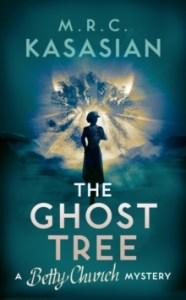
Detective Betty Church is forced to revisit ghosts from her past when a skeleton is found buried in the woods.
July, 1914: Sixteen-year-old Etterly, running from something, hides inside the trunk of a tree and disappears. The police search but find no trace. Her family and friends wrack their brains, but come up with nothing. And so slowly life returns to normal. The hole in the tree is boarded up and the town of Sackwater moves on. Only Etterly’s best friend, Betty, clings to hope, insisting she can hear her friend crying for help.
June, 1940: A skeleton is discovered buried in the woods. Though most clues have long since decayed, it is wearing an unusual necklace. As soon as Inspector Betty Church sees the evidence she recognises it. The necklace belonged to Etterly. Fearing the worst, Betty is determined to solve this strange case once and for all.
What happened to Etterly? And why has this secret remained buried for so long?
Format: Hardcover (496 pages) Publisher: Head of Zeus
Publication date: 3rd September 2020 Genre: Historical Fiction, Mystery, Crime
Find The Ghost Tree (A Betty Church Mystery Book 3) on Goodreads
Purchase links*
Amazon UK | Hive (supporting UK bookshops)
*links provided for convenience not as part of an affiliate programme
My Review
I was a fan of the author’s ‘The Gower Street Detective’ series and enjoyed the first book in his new series featuring Inspector Betty Church (Betty Church and the Suffolk Vampire) when I read it in 2018. I have the second book in the series, The Room of the Dead, in my TBR pile and although The Ghost Tree makes reference to events in the previous book, I believe it can still be enjoyed as a standalone or read out of sequence, as I did.
The Ghost Tree features the author’s trademark humour and fondness for wordplay and puns, and once again demonstrates his enthusiasm for giving characters quirky names. For example, the Harrison clan who appear in the book have first names that include Darklis, Harkles, Shadrach and Morphus. Try putting those through a spell checker!
As well as having a very personal reason for wanting to solve the mystery of Etterly Utter’s disappearance, Betty needs all her wits about her because the rest of the police officers at Sackwater Central are a pretty hopeless bunch. Betty’s fellow Inspector (known disparagingly as Old Scrapie) continues to have it in for her and WPC Dodo Chivers is still making ditsy comments and pathetic jokes. For example, when a character demands “Give me a ruler,” Betty reflects that at one time Dodo would have said George III, but that she [Dido] has grown up a lot since then. Unfortunately Betty is proved wrong. Worst of all, Dodo can’t even make a decent cup of tea! The only sensible member of the team is Sergeant Briggs who demonstrates unexpected empathy and sensitivity.
For fans of ‘The Gower Street Detective’ series, Betty’s godmother, March Middleton, makes a brief appearance in order to offer useful advice. And there’s an even briefer appearance by March’s guardian and mentor, Sidney Grice, displaying his usual extremely literal response to questions.
You can’t help liking Betty. She’s independent-minded, courageous and resourceful, especially since she’s had to overcome, not only discrimination in her chosen career, but the loss of her arm in an accident. As it happens, her prosthetic limb comes in very useful at times. Another returning character is Toby Gretson, editor of the local newspaper, with whom Betty has a bit of an on again, off again thing.
At nearly five hundred pages, there were some sections, such as the seemingly interminable description of a rounders game in the opening chapters, I felt could have been trimmed to improve the pace of the book. And readers will no doubt be divided between those who find the author’s rendering of a Suffolk accent amusing or irritating. I’m afraid, I found myself increasingly gravitating toward the latter when presented with sentences such as “You can’t admit you goo wrong over those old bone.‘
If you can get past some of the stylistic idiosyncrasies I’ve mentioned, there’s an intriguing mystery to be discovered that plunges the reader into the seamier side of life. Wartime events, such as the evacuation of Dunkirk, also provide a backdrop to the plot along with the day-to-day realities of rationing and blackouts. When the mystery is finally resolved, there emerges a heart-warming message about the strength of unconditional love and the possibility of forgiveness.
The engaging nature of Betty herself and the author’s tongue-in-cheek humour make The Ghost Tree an entertaining addition to the series. I received an advance review copy courtesy of Head of Zeus via NetGalley.
In three words: Quirky, ingenious, humorous
Try something similar: House of Silk by Anthony Horowitz
Follow this blog via Bloglovin
 About the Author
M.R.C. Kasasian was raised in Lancashire. He has had careers as varied as a factory hand, wine waiter, veterinary assistant, fairground worker and dentist. He is the author of the much loved Gower Street Detective series, five books featuring personal detective Sidney Grice and his ward March Middleton, as well as two other Betty Church mysteries, Betty Church and the Suffolk Vampire and The Room of the Dead. He lives with his wife, in Suffolk in the summer and in Malta in the winter. (Bio/photo credit: Publisher author page)
Connect with Martin
Goodreads

 About the Book
 About the Author
 What Cathy Read Next...