
It’s the first Saturday of the month which means it’s time for 6 Degrees of Separation!
Here’s how it works: a book is chosen as a starting point by Kate at Books Are My Favourite and Best and linked to six other books to form a chain. Readers and bloggers are invited to join in by creating their own ‘chain’ leading from the selected book.
Kate says: Books can be linked in obvious ways – for example, books by the same authors, from the same era or genre, or books with similar themes or settings. Or, you may choose to link them in more personal or esoteric ways: books you read on the same holiday, books given to you by a particular friend, books that remind you of a particular time in your life, or books you read for an online challenge. Join in by posting your own six degrees chain on your blog and adding the link in the comments section of each month’s post. You can also check out links to posts on Twitter using the hashtag #6Degrees.
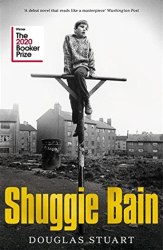 This month’s starting book is Shuggie Bain by Douglas Stuart. It’s a book I’ve not read but heard a lot about not least of which because it was the winner of the 2020 Booker Prize. Douglas Stuart was only the second Scottish writer to win the Booker Prize in its 51-year history.
The first was James Kelman in 1994 for How Late It Was, How Late. I haven’t read that one either but I know from the blurb that Sammy, its protagonist, becomes completely blind.
The leading character in Alis Hawkins’ historical crime novel None So Blind, Harry Probert-Lloyd, is also coming to terms with encroaching sight loss, putting paid to his career as a barrister.
The Great Darkness by Jim Kelly also features a leading character with damaged sight but in this case it hasn’t stopped him pursuing his career solving crimes in World War 2 Cambridge. Detective Inspector Eden Brooke’s experiences at the hands of the enemy during World War One has left him extremely sensitive to light.
Corpus by Rory Clements is also set in Cambridge, just before the outbreak of World War 2. History professor, Tom Wilde, an expert on Tudor spymasters Sir Francis Walsingham and Sir Robert Cecil, finds himself drawn into the investigation of a murder.
Sir Francis Walsingham turns up in The Incendium Plot, the first in A. D. Swanston’s historical mystery series featuring lawyer, Christopher Radcliff.
Another real life historical figure to make an appearance in The Incendium Plot is Sir Philip Sidney. His sister, Mary Sidney Herbert, is the focus of Naomi Miller’s historical novel, Imperfect Alchemist.
This month my chain has embraced blindness, spies and alchemy. Where did your chain take you this month?


 This month’s starting book is




 What Cathy Read Next...