20 Books Of Summer 2024 Reading Challenge #20booksofsummer24

20-books-of-summerI can’t believe it’s time again for this annual challenge run by my namesake Cathy at 746 Books.  Now in its tenth year, the challenge will run from Saturday 1st June to Sunday 1st September 2024.  I’ve participated for the past few years but only managed to complete it once, in 2021.

As (the other) Cathy explains, the rules are simple.  Take the Books of Summer image, pick the 10, 15 or 20 books you’d like to read and add your link to Cathy’s master post so she knows you’re taking part.

The rules are accommodating.  Want to swap a book? Go for it.  Fancy changing your list half way through? No problem.  Deciding to drop your goal from 20 to 15? She’s fine with that too.

I’m aiming for the full 20 once again and, as last year, I’m targeting books that have been in my TBR pile for way too long. Many of them appeared on last year’s list, I’m afraid to say. I have a couple of review copies received from authors I’d really like to get to but I’m also trying to be more realistic by including ARCs with publication dates from June onwards that I ‘need’ to read and review. In previous years I’ve been foolish enough to think I can read 20 books in addition to my review commitments for blog tours, etc.

You can find my list below.  Links from the titles will take you to the book description on Goodreads. I’ll update them with links to my reviews when – note, not if – I’ve read them.


  1. Magpie Murders by Anthony Horowitz (acquired October 2017)
  2. Transcription by Kate Atkinson (acquired January 2018)
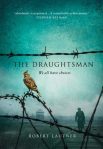
  3. The Draughtsman by Robert Lautner (acquired March 2018)
  4. The Legacy of Elizabeth Pringle by Kirsty Wark (acquired March 2018)
  5. Appetite by Philip Kazan (acquired April 2018)
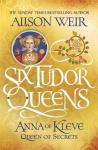
  6. Anna of Kleve by Alison Weir (acquired June 2018)
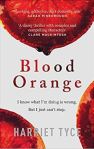
  7. Blood Orange by Harriet Tyce (acquired March 2019)
  8. Finding Dorothy by Elizabeth Letts (acquired March 2019)
  9. The Cross and the Curse by Matthew Harffy (acquired May 2019)
  10. Swan Song by Kelleigh Greenberg-Jephcott (acquired July 2019)
  11. The Second Sleep by Robert Harris (acquired July 2019)
  12. To Calais, In Ordinary Time by James Meek (acquired February 2020)
  13. Tidelands by Philippa Gregory (acquired February 2020)
  14. A Place Without Pain by Simon Bourke
  15. In the Garden of Sorrows by Karen Jewell
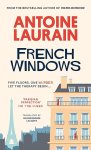
  16. French Windows by Antoine Laurain Read and reviewed
  17. Alvesdon by James Holland
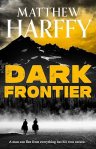
  18. Dark Frontier by Matthew Harffy (publishes 4th July)
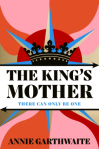
  19. The King’s Mother by Annie Garthwaite (publishes 11th July)
  20. Heart, Be At Peace by Donal Ryan (publishes 15th August)

Wish me luck! If you’re taking part too, enjoy your summer of reading.

#BookReview The Forgotten Letters of Esther Durrant by Kayte Nunn

About the Book

1951 – Esther Durrant, a young mother, is committed to an asylum by her husband. Run by a pioneering psychiatrist, the hospital is at first Esther’s prison – but can captivity lead to freedom?

2018 – When marine scientist Rachel Parker is forced to take shelter on an isolated island off the Cornish Coast during a research posting, she discovers a collection of hidden love letters. Captivated by their passion and tenderness, Rachel is determined to find the intended recipient.

Meanwhile, in London, Eve is helping her grandmother write her memoirs. When she is contacted by Rachel, it sets in motion a chain of events that threatens to reveal secrets kept buried for more than sixty years.

Format: Paperback (384 pages) Publisher: Orion
Publication date: 6th February 2020 Genre: Historical Fiction

Find The Forgotten Letters of Esther Durrant on Goodreads

Purchase links 
Bookshop.org 
Disclosure: If you buy a book via the above link, I may earn a commission from Bookshop.org, whose fees support independent bookshops

Hive | Amazon UK 
Links provided for convenience only, not as part of an affiliate programme


My Review

The Forgotten Letters of Esther Durrant is an accomplished dual time story in which I was equally engaged by both the past and present day stories, something that doesn’t always happen in such books. I also liked the setting of the Scilly Isles, one I haven’t come across before in a work of fiction.

The chapters that gradually reveal Esther’s story shine a light on the lack of understanding about post-natal depression. Indeed it is regarded as a form of madness. The way in which Esther’s despair manifests itself is treated not with kindness but with crude measures of control, and she is effectively duped into travelling to the island of Little Embers by her husband. Is he doing so to rid himself of a “problem” or because he believes, perhaps misguidedly, it is the best way to help her?

As it happens, Dr Richard Creswell, the psychiatrist in charge of the hospital (which is actually just a large but remote house) is more enlightened than many of his peers. Ahead of his time, he believes in what today we would call talking therapies and the healing power of nature. This enlightened attitude is also apparent in his treatment of the other patients under his care, all of whom are struggling with the after effects – both mental and physical – of their experiences during the war. As one of them confides to Esther, ‘People like us have to find a way to live with our sorrow, for it can never be banished forever’ and touchingly the patients do become a kind of family for one another.

I liked the way the small, remote island of Little Embers initially appears bleak, mirroring Esther’s troubled state of mind when she first arrives, but begins to show its beauty as the process of her recovery begins. ‘The tranche of shifting grey-blue sea lay like a hammered metal sheet… pockmarked with islets and swarming with seabirds hovering on currents of warmer air.’ But what never leaves her is her sadness at being parted from her five-year old son, Teddy. She finds solace in her daily meetings with Dr Creswell that begin as counselling sessions but develop into conversations about a shared love of music and literature.

In the modern day storyline, Rachel’s discovery of a cache of letters, written but never sent, reveal an abiding love of the kind she has never experienced herself. Moving from place to place, she has never formed – or wanted to form – any lasting attachments, unwilling to be tied down to any one person. Like Esther, it’s the Scilly Isles (in this case the main island of St. Mary’s) and its spirit of community – and one particular member of that community – that starts to make her think there is nothing to be feared from setting down roots.

The identity of the writer of the letters and the intended recipient are not hard to guess but I don’t think the author intended it to be so. The different threads come together in a very satisfying way revealing a moving story of two people whose moral principles kept them apart for decades. You may need some tissues handy at the end.

In three words: Emotional, moving, intimate

Try something similarThe Lost Lights of St Kilda by Elisabeth Gifford


About the Author

Kayte Nunn is the internationally bestselling author of seven novels including The Botanist’s Daughter (awarded the 2020 Winston Graham Award), The Forgotten Letters of Esther Durrant, The Silk House, The Last Reunion and The Only Child. Kayte’s novels are available worldwide in English, and have been translated into ten languages. Born in Singapore, raised in the US and the UK, she now lives in Northern NSW, Australia.

Connect with Kayte
Website | Facebook | Instagram