
Buchan of the Month: Introducing… The Gap in the Curtain by John Buchan

Buchan of the Month Banner 2020.jpgMy Buchan of the Month for July is The Gap in the Curtain, John Buchan’s only full-length novel with a supernatural element. Written between March 1930 and February 1931, it was published in the UK by Hodder & Stoughton on 7th July 1932 and in the US by The Riverside Press on 27th July 1932. The book is dedicated to his friends, Sybil and Lambert Middleton.

Featuring Sir Edward Leithen as narrator, the book is a series of interconnected stories in which a group of guests at a country house party are each given a glimpse of the future by way of an item in The Times dated a year hence. The guests, who include a politician and a financier, react in different ways to the foreknowledge they are granted.

Buchan scholar, David Daniell describes The Gap in the Curtain as a ‘satirical’ book in which Buchan takes aim at the world of international finance and politics. Ursula Buchan, the author’s granddaughter and his latest biographer, suggests the “brilliant, lengthy and disillusioned description of British politics at that time” reflects Buchan’s own experiences as a Member of Parliament.

Andrew Lownie feels that, although the idea of being able to look into the future was not new, Buchan was able to give it a new spin. He also finds it significant that the action of the book takes place at Easter citing its exploration of the redemptive power of love, the nature of Free Will and the concept of predestination.

The book received some warm reviews upon publication, notably from J.B. Priestley who praised Buchan’s “gallant versatility” and recommended it as a book that could be read “with excitement and profit”. Janet Adam Smith, Buchan’s first biographer, reports that The Gap in the Curtain had sold 78,000 copies up to 1960. Look out for my review of the book later this month.

Handheld Press will be publishing a new edition of The Gap in the Curtain in October 2021, available for pre-order now from their website. Pre-orders will be posted as soon as the book is received from the printer which is likely to be two to three months ahead of the publication date.

Sources:

Janet Adam Smith, John Buchan: A Biography (OUP, 1985 [1965])
Ursula Buchan, Beyond The Thirty-Nine Steps: A Life of John Buchan (Bloomsbury, 2019)
David Daniell, The Interpreter’s House: A Critical Assessment of John Buchan (Nelson, 1975)
Kenneth Hillier and Michael Ross, The First Editions of John Buchan: A Collector’s Illustrated Biography (Avonworld, 2008)
Andrew Lownie, John Buchan: The Presbyterian Cavalier (Constable, 1995)

The Colours by Juliet Bates #BookReview @RandomTTours @FleetReads

FINAL Colours BT PosterWelcome to today’s stop on the blog tour for The Colours by Juliet Bates. My thanks to Anne at Random Things Tours for inviting me to take part in the tour and to Fleet for my digital review copy.
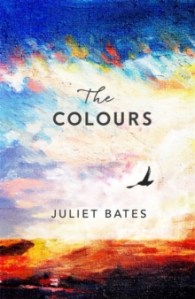

9780708899373About the Book

Ellen sees the world differently from everyone else, but living in a tiny town in the north-east of England, in a world on the cusp of war, no one has time for an orphaned girl who seems a little strange. When she is taken in to look after a rich, elderly widow all seems to be going better, despite the musty curtains and her aging employer completely out of touch with the world. But pregnancy out of wedlock spoils all this, and Ellen is unable to cope.

How will Jack, her son, survive – alone in the world as his mother was? Can they eventually find their way back to each other?

Format: Hardcover (384 pages)    Publisher: Fleet
Publication date: 9th April 2020 Genre: Historical Fiction

Find The Colours on Goodreads

Purchase links*
Amazon UK | Hive (supporting UK bookshops)
*links provided for convenience not as part of an affiliate programme


My Review

When her father dies, Ellen and her older brother, Henry, are separated and Ellen is sent to the Sacred Heart convent school. She struggles to conform to its strict regime (echoes of Frost in May by Antonia White) but is rescued by the offer of a role as companion to an elderly, blind widow, Mrs Tibbs, who lives in a large, secluded house. Gradually, Ellen encourages the old lady to focus on the present rather than the past. I was reminded of Miss Havisham in Great Expectations, especially when Ellen and Beadie, the cook/housekeeper, open the shuttered windows of the house to let the light stream in. Ellen becomes Mrs Tibbs’ eyes to the outside world, describing the scenes she can see from the windows.

Ellen has a distinctive vision of the world in which scents, sounds people and even emotions are manifested in colours (the medical term is synesthesia). During her time at the Sacred Heart, weekly confession is “a dull purple” and mass “a deep unpleasant brown”. At night, the whispers of the girls with whom she shares a dormitory are “shaded with a pale pink tint” although the girls themselves are white, “ghost white, like badly painted whitewash with just a hint of colour showing through.” And when she thinks of Beadie it is as “the colour of stewed prunes”.

For Ellen a colour is more than just blue, green and so on. For her, blue can be the blue of a kingfisher’s wing, a jay’s feather or cornflowers; green is the green of a cooking apple, an oily puddle, the leather cover of a book, lichen growing on a wall, the scales on a monkey puzzle tree.

Ellen’s son, Jack, whom the reader first meets as a young boy in 1931, shares some of his mother’s visual sensitivity but in his case this is initially expressed in an awareness of symmetry and perspective. Parted from his mother, who has withdrawn into her own inner world, Jack has only his uncle Henry to guide him through life. Jack secures an apprenticeship in a drawing office which seems to solidify his view of the world as black and white, expressed “in bold horizontals and verticals, in plans and elevations”. He delights in the lines he draws “straight and shining, no smudges or blotches, no multicoloured stains, no random pools of colour”. Later, Jack’s artistic talent expresses itself in less rigid ways.

Religion, in particular Catholicism, lurks in the background of the story and in the slightly creepy figure of the local priest, Father Scullion. Ellen’s brother is a devout Catholic but seems in a perpetual struggle between the teachings of his faith and his natural inclinations. Ellen’s experiences have left her with doubts about the existence of an afterlife. Perhaps, this is all there is, and it’s enough?

Alternating between the points of view of Ellen and Jack, and spanning a period of seventy years, the reader gradually learns of the events which have shaped both their lives, some of which are sad echoes of what has gone before. The book reveals the consequences of breaching societal norms or simply of having an outlook on the world that is different from that of other people.

A slow burn of a book, The Colours is a tender exploration of love, loss and the legacy of the past.

In three words: Gentle, insightful, imaginative

Try something similar: The Sea Gate by Jane Johnson

Follow this blog via Bloglovin


Juliet BatesAbout the Author

Juliet Bates was born in the north-east of England. After studying art and art history, she has worked as a lecturer in art schools in the UK and now in France. The Colours is Juliet’s second novel; her debut, The Missing, was published by Linen Press in 2009, and her short stories have appeared in British and Canadian journals and magazines.

Connect with Juliet
Instagram | Twitter