
About the Book
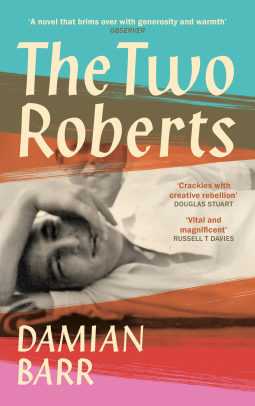
He will stay like this forever, Robert’s arm draped round him. They will be forever twenty.
Scotland, 1933. Bobby MacBryde is on his way. After years grafting at Lees Boot Factory, he’s off to the Glasgow School of Art, to his future. On his first day he will meet another Robert, a quiet man with loose dark curls – and never leave his side.
Together they will spend every penny and every minute devouring Glasgow – its botanical gardens, the Barras market, a whole hidden city – all the while loving each other behind closed doors. With the world on the brink of war, their unrivalled talent will take them to Paris, Rome, London. They will become stars as the bombs fall, hosting wild parties with the likes of Lucian Freud, Francis Bacon and Elizabeth Smart. But the brightest stars burn fastest.
Format: Hardcover (320 pages) Publisher: Canongate
Publication date: 4th September 2025 Genre: Historical Fiction
Find The Two Roberts on Goodreads
Purchase The Two Roberts from Bookshop.org [Disclosure: If you buy books linked to our site, we may earn a commission from Bookshop.org, whose fees support independent bookshops]
My Review
I confess I’d never heard of the Scottish artists Robert ‘Bobby’ MacBryde and Robert Colquhoun before reading this book and I suspect I’m not alone. How exciting though for an author to come across two people whose lives and achievements have been almost forgotten and bring them to a wider audience in an act of literary reincarnation. And to do so by imagining the thoughts and emotions of the men themselves. As Damian Barr writes in the Acknowledgements, ‘It’s the job of a novelist to know what we don’t know, to find gaps between facts to make our story.’
I felt I got to know the exuberant Bobby better than the more reserved Robert, although I can’t blame the author for falling in love with Bobby as a character, with his irrepressible energy, cheeky humour and sense of adventure.
Bobby and Robert’s passion for art burns almost as fiercely as their passion for each other, not that they don’t have their ups and downs like any relationship. Robert, as well as being physically fragile, has a tendency to withdraw into himself whereas Bobby is a man of impulse. ‘Bobby is so very alive that he is permanently alert to the pleasure in even the smallest thing. He is always being swept up in new excitement.’
I loved the way the author depicted the domestic intimacy of their relationship once they move in together, something fraught with risk given homosexuality was illegal. The author gives us a tragic example of the consequences of discovery at one point in the novel.
Funded by a scholarship of £120 awarded to Robert, in 1938 they set out for Europe to view the wondrous works of art they have only ever seen in books. In each country they visit Bobby is keen to try out his (very) rudimentary knowledge of the language. In Paris, a city filling up by the day at the prospect of war, they visit the Louvre where Bobby stares wondrously at the painting The Raft of the Medusa. In Marseilles there’s no art but there are plenty of sailors.
They return home, only to be parted when Robert is called up for military service whilst Bobby is exempted. It’s the first time they’ve been apart for years.
Two years later they’re back in London and fuelled by success. The pair enthusiastically immerse themselves in the hard-drinking lifestyle of the Soho set, rubbing shoulders with Lucian Freud, Francis Bacon, Dylan Thomas and Quentin Crisp. ‘Names, names, names. Names they read about in Horizon, New Writing, even the Evening Standard. Names that are now their friends, Well, mostly.’
And then suddenly their art is out of fashion and pretty soon they’re out of money and reliant on acquaintances to provide them with a roof over their heads and, importantly, somewhere to paint.
I found it difficult to visualise their paintings based on the verbal descriptions alone and, like many I suspect, I searched online for images. I was surprised both by the energetic use of colour but how aligned the pair clearly were in their artistic style even if it’s ‘objects for Bobby, subjects for Robert’. I also found a wonderful article on the BBC Arts website which includes an episode of the arts programme, Monitor, devoted to them (first broadcast in 1958).
You sense from the beginning that, given their lifestyle, the pair are not going to make old bones. However, I wasn’t quite prepared for how moved I was by the way in which they met their respective ends. It felt as if, rather than dying several years apart leaving one of them bereft, they should have gone together.
The Two Roberts has been described, aptly in my view, as the author’s ‘love letter’ to MacBryde and Colquhoun. I can only imagine what it must have been like for him to reach the final page of their story. Therefore I can forgive the author for including his own ‘wishful thinking’ version of their ending.
The Two Roberts is an intense, emotionally charged story of love, passion and loss.
I received a review copy courtesy of Canongate via NetGalley.
In three words: Intimate, vibrant, moving
About the Author
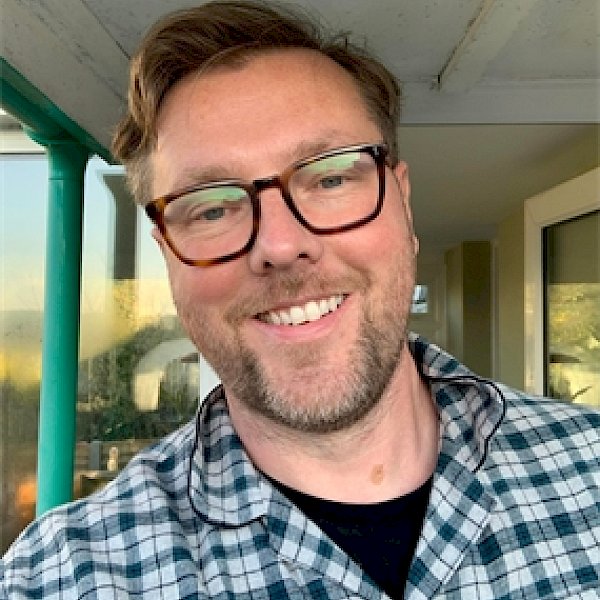
Damian Barr is an award-winning writer, broadcaster and journalist. His memoir Maggie & Me, won Stonewall Writer of the Year and Sunday Times Memoir of the Year. His debut novel, You Will Be Safe Here, was shortlisted for six major awards and named a Book of the Year in the Observer, Guardian and Mail. He has written columns for The Times and Sunday Times and hosted Front Row on BBC Radio 4 as well as his own series Guide Books.
In 2019, Damian brought books back to television with the Big Scottish Book Club, now in its sixth series and syndicated internationally. Also on BBC TV, he presented Shelf Isolation and the landmark documentary for Sir Walter Scott’s 250th. Damian holds a PhD in Creative Writing from Lancaster University and is a Fellow of the Royal Society of Literature. His world-famous Literary Salon ran from 2008 to 2023, celebrating writers from around the world and widening the cultural conversation. He is a trustee of Gladstone’s Library and a campaigner for libraries. He lives in Brighton. (Photo/bio: Publisher author page)
Connect with Damian
Website | Instagram | Facebook | Bluesky





 What Cathy Read Next...