
About the Book
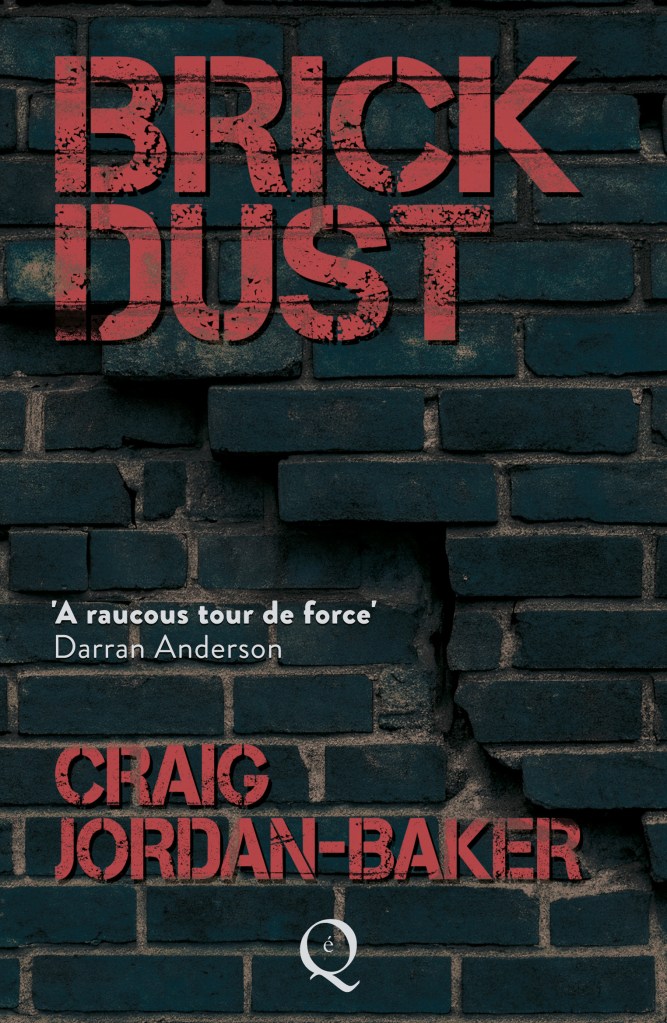
This sprawling saga of family and class is told by an enigmatic narrator, a hoarder of documents, who is trying to lay out a history of the Nacullian family.
As the jumble of their lives is pieced together we witness them migrate, marry, work up library fines, die, build bridges and Morris dance.
Brick Dust is a comedic tale about the struggle to make something solid, when all we have is dust.
Format: ebook (183 pages) Publisher: époque press
Publication date: 1st October 2025 Genre: Contemporary Fiction
Find Brick Dust on Goodreads
Pre-order/Purchase Brick Dust from époque press
My Review
The author’s debut novel, The Nacullians, was published in 2020 and revolves around three generations of one Irish family living in an unnamed city, which other reviewers have identified as Southampton. I haven’t read The Nacullians and, to be honest, found this a disadvantage. The members of the Nacullian family who feature in the book were strangers to me and at times I had to remind myself how one character was related to another. Having said that, if I had read The Nacullians at various points I guess I might have found myself thinking, I know a lot of this.
The book is essentially a series of vignettes related by an unnamed narrator, a self-styled ‘archivist’ whose flat is so full of stuff – old newspapers, notices about local events, bills, receipts – that he (or she) fears eviction by the council. Sometimes actual documents are quoted from but the rest of the time it’s unclear how the narrator has acquired the information about the characters, unless by omniscience. I also found myself wondering why the narrator was so particularly interested in the Nacullians. Is he/she a member of the family or are their stories just one small element of the detritus they have collected, randomly selected for recounting?
The unnamed narrator inserts him or herself into the story at certain points, talking to us the reader. For instance, protesting that although we might be thinking one particular segment is a digression, ‘it’s a narrator’s privilege to talk about whatever they want to, and it’s your privilege to stop reading if you want to.’ Or threatening to withhold information ‘because there are things we storytellers choose not to tell’, before going on to say, ‘Except I will tell you, because I’m nice like that’. There’s also reflection on the act of acquisition itself and the many possible ways of organising items, notably a collection of business cards from all over the world the narrator has inherited. (Book lovers can probably identify with the multiple possibilities when it comes to arranging your books.)
The blurb refers to the book as ‘a comedic tale’ and there are some very amusing parts, such as the repeated mentions of Nordic Crispy Pancakes. (You have to be of a certain age to remember that particular delicacy.) I also enjoyed the narrator’s references to the location of particular documents: ‘Airing Cupboard Floor’, ‘Foot of Bed’, ‘Under Bedroom Window’. A bit that made me chuckle was the minutes of the meeting of the Titanic Morris Men, especially the apologies for absence. And another was a letter about overdue library books.
However, there is a distinctly tragic aspect to many of the characters’ stories, for example that of young Betty Nacullian. People die, become estranged, experience prejudice, despair of their lives, reinvent themselves and struggle to navigate the challenges of everyday life. Arguably, it’s for situations like these the Nordic Crispy Pancake was invented. Failing that, search out your nearest Morris dancing club.
Brick Dust is an entertaining mix of acute observation and dark humour.
I received a digital review copy courtesy of époque press.
In three words: Spirited, funny, imaginative
About the Author

Craig Jordan-Baker is a Senior Lecturer in Creative Writing at The University of Brighton. He has published fiction in New Writing, Text, Firefly Magazine and the époque press é-zine, among others. His drama has been widely performed, including his adaptation of Beowulf and he has had dramatic work commissioned from organisations such as The New Forest National Park, The National Archives and The Booth Museum of Natural History. He is contributing co-editor of Writing Landscape and Setting in the Anthropocene-Britain and Beyond and regularly runs nature-based writing events and courses.
The Nacullians, Craig’s debut novel was published by époque press in 2020, followed by If the River is Hidden in 2022, co-authored with Cherry Smyth.
Connect with Craig
X/Twitter





 What Cathy Read Next...