Book Review – The Wager: A Tale of Shipwreck, Mutiny and Murder by David Grann

About the Book

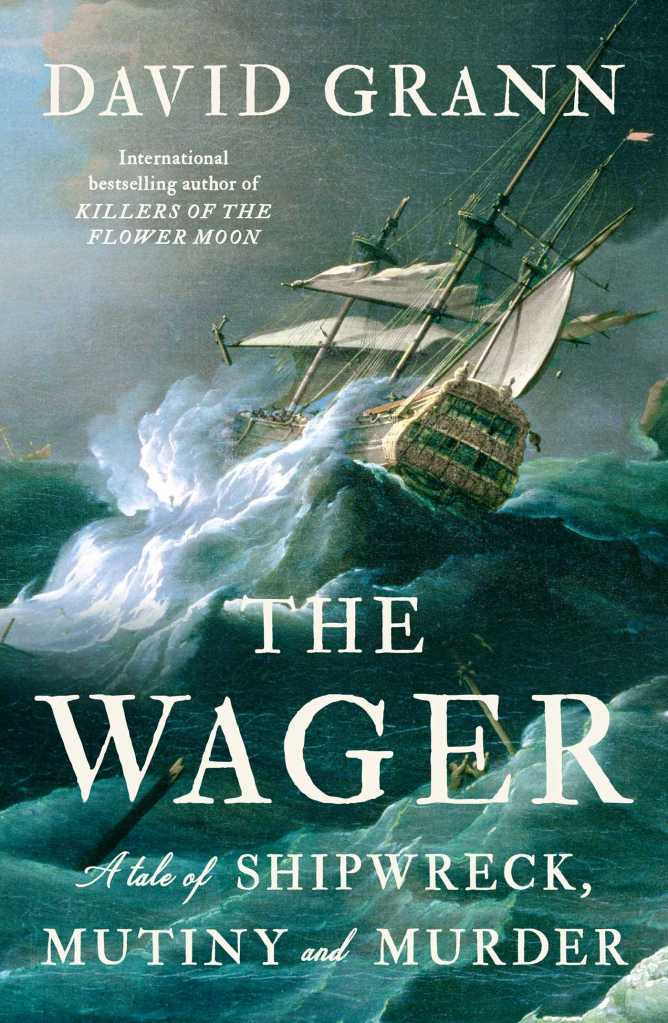
Book cover of The Wager by David Grann

1742: A ramshackle vessel of patched-together wood and cloth washes up on the coast of Brazil. Inside are thirty emaciated men, barely alive. Survivors from the Wager, a British vessel wrecked while on a secret mission to raid a Spanish treasure-filled galleon, they have an extraordinary tale to tell.

Six months later, an even more decrepit boat comes ashore on the coast of Chile, containing just three castaways with their own, very different account of what happened. The thirty sailors who landed in Brazil, they maintain, were not heroes – they were mutineers.

As accusations of treachery and murder fly, who is telling the truth? The stakes are life-and-death – for whoever is guilty could hang.

Format: Paperback (368 pages) Publisher: Simon & Schuster
Publication date: 18th April 2023 Genre: Nonfiction, History

Find The Wager on Goodreads

Purchase The Wager from Bookshop.org [Disclosure: If you buy books linked to our site, we may earn a commission from Bookshop.org, whose fees support independent bookshops.]


My Review

This was a book club pick and a rare non-fiction read for me. I really enjoyed it, as did the majority of my fellow readers. It’s a thrilling story of endurance and the will to survive with, it has to be said, some harrowing scenes in parts. It’s also a thought-provoking exploration of human behaviour under extreme circumstances.

The author’s meticulous research is obvious; you only have to look at the extensive notes and bibliography which make up nearly one hundred pages of the book to see that. Although the book is overflowing with maritime facts, including the origin of some commonly used phrases, it’s not a dry read. For example, this description of the toll on the Wager‘s structure of the rough seas they encounter: ‘Every day she was being devoured… She was pelted and gouged. She pitched, she heaved, she groaned, she splintered.’ Or this, when the ship is finally pitched onto the rocks of what will come to be known as Wager Island: ‘The bowsprit cleaved, windows burst, treenails popped, planks shattered, cabins collapsed, decks caved in.’

It has to be said that on the voyage the Wager’s crew experienced just about everything nature could throw at them as well as outbreaks of typhus and scurvy that cut a deadly swathe over the ship’s crew. I actually found it surprising that anyone survived the voyage, let along the shipwreck and the period as castaways on an island that provided very little in the way of food or shelter. Only salvaging items from the Wager ensured their survival and, at a crucial moment, assistance from an indigenous tribe much better suited to their environment than the crew.

One other thing that surprised me was the extent of the contemporaneous documents that survived, including the journals kept by sixteen year old midshipman John Byron (grandfather of the poet Lord Byron) and gunner, John Bulkeley.

The Wager is a story based on fact. If it wasn’t the author might have been tempted to create a more exciting ending but he stuck rigidly to the actual events which reveal something of a cover-up by those in power who didn’t care to advertise the breakdown of naval discipline or the parlous state of the country’s fleet.

By way of an afterword, Martin Scorcese (who brought to the screen David Grann’s previous book, Killers of the Flower Moon) and Leonard DiCaprio have acquired the screen rights to The Wager.

In three words: Well-researched, detailed, authentic
Try something similar: Erebus: The Story of a Ship by Michael Palin


About the Author

David Grann is the author of the international bestsellers Killers of the Flower Moon and The Lost City of ZKillers of the Flower Moon was a finalist for The National Book Award and won an Edgar Allan Poe Award. He is also the author of The White Darkness and the collection The Devil and Sherlock Holmes. Grann’s investigative reporting has garnered several honours, including a George Polk Award. He lives with his wife and children in New York. (Photo: Goodreads author page)

Author Interview – Sardines by Angel Dionne

My guest today on What Cathy Read Next is Angel Dionne, author of Sardines. It’s her first collection of short fiction and was published on 31st December 2023. You can find out more about Sardines below as well as read Angel’s fascinating answers to my questions, including why short stories and flash fiction are her ‘sweet spot’, and the significance of her book’s title. She also reveals the equally intriguing title of her next collection.


About the Book

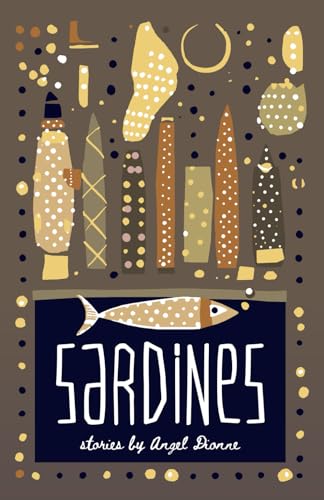
Book cover of Sardines by Angel Dionne

“Sometimes, he wished things had been different for him.” – from the title story

It is a universal enough truth that human beings are social by nature. There is space within us which normally fills up with relationships and rich experiences. When we are rendered solitary by circumstance or temperament, however, that space fills instead with the symptoms of loneliness. Angel Dionne’s dry, observant short stories pull back the lid of that claustrophobic way of life, giving us a vantage on the minor existential pains of people talking most often to themselves.

In this the author’s first collection, readers will find twelve tinned tales of a world both familiar and disquietingly austere. For all of her economy of expression, Dionne’s investigations into the scenes — hair salon, butcher’s, library, zoo, café — and occurrences of everyday life — a read-through of the paper, a conversation at the cash-out, an inquiry into the open job — are meticulously observed.

Dionne’s story-telling is a kind of narrative atomic theory, in the same philosophical school as the writing of Nancy Huston, Édouard Louis, Valeria Luiselli, Thomas Bernhard, I. L. Peretz. Life, Dionne shows, is not so abstract or so complex that it cannot be made sense of. With sympathy, wit, and a relentless eye for detail, she demonstrates how to discern the commonplace minutiae of human existence, and how to see the ways they interact and compound until the mundane begins to resonate with human meaning.

Find Sardines on Goodreads

Purchase Sardines from Amazon [link provided for convenience not as part of an affiliate programme]


Q&A with Angel Dionne, author of Sardines

Q. You’ve had work published in numerous anthologies and journals, but this is your first collection of short stories. How did you go about putting together the collection?

A. Most of the stories in Sardines were written under the guidance of my PhD supervisor, Dr. David Medalie. During my PhD program, I wrote ten of the twelve stories that comprise the collection. The remaining two – “An Honest Day’s Work” and “A Very Good Man” – were written post-graduation. Writing these final two stories proved to be quite challenging, and I believe that was due to the absence of external pressures like looming deadlines. I’m one of those authors who works well under pressure but occasionally struggles with procrastination without it.

Q. What is the significance of the collection’s title?

A. The title of the collection is also the title of the first story. However, I believe the title is significant in that it captures the essence of my characters’ lives. The characters live pinched lives both in terms of where they live and how they live. The majority of the stories are set in cramped tenement buildings where my characters live side-by-side with people who they choose to isolate themselves from. These self-imposed states of isolation result in characters who live claustrophobic lives. They are, in essence, not unlike the tiny fish you find crowded together inside tin of sardines.

Q. Are there any common themes to the stories?

A. I wanted the stories to explore the theme of unresolved guilt, which was inspired by the three spheres of guilt which Martin Buber outlines in “Guilt and Guilt Feelings” (1957). I came across this paper while writing the research portion of my PhD dissertation, and I immediately knew that I wanted to illustrate Buber’s ideas using fiction to show how unresolved guilt impacts authentic human relationships, particularly within the framework of Buber’s “I-Thou”. The stories contain open endings, leaving the readers to ponder whether the main characters have resolved their guilt.

Q. What do you enjoy about writing short stories, and what are the challenges?

A. Writing short stories gives me the opportunity to create an intimate portrait of my characters. I’m able to fully explore their self-imposed states of isolation, their existential guilt, and their relationships (or lack thereof) with others. I believe that short fiction gives me just enough space to capture the characters’ states of mind.

I think my main struggle is that I tend towards extreme brevity. It’s sometimes difficult for me to write a story longer than a thousand words. In this sense, the stories in Sardines were difficult to write as a few of them (particularly the title story) contain six to seven thousand words.

I occasionally consider writing a novel, but I think short stories and flash fiction are my sweet spot. 

Q. In a recent interview you revealed that your love of writing started in childhood. Do you remember the first story you wrote?

A. My earliest attempts at storytelling began before I could even spell. I loved telling stories, and I’d sometimes ask my mother or grandmother to transcribe them for me. I found one of these stories recently, written in my grandmother’s handwriting. It features a little girl who, frustrated with her teacher, throws chewed bubble-gum into her hair.

The first story that I can remember writing down myself was a non-fiction story. Every year from first grade to twelfth grade, we were required to write a story as part of an annual writing competition called Young Authors. In the first grade, I wrote a story about my best friend’s illness, and it won the first-grade competition. 

Q. Do you have any writing heroes and, if so, how have they influenced your own work?

My personal writing hero is author Cathie Pelletier. I had the privilege of being her student during my undergraduate studies at the University of Maine at Fort Kent where she was a visiting professor. My Victorian Literature course had been cancelled, and I needed to fill the spot, so I signed up for Cathie’s course.

Despite my lifelong love for writing, I was often told there was no money in it and that it wasn’t a viable career prospect. While my mother fully believed in my potential as a writer and hoped I would study writing, I instead allowed myself to be dissuaded by others.

Nonetheless, I enrolled in the course. It was not by any means an easy class. However, I benefitted enormously from Cathie’s feedback and the feedback given to me by my peers. Sometimes, the critiques were difficult to digest, but I came to understand that it wasn’t personal. Critique is an opportunity for growth. It’s because of Cathie that I realized my dream of becoming an author was indeed possible despite what I had been told.

Q. What are you working on next?

A. I’m currently working on another collection entitled Weakly Electric Fish Garden. It’s a highly experimental collection of surrealist prose in verse form.   


About the Author

Angel T Dionne, author of Sardines

Angel T. Dionne is an associate professor of English literature at the University of Moncton Edmundston campus. She holds a PhD in creative writing from the University of Pretoria, and she is the founder/head editor of Vroom Lit Magazine. Her writing has been featured in several journals and anthologies. She is the author of a full-length collection of short fiction, Sardines (ClarionLit, 2023), and two chapbooks, Inanimate Objects (Bottlecap Press, 2022) and Mormyridae (LJMcD Communications, 2024).

Connect with Angel
Website | X | Instagram | Facebook