
 This meme was originally created by Lia at Lost in a Story as a way to tackle the gargantuan To-Read shelves a lot of us have on Goodreads.
The rules are simple:
- Go to your Goodreads To-Read shelf.
- Order on ascending date added.
- Take the first 5 (or 10 if you’re feeling adventurous) books
- Read the synopses of the books
- Decide: keep it or should it go?
- Repeat until the entire list has been filtered
The number of books on my To-Read shelf on Goodreads has remained stubbornly around the 250 mark so I want to keep going with this weeding out exercise. Apart from anything else, it could result in additional non-virtual bookshelf space. All the books I’m looking at here are books I own, either in physical or digital form. I have a separate ‘Wishlist’ shelf with 192 books on it.
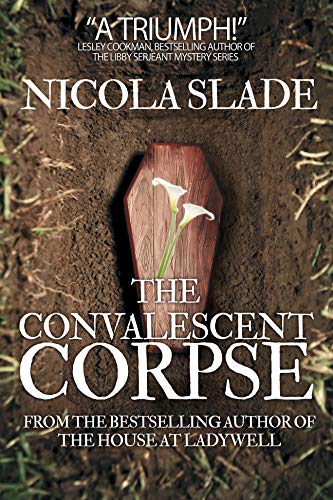 The Convalescent Corpse by Nicola Slade (added 16th November 2019)
Life in 1918 has brought loss and grief and hardship to the three Fyttleton sisters.
Helped only by their grandmother (a failed society belle and expert poacher) and hindered by a difficult suffragette mother, as well as an unruly chicken-stealing dog and a house full of paying guests, they now have to deal with the worrying news that their late – and unlamented – father may not be dead after all.
And on top of that, there’s a body in the ha-ha.
Verdict: Dump – This sounds quite fun but I no longer have real enthusiasm for reading it.
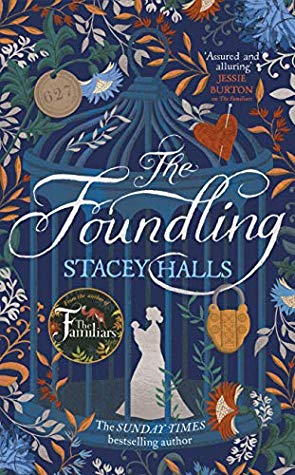 The Foundling by Stacey Halls (added 5th January 2020)
London, 1754. Six years after leaving her newborn, Clara, at London’s Foundling Hospital, young Bess Bright returns to reclaim the illegitimate daughter she has never really known. Dreading the worst–that Clara has died in care–the last thing she expects to hear is that her daughter has already been reclaimed. Her life is turned upside down as she tries to find out who has taken her little girl, and why.
Less than a mile from Bess’s lodgings in a quiet town house, a wealthy widow barely ventures outside. When her close friend, an ambitious doctor at the Foundling Hospital, persuades her to hire a nursemaid for her young daughter, she is hesitant to welcome someone new into her home and her life. But her past is threatening to catch up with her and will soon tear her carefully constructed world apart.
Verdict: Keep – I really enjoyed The Familiars and also the author’s latest book, The Household.
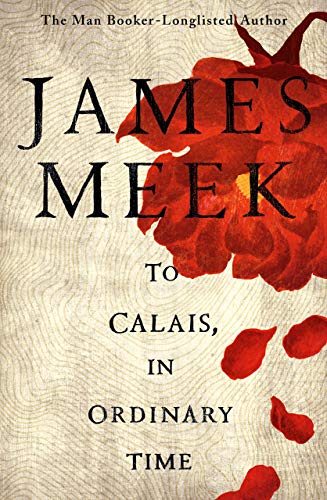 To Calais, In Ordinary Time by James Meek (added 22nd February 2020)
Three journeys. One road.
England, 1348. A gentlewoman is fleeing an odious arranged marriage, a Scottish proctor is returning home to Avignon and a handsome young ploughman in search of adventure is on his way to volunteer with a company of archers. All come together on the road to Calais.
Coming in their direction from across the Channel is the Black Death, the plague that will wipe out half of the population of Northern Europe. As the journey unfolds, overshadowed by the archers’ past misdeeds and clerical warnings of the imminent end of the world, the wayfarers must confront the nature of their loves and desires.
Verdict: Keep – This book was on a previous 20 Books of Summer list and is on this year’s list as well. Although it has quite a low average rating (3.66) on Goodreads, it was shortlisted for the Walter Scott Prize for Historical Fiction in 2020.
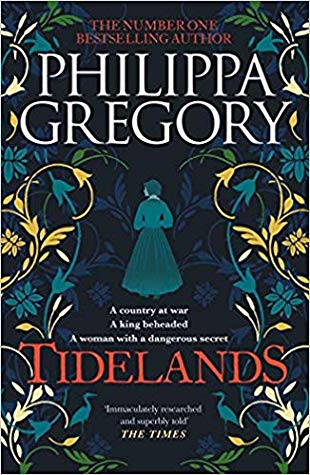 Tidelands by Philippa Gregory (added 25th February 2020)
England 1648. A dangerous time for a woman to be different
Midsummer’s Eve, 1648, and England is in the grip of civil war between renegade King and rebellious Parliament. The struggle reaches every corner of the kingdom, even to the remote Tidelands – the marshy landscape of the south coast.
Alinor, a descendant of wise women, crushed by poverty and superstition, waits in the graveyard under the full moon for a ghost who will declare her free from her abusive husband. Instead she meets James, a young man on the run, and shows him the secret ways across the treacherous marsh, not knowing that she is leading disaster into the heart of her life.
Suspected of possessing dark secrets in superstitious times, Alinor’s ambition and determination mark her out from her neighbours. This is the time of witch-mania, and Alinor, a woman without a husband, skilled with herbs, suddenly enriched, arouses envy in her rivals and fear among the villagers, who are ready to take lethal action into their own hands.
Verdict: Keep – I’ve read and enjoyed lots of Philippa Gregory’s books. Although the plot now sounds quite similar to other books I’ve read in the meantime, I’ll keep it not least because it’s on my 20 Books of Summer 2024 list.
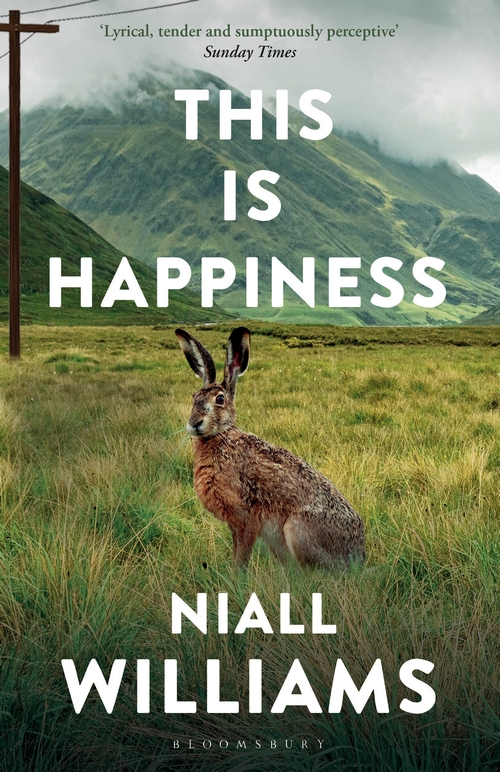 This Is Happiness by Niall Williams (added 9th March 2020)
Change is coming to Faha, a small Irish parish that hasn’t changed in a thousand years.
For one thing, the rain is stopping. Nobody remembers when it started; rain on the western seaboard is a condition of living. But now – just as Father Coffey proclaims the coming of the electricity – the rain clouds are lifting. Seventeen-year-old Noel Crowe is idling in the unexpected sunshine when Christy makes his first entrance into Faha, bringing secrets he needs to atone for. Though he can’t explain it, Noel knows right then: something has changed.
As the people of Faha anticipate the endlessly procrastinated advent of the electricity, and Noel navigates his own coming-of-age and his fallings in and out of love, Christy’s past gradually comes to light, casting a new glow on a small world.
Verdict: Keep – This was longlisted for the Walter Scott Prize in 2020, a fact that often influences my decisions, and it’s on my 20 Books of Summer 2024 list.
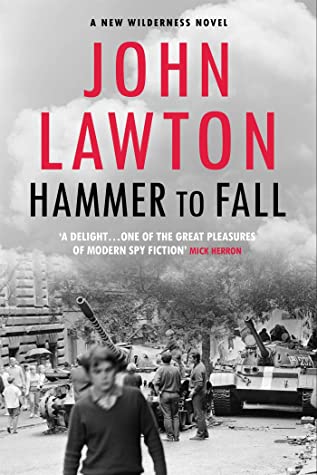 Hammer To Fall by John Lawton (added 24th March 2020)
It’s London, the swinging sixties, and by rights MI6 spy Joe Wilderness should be having as good a time as James Bond. But alas, in the wake of an embarrassing disaster for MI6, Wilderness has been posted to remote northern Finland in a cultural exchange program to promote Britain abroad.
Bored by his work, with nothing to spy on, Wilderness finds another way to make money: smuggling vodka across the border into the USSR. He strikes a deal with old KGB pal Kostya, who explains to him there is a vodka shortage in the Soviet Union – but there is something fishy about Kostya’s sudden appearance in Finland and intelligence from London points to a connection to cobalt mining in the region, a critical component in the casing of the atomic bomb.
Wilderness’s posting is getting more interesting by the minute, but more dangerous too.
Verdict: Keep – This is the third book in the author’s ‘Joe Wilderness’ series. I enjoyed the first two booksand I have a copy of the fourth, Moscow Exile, which I don’t want to read until I’ve read this one!
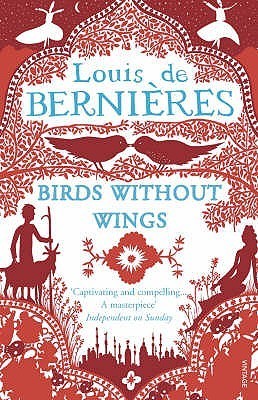 Birds Without Wings by Louis de Bernieres (added 27th March 2020)
Set against the backdrop of the collapsing Ottoman Empire, Birds Without Wings traces the fortunes of one small community in south-west Anatolia – a town in which Christian and Muslim lives and traditions have co-existed peacefully for centuries.
When war is declared and the outside world intrudes, the twin scourges of religion and nationalism lead to forced marches and massacres, and the peaceful fabric of life is destroyed. Birds Without Wings is a novel about the personal and political costs of war, and about love: between men and women; between friends; between those who are driven to be enemies; and between Philothei, a Christian girl of legendary beauty, and Ibrahim the Goatherd, who has courted her since infancy.
Verdict: Keep – This has been on my wishlist for years but I only recently acquired a copy after I heard the author interviewed at Falmouth Books Festival last year.
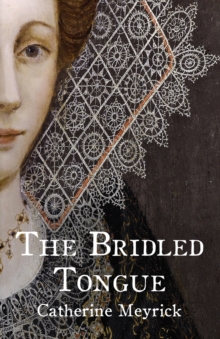 The Bridled Tongue by Catherine Meyrick (added 26th May 2020)
England 1586. Alyce Bradley has few choices when her father decides it is time she marry as many refuse to see her as other than the girl she once was—unruly, outspoken and close to her grandmother, a woman suspected of witchcraft.
Thomas Granville, an ambitious privateer, inspires fierce loyalty in those close to him and hatred in those he has crossed. Beyond a large dowry, he is seeking a virtuous and dutiful wife. Neither he nor Alyce expect more from marriage than mutual courtesy and respect.
As the King of Spain launches his great armada and England braces for invasion, Alyce must confront closer dangers from both her own and Thomas’s past, threats that could not only destroy her hopes of love and happiness but her life. And Thomas is powerless to help.
Verdict: Dump – These are the ones I find difficult. The book was sent to me by the author so I really do owe her a review but… we’re three years on so I suspect she’s given up waiting and it does sound similar to other books I’ve read in the meantime.
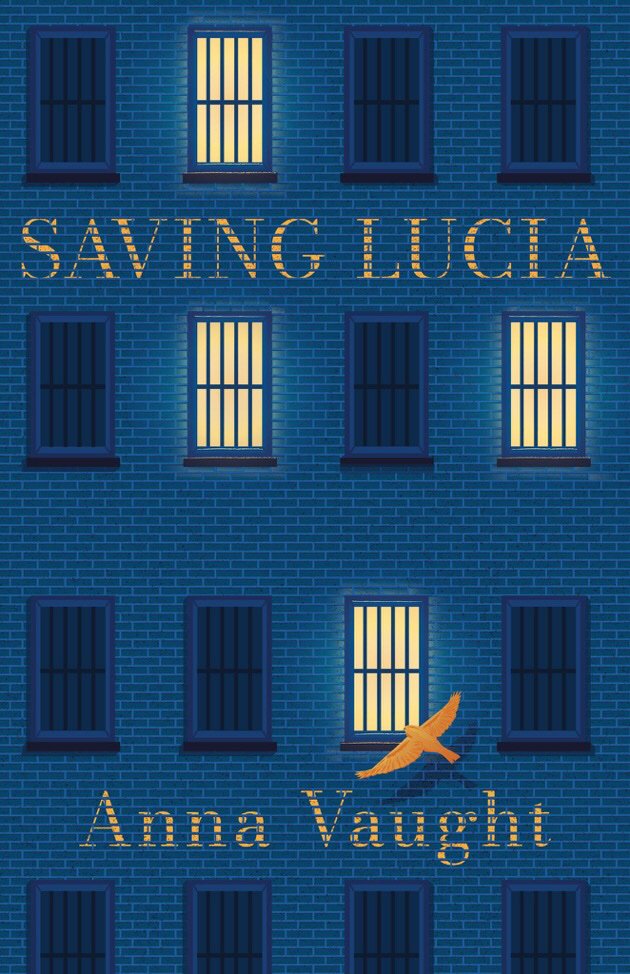 Saving Lucia by Anna Vaught (added 4th June 2020)
How would it be if four lunatics went on a tremendous adventure, reshaping their pasts and futures as they went, including killing Mussolini?
What if one of those people were a fascinating, forgotten aristocratic assassin and the others a fellow life co-patient, James Joyce’s daughter Lucia, another the first psychoanalysis patient, known to history simply as ‘Anna O,’ and finally 19th Century Paris’s Queen of the Hysterics, Blanche Wittmann?
That would be extraordinary, wouldn’t it? How would it all be possible? Because, as the assassin Lady Violet Gibson would tell you, those who are confined have the very best imaginations.
Verdict: Keep – If you’ll pardon the pun, I was in two minds about this one but I’ve been swayed by positive reviews of it by book bloggers whose opinions I respect.
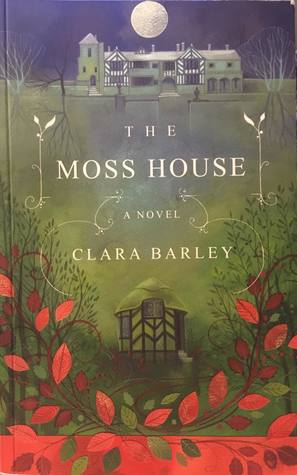 The Moss House by Clara Barley (added 4th June 2020)
Two hundred years ago, neighbouring Yorkshire landowners Miss Lister and Miss Walker find their lives become entwined in a passionate, forbidden relationship and retreat to the Moss House, their private sanctuary away from an unaccepting world. Their tranquillity does not last long as they are drawn into the turmoil of a changing society and a divided family, testing their love for each other, eventually driving them from their home.
The world was not yet ready for the likes of Miss Lister. Landowner, scholar, traveller, mountaineer and non-conformist but in The Moss House we discover her lifelong battle to be her true self as she finds Ann Walker and together they try to live life on their own terms.
Verdict: Dump – Miss Lister is Ann Lister of the TV series, Gentleman Jack, which I have not watched. I was put off by some of the reviews so gave it the first chapter test. I don’t think it’s for me.
The Result – 7 kept, 3 dumped. Would you have made different choices?


 What Cathy Read Next...