Book Review – The Language of Remembering by Patrick Holloway @epoque_press

About the Book

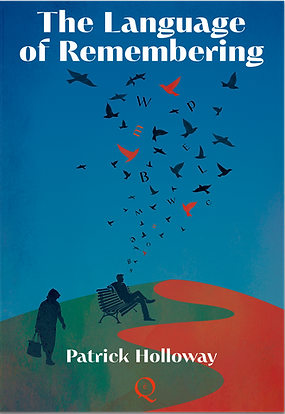
Front cover of The Language of Remembering by Patrick Holloway

Returning from Brazil with his wife and daughter, Oisín is looking to rebuild a life in Ireland and reconnect with his mother, Brigid, who has early onset Alzheimer’s. As her condition deteriorates she starts to speak Irish, the language of her youth, and reflect on her childhood dreams and aspirations.

Mother and son embark on a journey of personal discovery, and as past traumas are exposed they begin to understand what has shaped them and who they really are.

Format: Paperback (242 pages) Publisher: époque press
Publication date: 25th February 2025 Genre: Contemporary Fiction

Find The Language of Remembering on Goodreads

Purchase The Language of Remembering direct from époque press


My Review

The book moves between two timelines. In the present day, Oisín has returned to Ireland from Brazil along with his wife Nina and young daughter Ailish. The author deftly explores the conflict between Oisín’s sense of responsibility for the care of his mother and the disruption caused to the family by their move from Brazil, Nina’s native country. His struggles to find a job that will enable them to obtain a mortgage and move into a permanent home only add to his sense of guilt and frustration. His experiences are narrated in the second person which I found had the effect of giving immediacy to Oisín’s struggles, forcing me to place myself in his situation.

Brigid’s story starts in the 1970s, in rural Ireland. Whilst still a teenager, she discovers she is pregnant. Learning of her condition, her parents react with a mixture of anger and disappointment, well aware of the social stigma this will bring to Brigid and their family. Brigid and James, the father of her child, are pressurised into a hasty wedding by their respective families.

Brigid and James begin to realise their lives will have to take a very different trajectory, the responsibilities of parenthood putting paid to their personal ambitions. They also struggle to extricate themselves from the influence of James’s controlling family. But the birth of her son Oisín, albeit after a very difficult birth, brings Brigid unexpected joy.

With Brigid’s condition worsening, Oisín’s visits to his mother in her care home are often challenging. Sometimes she can recall events from her early life in detail, sharing things Oisín never knew, or remember vividly moments of their life when he was growing up. At other times, she seems in a world of her own, confused by her surroundings. There are heartbreaking moments that will be familiar to anyone who has cared for someone with Alzheimer’s such as when Brigid mistakes Oisín for her dead husband, James, or becomes distressed because of a misunderstanding.

As the title suggests, language and communication are key themes of the book. Along with Brigid’s declining memory is her increasing use of Gaelic, a language she spoke with her father but one Oisín does not understand, although he makes touching efforts to do so as the book progresses. The author includes the reader in this challenge by, from time to time, incorporating phrases in Gaelic without translation, placing us in the same position as Oisín in searching for clues as to their meaning.

Alongside the challenges of communication, I liked how the book explored the vibrancy of language. For example, Brigid’s mother, Kathleen, possesses an extensive vocabulary and interest in the etymology of words. Her speech is peppered with words such as ‘subjugated’, ‘euphemism’, ‘quandary’. And Oisín recalls time spent with his father learning the collective names for birds. However Oisín also knows the ability of words to wound.

The Language of Remembering is a moving and perceptive story about the role language plays in our interactions with others, and how it can be both a barrier and a pathway to understanding.

I received an advance digital copy courtesy of époque press.

In three words: Tender, insightful, emotional
Try something similar: Tiny Pieces of Enid by Tim Ewins


About the Author
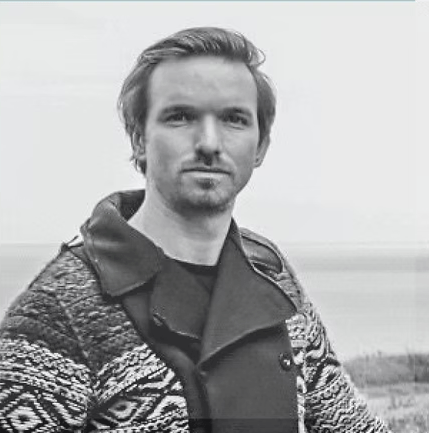
Author Patrick Holloway

Patrick Holloway is an Irish writer of fiction and poetry and is an editor of the literary journal, The Four Faced Liar. He completed his Masters in Creative Writing from the University of Glasgow, before moving to Porto Alegre, Brazil, where he completed his PhD in Creative Writing.

He is the winner of the Bath Short Story Award, The Molly Keane Creative Writing Prize, The Flash 500 Prize, the Allingham Fiction contest and he was the recipient of the Paul McVeigh Residency in 2023. His work appears in The Stinging Fly, The London Magazine, Poetry Ireland, The Moth, Southword, The Ilanot Review, Carve, The Irish Times and The Irish Independent. (Photo/bio: Publisher website)

Connect with Patrick
X | Instagram | Bluesky

A Q&A with George Alexander, author of Twilight of Evil

My guest today on What Cathy Read Next is George Alexander, author of historical thriller Twilight of Evil. Published on 10th January 2025, Twilight of Evil is available to purchase as an ebook or paperback from Amazon and other online retailers. Read on as I chat with George about the inspiration for the book and the challenges of writing alternate history.


About the Book

Front cover of Twilight of Evil by George Alexander

What if Adolf Hitler cheated death in the ruins of Berlin? Did the Fuhrer truly perish in the crumbling capital, or did he evade capture and flee to the distant shores of South America?

Twilight of Evil delves into the controversial and intriguing tale of Adolf Hitler’s escape from Berlin during the closing days of the Third Reich and his post-war life. Join David Hazel, a young Jewish researcher, as he probes into the shocking truth behind Hitler’s disappearance through the work of the renowned American scholar, Dr. Peter Alex.

The novel transports readers to the chaotic final days of the Nazi regime, depicting the crumbling empire and the desperate measures taken by its leaders. The book probes into the dramatic exploration of Hitler’s ultimate fate, revealing the truth behind his disappearance and the people who crossed his path. From secret alliances to deadly betrayals, this novel takes you on a journey through the escape and post-war life of some of history’s most notorious figures.

Find Twilight of Evil on Goodreads


Q & A with George Alexander, author of Twilight of Evil

You’ve published a number of nonfiction books. What made you decide to turn to fiction?

I have authored/co-authored twelve nonfiction books. Most of these were written while I was working with a Christian NGO (Non-governmental organisation) to promote and propagate its objectives, or in the field of social science. When I left the NGO a couple of years ago, I started exploring other areas of interest. I wanted to try my hand at fiction, as I had never done so before. It was a kind of challenge I undertook – something new, something fresh.

How and when did the idea for the novel first come to you?

My first exposure to the topic of Hitler’s fate was in the book Grey Wolf: The Escape of Adolf Hitler by Gerrard Williams and Simon Dunstan. I enjoyed the book immensely due to its presentation style and wealth of information. Subsequently, I watched all episodes of Hunting Hitler on the History Channel, repeatedly. I also watched many YouTube videos on the topic as I was fascinated by the mystery, conspiracy and controversy surrounding Hitler’s fate. During the COVID period, I read Eyewitness to Hitler’s Escape by Peter David Orr, followed by a couple of his other books. After joining his Facebook community and interacting extensively with Peter, the idea of writing a novel sparked in my mind.

You describe Twilight of Evil as a historical thriller. What do you believe are the essential elements of a thriller and how did you incorporate these into the book?

Twilight of Evil is not a purely edge-of-your-seat thriller, but rather a mix of genres. For me, a thriller novel should have suspense, unexpected twists and turns, and good pacing. However, these elements shouldn’t be included gratuitously. When I wrote Twilight of Evil I was careful to ensure any thrilling or suspenseful moments, like chases or gunfights, logically aligned with the premise. So, I had to write and rewrite such aspects until I found them to be logical and matching the flow of the novel. I’ve tried my best, and I leave it to the readers and reviewers to determine the rest. 

Your book includes real-life figures. Did this pose particular challenges?

Since Twilight of Evil reimagines the final days of Adolf Hitler, it incorporates historical characters alongside fictional ones. The challenge lay in seamlessly integrating the historical and fictional elements, particularly in constructing the post-war lives of Hitler, Eva Braun, and others. Given their notoriety, portraying these figures was not easy.  Twilight of Evil isn’t about rewriting history, but about exploring the enduring fascination with this dark period and the unsettling possibility that even the most monstrous figures can evade accountability.

What are you working on next?

I am in the final stages of completing another historical fiction novel, this time with Jesus of Nazareth as the central character. It will be published in Malayalam, a South Indian language. Also a nonfiction work exploring the identity crisis of the indigenous Malankara Nasrani community of India. I plan to write more fiction in the future.


About the Author

Author George Alexander

A seasoned writer, orator, and trainer, George boasts a career spanning over 16 years in the dynamic realm of human resources and management. His extensive experience has been honed across various organizations, including corporate, government agencies, academic institutions, and non-profit entities.

Alexander holds two master’s degrees: one in social work specializing in urban and rural community development, and another in philosophy focusing on social transformation and empowerment. This unique blend of academic pursuits has equipped him with a deep understanding of human behavior, societal dynamics, and the power of transformative change. Beyond his professional endeavors, Alexander is a dedicated advocate for social justice and community development. 

As a board member of the Occidental Studies Institute (OSI), he actively fosters intellectual discourse and promotes progressive social change. 

His prolific literary career has resulted in the authorship and co-authoring over 12 books and numerous articles. His writings explore various topics, including human resources, leadership, social justice, and personal development.

Connect with George
Website | Instagram | Goodreads