
About the Book

‘Things change; we have to recognise that; the world will not stay still. What we must hope is that the new is better and stronger than the old.‘
ANNO DOMINI 1546. In a manor house in England a young woman feels the walls are closing around her, while her dying husband is obsessed by his vision of a chapel where prayers will be said for his immortal soul.
As the days go by and the chapel takes shape, the outside world starts to intrude. But as the old ways are replaced by the new, the people of the village sense a dangerous freedom …
Format: audiobook (7 hours 20 mins) Publisher: Swift Press
Publication date: 1st February 2025 Genre: Historical Fiction
Find The Book of Days on Goodreads
Purchase The Book of Days from Bookshop.org [Disclosure: If you buy books linked to our site, we may earn a commission from Bookshop.org, whose fees support independent bookshops]
My Review
The Book of Days is one of the books on the shortlist for the Walter Scott Prize for Historical Fiction 2025. The winner will be announced on Thursday 12th June at the Borders Book Festival (and I will be there!).
There’s a hypnotic quality in the way Alice’s life plays out day by day, governed by the rhythm of the changing seasons and the rituals of religious devotion. ‘All our days are measured in our prayers, our years in the feasts and the seasons.’
There’s a claustrophobic feeling to much of the book with the household dominated by the gradual decline of Alice’s husband, the Lord of the Manor, who is suffering from an unknown condition. The prospect of imminent death has caused him to focus on his immortal soul, employing the most highly skilled craftsmen to construct a chapel and create an elaborately carved tomb where he can be laid to rest alongside his first wife (and eventually Alice).
Alice is still grieving the loss of a daughter and is conscious that her position is precarious given her husband has a daughter by his first wife who will inherit the estate. Alice takes things into her own hands in a way that seems impossible to outside observers, opening her up to accusations of adultery and implicating a new arrival in the community. It will provide ammunition for those who support the Reformation.
This is not a book that moves at pace. It’s only in the final chapters when events in the outside world – the death of Henry VII and the accession to the throne by Edward VI – impose themselves on the lives and religious practices of the village that the pace picks up. Suddenly all the familiar things that have been central to their religious beliefs – the Latin Mass, religious images, sacred relics – are prohibited.
There is a brilliant passage in which Alice rails against the impact the changes will have on people who cannot read and who learn the Scriptures from pictures on church walls or in stained glass, and who find hope for worldly troubles in making offerings to images of saints. ‘You who take so much for granted, with your sound walls, rich food and fine jewels – and books, especially books – do you truly begrudge the people of this or any other lowly parish their little scraps of coloured glass, their painted saints, their confidence in prayer?‘ ‘
The conflicting doctrines divide families and communities, whipped up by the incendiary rhetoric of visiting preachers. For Alice and others, things will never be the same again.
The Book of Days has an authentic sense of time and place, and there are some wonderful descriptions of nature and the changing seasons. However, it was just too unevenly paced for me, with a lot of dramatic events happening in the very final part of the book. Although beautifully written and an admirable work of historical fiction, it’s not my favourite of the books on the shortlist which, on past experience, means it will probably win.
I listened to the audiobook read by Lucy Scott who captured perfectly the contemplative tone of the book.
In three words: Intimate, introspective, meditative
Try something similar: For Thy Great Pain Have Mercy On My Little Pain by Victoria Mackenzie
About the Author
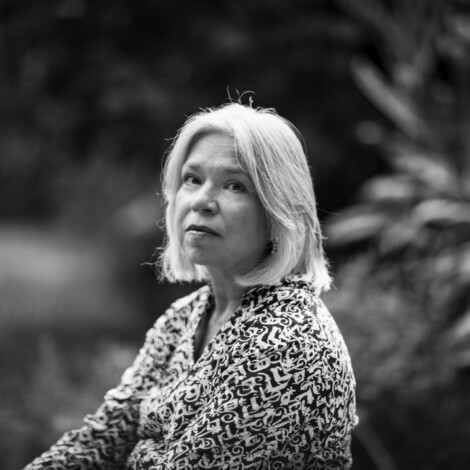
Francesca Kay grew up in Southeast Asia and India, and has subsequently lived in Jamaica, the United States, Germany and now lives in Oxford. Her first novel, An Equal Stillness, won the 2009 Orange Award for New Writers, and her second novel, The Translation of the Bones, was longlisted for the 2012 Women’s Prize for Fiction. Her third novel, The Long Room, was published in 2016; The Book of Days is her fourth. (Photo/bio: Publisher website)



 What Cathy Read Next...