

Hosted by Taking on a World of Words, this meme is all about the three Ws:
- What are you currently reading?
- What did you recently finish reading?
- What do you think you’ll read next?
Why not join in too? Leave a comment with your link at Taking on a World of Words and then go blog hopping!
What I’m Currently Reading
I’m reading the final two books on the shortlist for the Walter Scott Prize for Historical Fiction and a book from my NetGalley shelf.
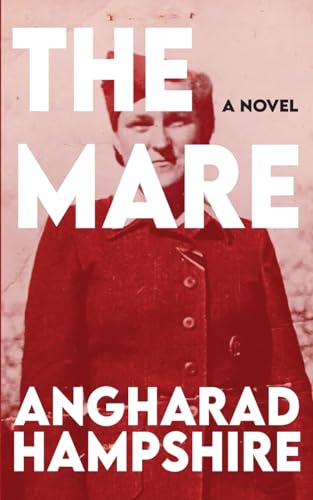
The Mare by Angharad Hampshire (Northodox Press)
Hermine Braunsteiner was the first person to be extradited from the Unites States for Nazi war crimes. She was one of a few thousand women to work as a female concentration camp guard. Prisoners nicknamed her ‘the Mare’ because she kicked people to death. When the camps were liberated, Hermine escaped and fled back to Vienna.
Many years later, she met Russell Ryan, an American man holidaying in Austria. They fell in love, married, and moved to New York, where she lived a quiet life as an adoring suburban housewife, beloved friend and neighbour. No one, not even her husband, knew the truth of her past, until one day a New York Times journalist knocked on their door, blowing their lives apart.
The Mare tells Hermine and Russell’s story for the first time in fiction. It explores how an ordinary woman could descend so quickly into evil, examining the role played by government propaganda, ideology, fear and cognitive dissonance, and asks why her husband chose to stay with her despite discovering what she had done.
The Book of Days by Francesca Kay (Swift Press)
Anno Domini 1546. In a manor house in England a young woman feels the walls are closing round her, while her dying husband is obsessed by his vision of a chapel where prayers will be said for his immortal soul.
As the days go by and the chapel takes shape, the outside world starts to intrude. And as the old ways are replaced by the new, the people of the village sense a dangerous freedom.

A Beautiful Way to Die by Eleni Kyriacou (Head of Zeus via NetGalley)
PLAY THEIR GAME
Hollywood, 1953. Young actress Ginny Watkins is turning heads. Even the legendary – and married – actor Max Whitman can’t resist the allure of the hottest new starlet. He promises Ginny the world, in return for the right favour.
DO WHAT THEY SAY
London, 1954. Stella Hope, once the most famous actress in Hollywood, has been ousted to Ealing Studios after her divorce from the powerful Max. Just as she accepts her fate, she receives a letter, blackmailing her for a mistake she made many years ago.
OR THEY’LL BURY YOU
Two women on either side of stardom find themselves in the orbit of the same beguiling man. And one night, in the shadows of a glamorous Oscars afterparty, their lives are changed forever…
What I’ve Just Read

Glorious Exploits by Ferdia Lennon (Fig Tree)
Ancient Sicily. Enter GELON: visionary, dreamer, theatre lover. Enter LAMPO: feckless, jobless, in need of a distraction.
Imprisoned in the quarries of Syracuse, thousands of defeated Athenians hang on by the thinnest of threads. They’re fading in the baking heat, but not everything is lost: they can still recite lines from Greek tragedy when tempted by Lampo and Gelon with goatskins of wine and scraps of food.
And so an idea is born. Because, after all, you can hate the invaders but still love their poetry.
It’s audacious. It might even be dangerous. But like all the best things in life – love, friendship, art itself – it will reveal the very worst, and the very best, of what humans are capable of. What could possibly go wrong? (Review to follow)

The Night Swimmer by Simon J Houlton
A haunting literary novel of isolation, addiction, and the search for meaning — set against the grey tides of Hastings Old Town.
William “Bill” Eckersley is an unemployed writer, a night swimmer, and a man drowning in alcohol and self-doubt. Trapped in a crumbling seaside town — and within his own mind — he spirals as he searches for creative inspiration and a way out of his own inertia.
His solitary existence begins to unravel, pulling him into an increasingly disorienting world shaped as much by memory and imagination as reality. (Review to follow)
What I’ll Be Reading Next
The Surgeon’s House by Jody Cooksley (Allison & Busby via NetGalley)
London, 1883. The brutal murder of Rose Parmiter seems, at first glance, to be a random and senseless act. Rose was the beloved cook at Evergreen House, a place of refuge for women and children, a place from which they can start their lives afresh.
Proprietor Rebecca Harris is profoundly shocked by the death of her dear friend and alarmed at the mysterious events which begin to unfold shortly afterwards. Could the past be casting a shadow on the present? The malign legacy of the Everley family who called Evergreen home, cannot be ignored.
After two further deaths it becomes clear there is an evil presence infecting their sanctuary, and Rebecca must draw out the poison of the past so the Evergreen residents can finally make peace with the darkness in their lives.







 What Cathy Read Next...