
 About the Book
It’s 1956 and Bernie Gunther is on the run. Ordered by Erich Mielke, deputy head of the East German Stasi, to murder Bernie’s former lover by thallium poisoning, he finds his conscience is stronger than his desire not to be murdered in turn. Now he must stay one step ahead of Mielke’s retribution.
The man Mielke has sent to hunt him is an ex-Kripo colleague, and as Bernie pushes towards Germany he recalls their last case together. In 1939, Bernie was summoned by Reinhard Heydrich to the Berghof: Hitler’s mountain home in Obersalzberg. A low-level German bureaucrat had been murdered, and the Reichstag deputy Martin Bormann, in charge of overseeing renovations to the Berghof, wants the case solved quickly. If the Fuhrer were ever to find out that his own house had been the scene of a recent murder – the consequences wouldn’t bear thinking about.
And so begins perhaps the strangest of Bernie Gunther’s adventures, for although several countries and seventeen years separate the murder at the Berghof from his current predicament, Bernie will find there is some unfinished business awaiting him in Germany.
Format: ebook, hardcover, paperback (550 pp.) Publisher: Quercus Fiction
Published: 4th April 2017 (hardcover) Genre: Historical Fiction, Crime, Mystery
Purchase Links*
Amazon.co.uk ǀ Amazon.com ǀ Hive.co.uk (supporting UK bookshops)
*links provided for convenience, not as part of any affiliate programme
Find Prussian Blue on Goodreads
My Review
I seem to make a habit of coming to book series late on in the sequence but I don’t believe I’ve ever come in as late to a series as book twelve! That’s the situation I was faced with when reading Prussian Blue, the twelfth outing for Philip Kerr’s leading character, Bernie Gunther. Although I was familiar with the author’s reputation and the existence of the series, I have The Walter Scott Prize for Historical Fiction judges to thank for making me read Prussian Blue as it was one of the thirteen books on the longlist for the 2018 prize (although it didn’t make the shortlist). Safe to say, I now have books one to eleven added to my wish list- oh, and book number thirteen, Greeks Bearing Gifts, which was published recently.
The book has a dual timeline structure, opening in 1956 with Bernie being made an ‘offer he can’t refuse’ by the Deputy Head of the East German Stasi. As it happens, being at a kind of crossroads in his life, it’s an offer Bernie does decide to refuse meaning he’s soon on the run from the agents sent to track him down. ‘When you go on the run you have to believe it’s worth it, but I really wasn’t sure about that. Not anymore. I was already tired. I had no real energy left for life, let alone escape.’ Bernie being Bernie he does find the energy to escape, a decision which will need all his experience and guile because one of his pursuers is someone he worked with when investigating a very singular case back in 1939 – a murder on no less a place than the terrace of Hitler’s mountain home in Obersalzberg. (Unfortunately, Hitler wasn’t there at the time but there are shades of Rogue Male by Geoffrey Household here.)
Although, as I’ve said, this was my first foray into the world of Bernie Gunther, I didn’t feel at all at a disadvantage. With some series I find that if you come late to them you already get to know pretty much everything that’s happened in previous books making reading the earlier books redundant. That’s not the case here. Yes, there are little references to earlier cases and events in Bernie’s life but these only served to whet my appetite to find out more.
I really felt I got to know Bernie’s character. He’s stubborn (pigheaded even), persistent, tough, resourceful and perceptive of human nature. He has a bit of a problem with authority. ‘Making a nuisance of yourself is what being a policeman is all about and suspecting people who were completely above suspicion was about the only thing that made doing the job such fun in Nazi Germany.’ Back in 1939 he was also no fan of the Nazis. ‘The one thing about the Nazis you could always rely on what that they were not to be relied upon. None of them. Not ever.’
What I really loved about Bernie and the writing in general was the dry, pithy humour. Here are some of my favourite Bernie bon mots from the book:
On the Stasi: ‘The Mounties might have had a reputation for always getting their man but the Stasi have always got the men and the women and the children too, and when they got them they made them all suffer.’
On Martin Boorman’s lair: ‘A log the size of the Sudetenland was smoking in the grate and on the walls were several electric candelabra that looked as if they’d been placed there by a mad scientist’s faithful retainer.’
A little in-joke by the author: ‘This case had it all, I told myself: absurdity, alienation, existential anxiety, and no shortage of likely and unlikely suspects. If I’d been a very clever German of the kind who knew the difference between the sons of Zeus, Reason and Chaos, I might have been dumb enough to think I could write a book about it.’
I’m not going to go into detail about the plot but I’ll just say the book is brilliantly structured. Both storylines are compelling and the way in which the book switches between the two never feels forced or out of place. I really did feel I was in a safe pair of hands with this author; that I was in the presence of a master storyteller. At one point, one of the characters says: “The end has to satisfy everyone, does it not?” Well, this reader was definitely satisfied at the end.
In reflective mood, Bernie muses, ‘I’d always thought there was plenty of time to do things and yet, now I really thought about it, there had been not a moment to spare.’ Sadly, there was very little more time for the author. Philip Kerr’s death in March robbed the book world of further Bernie Gunther adventures. However, what a wonderful legacy the author leaves for future readers to enjoy. I intend to savour every one of the other books in the series.
In three words: Compelling, suspenseful, mystery
Try something similar…The Ashes of Berlin (Gregor Reinhardt #3) by Luke McCallin (click here to read my review)
 About the Author
Philip Kerr was born in Scotland in 1986. He is best known for his Bernie Gunther series of 13 historical thrillers (plus one in the pipeline) and a children’s series, Children of the Lamp, under the name P.B. Kerr. Philip died on 23rd March 2018.
Connect with Philip
Website ǀ Instagram ǀ Twitter ǀ Goodreads


 Manhattan Beach by Jennifer Egan
 Sugar Money by Jane Harris
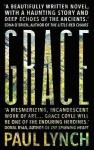 Grace by Paul Lynch
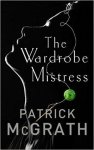 The Wardrobe Mistress by Patrick McGrath
 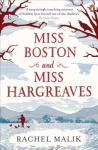 Miss Boston and Miss Hargreaves by Rachel Malik
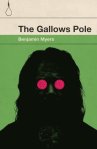 The Gallows Pole by Benjamin Myers
 What Cathy Read Next...