

Throwback Thursday: The Dark Tide by Vera Brittain

ThrowbackThursday

Throwback Thursday is a weekly meme originally created by Renee at It’s Book Talk.  It’s designed as an opportunity to share old favourites as well as books that we’ve finally got around to reading that were published over a year ago.

Today I’m reviewing a book from my Classics Club list – The Dark Tide by Vera Brittain.  You can find my full list here.
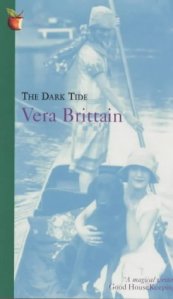

The Dark TideAbout the Book

Bright, romantic and vivacious, Daphne Lethbridge is back at Oxford after a period of voluntary work.  The First World War has ravaged Europe, but it has done nothing to daunt her spirit, and she plunges headlong into the whirl of college dinners, debates and romances.  Her enjoyment, though, is soured by her cynical contemporary Virginia Dennison, who spars with Daphne on every occasion. Beneath their surface civility seethes a deep envy.

Daphne seems to triumph over Virginia when she makes a brilliant marriage to a rising political star.  But after they settle in London, she begins to realize the bitter truth of her marriage. It takes a chance encounter with her old enemy for her disillusionment to give way to a mature understanding of a woman’s destiny and a woman’s friendship.

Format: Paperback (260 pp.)    Publisher: Virago Modern Classics
Published: 1999 [1923]              Genre: Fiction

Find The Dark Tide on Goodreads


My Review

Better known for her autobiographical works, in particular Testament of Youth, Vera Brittain also wrote a number of novels.  The Dark Tide was in fact her first novel and, although I hesitate to say so, it shows.  However, you don’t need to take my word for it because the author herself was fairly critical about this first attempt at fiction in her foreword to the reprinted 1935 edition.  Although defending the accuracy of the novel’s depiction of the life of women students in the 1920s, she concedes ‘the crude violence of its methods and unmodified black-and-whiteness of its values’.

As Mark Bostridge, Vera Brittain’s biographer, observes in his introduction to the 1999 edition of The Dark Tide, the book created a minor sensation when first published on account of its portrayal of an Oxford women’s college (a thinly veiled Somerville College).  It also risked causing offence to her friend, Winifred Holtby, caricatured as the character Daphne Lethbridge in the novel.   He describes the characters in The Dark Tide as ‘not so much imaginatively redeveloped as simply transferred direct from fact to fiction’.  One of the key scenes in the book describing a college debate in which Daphne and Virginia cross verbal swords re-enacts an actual event involving Vera Brittain and Winifred Holtby during their time at Somerville (described by Brittain in Testament of Youth).

My main issue with the book is that I felt I was being invited to see aspects of Virginia’s character as faults when they seemed to me mostly positive traits.  Conversely, Daphne, whom I felt I was supposed to admire, came across as spiteful, vindictive and envious of Virginia’s achievements and intellect.   My view of Daphne was redeemed to a certain extent by her developing self-awareness at the book progresses but it’s difficult to like a character who displays snobbery such as in the following passage: ‘She flung her books and papers in a heap on the table, and took down her new green coat and skirt from the wardrobe.  It was very expensive, and Daphne loved it – especially as it would make her appear such a contrast to Virginia. Virginia always seemed so fond of black; it was sheer affectation, Daphne thought, to adopt such a sombre style.’

The character I really liked was History Tutor, Miss O’Neill, for her kindliness towards the students.  She came across as perceptive, intelligent and successful but not arrogant about that success; a really positive role model for a woman of that time.    I do thought have to give the author credit for conveying the insular, slightly claustrophobic and at times bitchy atmosphere of an institution where people are thrown together in close proximity and in academic competition.

Towards the end of the book, I began to feel more sympathy for Daphne and the situation in which she finds herself.  However, I still found myself frustrated at her submissiveness and how, for a clearly intelligent woman, she had the wool pulled over her eyes so comprehensively.

The Dark Tide is interesting from the point of view of its place in the evolution of  Vera Brittain’s writing but I believe she definitely wrote better novels and that her non-fiction remains her crowning achievement.  If you feel inclined to explore her fiction, Honourable Estate or Born 1925 may be better places to start.
Follow my blog with Bloglovin


Vera BrittainAbout the Author

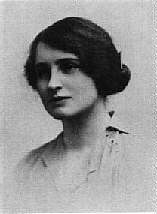
Vera Mary Brittain (1893 – 1970) grew up in provincial comfort in the north of England.  In 1914 she won an exhibition to Somerville College, Oxford, but a year later abandoned her studies to enlist as a VAD nurse.  She served throughout the war, working in London, Malta and the Front in France.

At the end of the war, with all those closest to her dead, Vera Brittain returned to Oxford.  There she met Winifred Holtby – author of South Riding – and this friendship which was to last until Winifred Holtby’s untimely death in 1935 sustained her in those difficult post-war years.

Vera Brittain was a convinced pacifist, a prolific speaker, lecturer, journalist and writer, devoting much of her energy to the causes of peace and feminism.  She wrote 29 books in all – novels, poetry, biography, autobiography and other non-fiction – but it was Testament of Youth which established her reputation and made her one of the best loved writers of her time.

Vera Brittain married George Catlin in 1925 and had two children.  Her daughter is Shirley Williams, Baroness Williams of Crosby, who is a British politician and academic who represents the Liberal Democrats in the House of Lords.

Throwback Thursday: The Sixteen Trees of the Somme by Lars Mytting

ThrowbackThursday

Throwback Thursday is a weekly meme originally created by Renee at It’s Book Talk.  It’s designed as an opportunity to share old favourites as well as books that we’ve finally got around to reading that were published over a year ago.

Today I’m revisiting a fabulous book I reviewed when it was first published in August 2017, The Sixteen Trees of the Somme by Lars Mytting (translated by Paul Russell Garrett).  The book was published in paperback earlier this week, with a new cover design.  You can find purchase links below.   The Sixteen Trees of the Somme is also the Waterstones Fiction Book of the Month for October 2018.


The Sixteen Trees of the Somme PBAbout the Book

Edvard grows up on a remote mountain farmstead in Norway with his taciturn grandfather, Sverre. The death of his parents, when he was three years old, has always been shrouded in mystery – he has never been told how or where it took place and has only a distant memory of his mother.

But he knows that the fate of his grandfather’s brother, Einar, is somehow bound up with this mystery. One day a coffin is delivered for his grandfather long before his death – a meticulous, beautiful piece of craftsmanship. Perhaps Einar is not dead after all.

Edvard’s desperate quest to unlock the family’s tragic secrets takes him on a long journey – from Norway to the Shetlands, and to the battlefields of France – to the discovery of a very unusual inheritance. The Sixteen Trees of the Somme is about the love of wood and finding your own self, a beautifully intricate and moving tale that spans an entire century.

Format: Paperback  (416 pp.)                                     Publisher: MacLehose Press
Published
: 1st October 2018 [10th August 2017]  Genre: Historical Fiction

Purchase Links*
Amazon.co.uk  ǀ  Amazon.com  | WaterstonesHive.co.uk (supporting UK bookshops)
*links provided for convenience, not as part of any affiliate programme

Find The Sixteen Trees of the Somme  on Goodreads


My Review

The death of Edvard’s grandfather, Bestefar, and the facts that come to light as a result, change everything for Edvard. They see him embark on a journey that will take him away from the isolated Nowegian farm where he has grown up to the Shetlands and France as he searches for the truth about the cause of his parents’ death and the four days afterwards when he was missing. It also stirs up vague fragments of memories – a scent, the sound of a voice, the texture of a fabric, a discarded toy – that don’t make any sense but convince Edvard that he needs to find out more about his parents’ death.

‘Because there was something about Mamma and Pappa’s story that was stirring, quietly, like a viper in the grass.’

As is often the case when unearthing secrets from the past, Edvard is forced to confront unwelcome possibilities and make agonising choices. Edvard’s search reaches back in time to WW1 and WW2, bringing to light painful facts from the past – death, injury, separation and betrayal – but also revealing stories of courage, determination and devotion. It provokes questions such as whether it is better sometimes not to know the truth, to be careful what you wish for, that actions have consequences even if unintended, and the fulfilment you seek may be closer to home than you think.

I found the story absolutely enthralling and I loved the fantastic sense of place created in each location. From the author’s beautiful, heartfelt descriptions, I felt as if I could look out my own window and see the farm in Norway laid out before me.

‘Redcurrant bushes dense with berries, the flag-stoned path leading to the swimming hole at the river, the creek which cut through the potato fields and disappeared from sight behind the barn. The fruit trees, the pea pods that dangled like half moons when we got close to them, so plentiful that we could fill up on them without taking a step. The dark-blue fruit of the plum trees, the sagging raspberry bushes just waiting for us to quickly fill two small plates and fetch some caster sugar and cream.’

In particular, I loved the way the author captured the remote beauty of the Shetlands and the sense of a community where everyone knows what goes on, who’s arrived on the ferry, whose car has just passed them on the road. The author roots the various parts of the story each in their distinct time, in particular, using popular music as the background to Edvard’s journey. (I get the impression the author is a bit of a music fan, perhaps attracted at some point in his life to a girl by the way she browses in a record shop.)

At times, Edvard feels as if he has come to a dead-end in his search but still he continues searching for clues, motivated by curiosity but also by a sense of obligation to the dead – those known to him and those victims of two world wars unknown to him: ‘I wanted to be someone the dead could rely on.’

As the author of the left-field hit, Norwegian Wood: Chopping, Stacking and Drying Wood the Scandinavian Way (now also an activity book), it’s no surprise that wood is at the heart of the story. It is part of the plot in a number of ways – in fact, more and more ways as the story progresses – but it is also celebrated in the book for its form, history and beauty. Similarly, there is real regard for the craftsmanship that can fashion a piece of wood into an object of beauty, utility or religious symbolism.

The Sixteen Trees of the Somme has a compelling, enthralling story line with wonderfully atmospheric settings and well-developed characters. I was completely immersed in Edvard’s search for the truth about his parents’ death; like him, all the time fearing the dark secrets he might uncover but compelled to find out nonetheless. A fantastic book, highly recommended.

I received an advance reader copy courtesy of NetGalley and publishers Quercus Books/MacLehose Press.


LarsMyttingAbout the Author

Lars Mytting, a novelist and journalist, was born in Fåvang, Norway, in 1968. His novel The Sixteen Trees of the Somme was awarded the Norwegian National Booksellers’ Award and has been bought for film. Norwegian Wood: Chopping, Stacking and Drying Wood the Scandinavian Way has become an international bestseller and was the Bookseller Industry Awards Non-Fiction Book of the Year 2016.

(Photo credit: Goodreads Author Page)

Connect with Lars

Website | Goodreads