
#ThrowbackThursday Poor Boy Road by James L. Weaver

ThrowbackThursday

Throwback Thursday is a weekly meme hosted by Renee at It’s Book Talk. Throwback Thursday is designed as an opportunity to share old favourites as well as books that we’ve finally got around to reading that were published over a year ago. If you decide to take part, please link back to It’s Book Talk.


I’ve decided to delve back into the earliest days of my blog (not that it’s that old) and share one of my first reviews. It’s for the first in a series of terrifically entertaining action thrillers by James L. Weaver, published in March 2016. You can read my review of the sequel Ares Road here and if you happen to get hooked, you’ll pleased to learn a third book, Blackbird Road, is due out in 2018.

Poor Boy Road (Jake Caldwell #1) by James L. Weaver
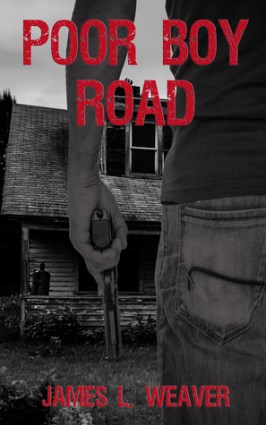
poorboyAbout the Book

As a mob enforcer, Jake Caldwell is in the dark business of breaking kneecaps and snapping bones. But each job sends him one step closer to turning into the man he swore he’d never become – his violent and abusive father. Leaving the mob is easier said than done. When his boss offers a bloody way out, Jake has no choice but to take it, even if it means confronting ghosts of old. Arriving in his hometown, Jake has two things on his mind: kill ruthless drug lord Shane Langston and bury his dying father. Racing through the countryside searching for Langston, the web of murder, meth and kidnapping widens, all pointing toward a past Jake can’t escape and a place he never wanted to return – Poor Boy Road.

Purchase Links*
Amazon.co.uk ǀ
*links provided for convenience, not as part of any affiliate programme

Find Poor Boy Road on Goodreads


My Review

Poor Boy Road is the first in a series featuring mob enforcer, Jake Caldwell. In fact, Jake very much wants to be an ex-mob enforcer but the price for this is killing his mob boss’s rival drug lord, Shane Langston. This will mean returning to his hometown which holds nothing but bad memories – of his troubled childhood at the hands of his violent father (now close to death), the trauma of his brother’s death and his abandonment of the woman he loved.

Although the book follows a fairly well-trodden path for an action/thriller, that doesn’t make it any less entertaining. Despite his dubious past exploits, Jake Caldwell makes an really engaging protagonist who one feels still retains his moral compass. It’s to the author’s credit that we care about Jake, who comes across as something of a ‘lost soul’ seeking a path to redemption despite the ‘Devil’s bargain’ he’s had to make with his mob boss, Keats.

‘Sometimes he stared in the mirror at hollow eyes, seeing the face of a man who hid in the shadows, a man he swore he’d never become.’

In fact, many of the characters in the book are looking for a way out: from poverty, crime, drug and alcohol addiction, family breakdown or domestic violence. The author creates a convincing picture of life in small-town America where your life chances can be measured by which side of Poor Boy Road you reside.

‘Every town, every city had their economic dividing line between the haves and the have nots. Poor Boy Road was their line.’

The book is full of twists and turns with plenty of action as Jake teams up with his old friend, Bear, now Sheriff of Benton County, to frustrate the drug gangs that menace the community and achieve the goal that will give him the chance to make a new start in life.   Along the way Jake has to confront unpleasant memories, particularly his troubled relationship with his father, in the hope that he can stop trying to ‘outrun the ghosts’.

I really enjoyed Poor Boy Road and I can’t wait to read the next in the series, Ares Road.

I received a copy of this book courtesy of Lakewater Press in return for an honest review.

About the Author

James L. Weaver is the Kansas City author of the Jake Caldwell series featuring IAN Thriller of the Year finalist Poor Boy Road and soon to be released Ares Road from Lakewater Press. He makes his home in Olathe, Kansas with his wife of 19 years and two children. His previous publishing credits include a six part story called The Nuts and his 5-star rated debut novel Jack & Diane. Author note: a handful of the raters are actually not related to him.

Connect with James

Website ǀ Facebook ǀ Twitter ǀ Goodreads

author-banner


Throwback Thursday

ThrowbackThursday

Throwback Thursday is a weekly meme hosted by Renee at It’s Book Talk.  It’s designed as an opportunity to share old favourites as well as books that we’ve finally got around to reading that were published over a year ago. If you decide to take part, please link back to It’s Book Talk.


I’ve decided to delve back into the earliest days of my blog (not that it’s that old) and share one of my first reviews. It’s for a collection of short stories by Katherine Mansfield, an author I was introduced to whilst studying for my Masters with The Open University. If you like your short stories a little dark, then give this collection a try.

In A German Pension: 13 Stories by Katherine Mansfield

germanAbout the Book

In A German Pension was Katherine Mansfield’s first published collection of short stories. The stories were inspired by her stay at the Villa Pension Müller in the Bavarian spa of Bad Wörishofen in 1909.

Purchase Links*
Amazon.co.uk ǀ
*links provided for convenience, not as part of any affiliate programme

Find In A German Pension: 13 Stories on Goodreads


My Review

The stories in this collection are divided between vignettes of guests staying at the Pension, which are gently mocking in tone, and much darker stories that often have a sting in the tail. A frequent theme of the latter is the social and sexual oppression of women.

In “German Meat”, the female English narrator is a sardonic commentator on the coarseness of the German guests who are constantly eating, perspiring and discussing their ailments and bodily functions. They, however, believe themselves superior to the English, particularly when they learn the narrator does not know what kind of meat her husband likes and, worse still, admits to being vegetarian. Mansfield deftly conveys the guests’ greed and grotesque habits in a few short sentences.

‘A glass dish of stewed apricots was placed upon the table. “Ah , fruit!” said Fraulein Stiegelauer, “that is so necessary to health. The doctor told me this morning that the more fruit I could eat the better.” She very obviously followed the advice.’

In “The Sister of the Baroness”, Mansfield exposes the snobbery of the other guests who cannot contain their excitement at the prospect of a relative of a wealthy member of the nobility staying at the Pension.

‘Coffee and rolls took on the nature of an orgy. We positively scintillated. Anecdotes of the High Born were poured out, sweetened and sipped: we gorged on scandals of High Birth generously buttered.’

Unfortunately their fawning regard for the new arrival turns out to be misplaced when it is revealed she is merely the daughter of the Baroness’s dressmaker.

In “The Advanced Lady”, the pretensions to intellectual superiority of a lady writer are lampooned.

‘“But Love is not a question of lavishing,” said the Advanced Lady. “It is the lamp carried in the bosom touching with serene rays all the heights and depths of…” “Darkest Africa,” I murmured flippantly. She did not hear.’

Amongst the darkest of the stories is “The Child Who Was Tired”, which recounts the unrelenting toil of a young girl and the dreadful act she is driven to by despair and exhaustion. Another notable story is “Frau Brechenmacher Attends a Wedding” in which the conventions of domestic bliss are satirised both in the descriptions of the pompous Herr Brechenmacher and the events of the wedding breakfast. The bride is described as having the appearance of “an iced cake, all ready to be cut and served in neat little pieces to the bridegroom beside her”. There is a sense of violence underpinning the story which is realised in the final sentence.

Although Mansfield later came to regard this early collection of stories as having little merit, I enjoyed the precision of the writing and their dark humour.

mansfieldAbout the Author

Katherine Mansfield was born in New Zealand in 1888 and is widely considered the best short story writer of the modernist period. She left New Zealand for the UK when she was 19 and then travelled for a time in Europe. She was associated with a “new dawn” in English literature and together with T.S. Eliot, James Joyce and Virginia Woolf made the London of the period the centre of the literary world. Mansfield’s stories were written without a conventional plot but concentrated on one moment, a crisis or turning point rather than a sequence of events. Often very dark, common themes of her stories include human isolation, the conflict between love and disillusionment, idealism and reality. Katherine Mansfield died in 1923 at the age of only 34.