
#WWWWednesday – 3rd March 2021

WWWWednesdays

Hosted by Taking on a World of Words, this meme is all about the three Ws:

  • What are you currently reading?
  • What did you recently finish reading?
  • What do you think you’ll read next?

Why not join in too?  Leave a comment with your link at Taking on a World of Words and then go blog hopping!


Currently reading

StellaStella by Takis Würger, translated by Liesl Schillinger (ARC, courtesy of Grove Press and Readers First)

In 1942, Friedrich, an even-keeled but unworldly young man, arrives in Berlin from bucolic Switzerland with dreams of becoming an artist. At a life drawing class, he is hypnotized by the beautiful model, Kristin, who soon becomes his energetic yet enigmatic guide to the bustling and cosmopolitan city. Kristin teaches the naïve Friedrich how to take care of himself in a city filled with danger, and brings him to an underground jazz club where they drink cognac, dance, and kiss. The war feels far away to Friedrich as he falls in love with Kristin, the pair cocooned inside their palatial rooms at the Grand Hotel, where even champagne and fresh fruit can be obtained thanks to the black market.

But as the months pass, the mood in the city darkens yet further, with the Nazi Party tightening their hold on everyday life of all Berliners, terrorizing anyone who might be disloyal to the Reich. Kristin’s loyalties are unclear, and she is not everything she seems, as his realizes when one frightening day she comes back to Friedrich’s hotel suite in tears, battered and bruised. She tells him an astonishing secret: that her real name is Stella, and that she is Jewish, passing for Aryan. Fritz comforts her, but he soon realizes that Stella’s control of the situation is rapidly slipping out of her grasp, and that the Gestapo have an impossible power over her.

As Friedrich confronts Stella’s unimaginable choices, he finds himself woefully unprepared for the history he is living through. Based in part on a real historical character, Stella sets a tortured love story against the backdrop of wartime Berlin, and powerfully explores questions of naiveté, young love, betrayal, and the horrors of history.
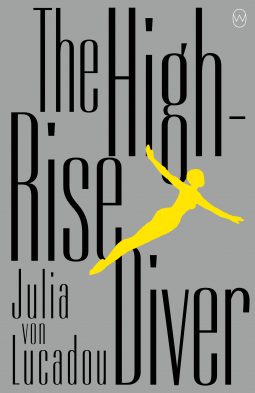
The High-Rise DiverThe High-Rise Diver by Julia von Lucadou, translated by Sharmila Cohen (eARC, courtesy of World Editions via NetGalley)

Big Sister is watching you.

Riva is a “high-rise diver,” a top athlete with millions of fans, and a perfectly functioning human on all levels. Suddenly she rebels, breaking her contract and refusing to train. Cameras are everywhere in her world, but she doesn’t know her every move is being watched by Hitomi, the psychologist tasked with reining Riva back in. Unquestionably loyal to the system, Hitomi’s own life is at stake: should she fail to deliver, she will be banned to the “peripheries,” the filthy outskirts of society.

For readers of The Handmaid’s Tale, The Circle and Brave New World, this chilling dystopia constructs a world uncomfortably close to our own, in which performance is everything. 


Recently finished

Links from the titles will take you to my reviews

The Northern Reach by W.S. Winslow 

Nick by Michael Farris Smith

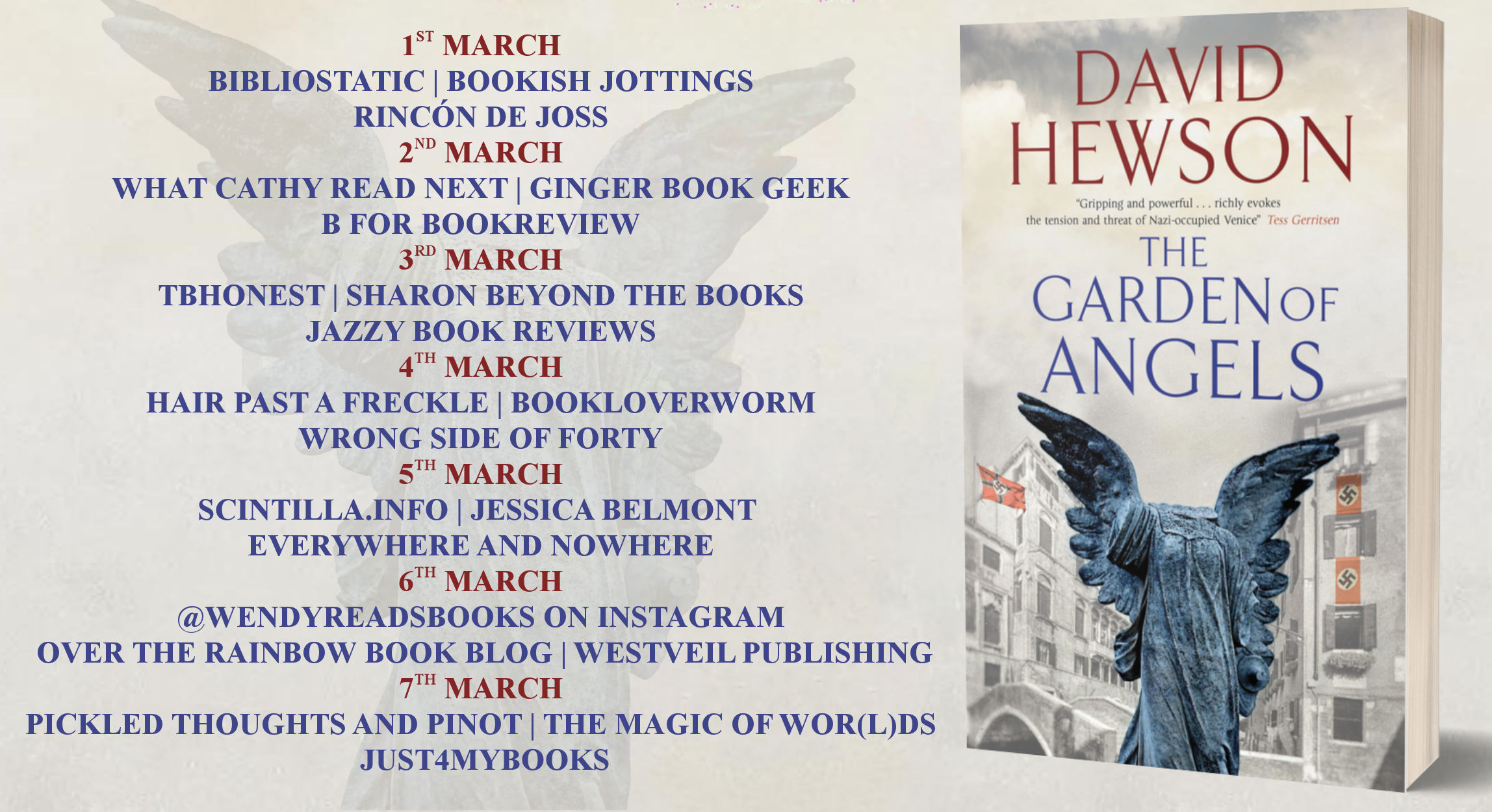
The Garden of Angels by David Hewson 

Dangerous Women by Hope Adams

London, 1841. Two hundred Englishwomen file aboard the Rajah, the ship that will take them on a three-month voyage to the other side of the world. They’re daughters, sisters, mothers – and convicts. Transported for petty crimes. Except one of their number is a secret killer, fleeing justice. When a woman is mortally wounded, the hunt is on for the culprit. But who would attack one of their own, and why? Based on a true story, Dangerous Women is a sweeping tale of confinement, loss, love and, above all, hope in the unlikeliest of places. (Review to follow 4th March)

Masters of Rome (Rise of Emperor’s #2) by Gordon Doherty & Simon Turney 

Their rivalry will change the world forever.

As competition for the imperial throne intensifies, Constantine and Maxentius realise their childhood friendship cannot last. Each man struggles to control their respective quadrant of empire, battered by currents of politics, religion and personal tragedy, threatened by barbarian forces and enemies within.

With their positions becoming at once stronger and more troubled, the strained threads of their friendship begin to unravel. Unfortunate words and misunderstandings finally sever their ties, leaving them as bitter opponents in the greatest game of all, with the throne of Rome the prize.

It is a matter that can only be settled by outright war… (Review to follow 4th March for blog tour)


What Cathy (will) Read Next

A Lifetime of MenA Lifetime of Men by Ciahnan Darrell (ebook, courtesy of the author)

Tolan has always let her mother have one secret – how she got that scar on her face – playing along with her mother’s game of inventing outlandish tales to explain the wound away. But when she finds a manuscript on her mother’s computer that promises to reveal the true story, Tolan only hesitates for a moment before curiosity compels her to read on.

She’s hoping for answers, but instead, she finds more mysteries tucked away in her mother’s past. Her mother appears to be associated with Bo, a feisty photojournalist who flies to Cuba in pursuit of a story and becomes embedded with Castro’s rebels, but Tolan can’t quite work out their connection. She’s more clear about the relationship between her mother and Michael, a man twelve years her senior. They bond over their shared outcast status, and their friendship quickly becomes intimate, but the relationship antagonizes the self-appointed moral watchdogs in their small town, who start to convert their threats into action. Tolan is pretty sure that Michael is her father. Her mother told her he died years ago, but the book suggests their story had a different ending.

Almost overnight, everything Tolan thought she knew about herself and her family has changed. She wants answers, but to find them, she risks destroying her closest relationships.

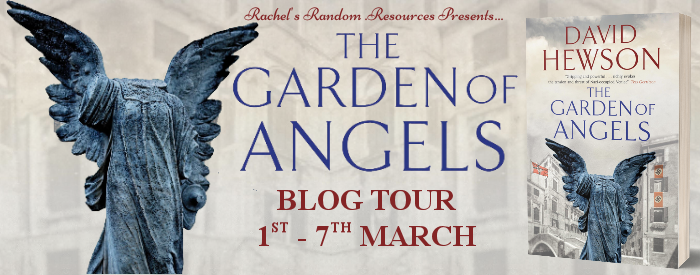
#BookReview The Garden of Angels by David Hewson @rararesources @severnhouse

The Garden of Angels

Welcome to today’s stop on the blog tour for The Garden of Angels by David Hewson. My thanks to Rachel at Rachel’s Random Resources for inviting me to take part in the tour and to Severn House for my digital review copy via NetGalley. The Garden of Angels is available now in hardback, ebook and as an audio book. Do also check out the posts by my tour buddies for today, Amanda at Ginger Book Geek and Els at B For BookReview.


The Garden of AngelsAbout the Book

The Palazzo Colombina is home to the Uccello family: three generations of men, trapped together in the dusty palace on Venice’s Grand Canal. Awkward fifteen-year-old Nico. His distant, business-focused father. And his beloved grandfather, Paolo. Paolo is dying. But before he passes, he has secrets he’s waited his whole life to share.

​When a Jewish classmate is attacked by bullies, Nico just watches – earning him a week’s suspension and a typed, yellowing manuscript from his frail Nonno Paolo. A history lesson, his grandfather says. A secret he must keep from his father. A tale of blood and madness . . .

​Nico is transported back to the Venice of 1943, an occupied city seething under its Nazi overlords, and to the defining moment of his grandfather’s life: when Paolo’s support for a murdered Jewish woman brings him into the sights of the city’s underground resistance. Hooked and unsettled, Nico can’t stop reading – but he soon wonders if he ever knew his beloved grandfather at all.

Format: Hardcover (320 pages)         Publisher: Severn House
Publication date: 29th January 2021 Genre: Historical Fiction

Find The Garden of Angels on Goodreads

Purchase links
Hive | Amazon UK
Links provided for convenience only, not as part of an affiliate programme


My Review

I was drawn to this book partly by its subject matter but also by its setting. I’ve been lucky enough to visit Venice on a couple of occasions, although I can’t claim the intimate knowledge of the city the author clearly possesses. I’ll admit that, because of its unique location, it hadn’t occurred to me that Venice would have been occupied by the Nazis during the Second World War. Therefore, this was an aspect of the novel I found especially intriguing.

The story of the wartime experiences of Nico’s grandfather, Paolo Uccello, and his fellow Venetians is revealed in instalments to Nico, by way of a series of letters. A little confusingly Paolo’s recollections are related in the third person, as if he was an observer rather than a participant, and include scenes and conversations to which he was not a party. Leaving that aside, the story Paolo tells is one of fear, betrayal, collaboration and wartime atrocities but also of courage.

As Nico learns more about Paolo’s experiences, he wanders the streets of Venice visiting – and photographing – some of the locations mentioned by his grandfather, such as the building that housed the SS headquarters and the site of the Jewish ghetto. He is struck by the seeming unawareness of present day visitors to the terrible events that took place in those same places fifty years before.  Seeing a group of children playing football at one site, he has to stop himself shouting ‘Don’t you know what happened here? Can’t you feel the traces of all that memory?’.  As it happens, the Venetians who lived through that time, including the family’s housekeeper, seem equally unwilling to talk about what went on during the occupation. Nico’s wanderings through the city give him a growing sense of past and present eliding. ‘More and more I felt I was walking through two cities at the same time.  The Venice I’d grown up in.  The different, darker, violent city that Nonno Paolo had known when he wasn’t much older than me.’  

I liked the way his grandfather’s story makes Nico reflect on how war can make people behave.  ‘That was one of the lessons he was trying to teach me: evil wasn’t special. There was no need for extraordinary villains with scars, and wicked, dark glints in their eyes.  It was ordinary, mundane, a part of the city, a lurking virus within us all.’  A good example in the book of the ‘ordinary monsters’ is the character Luca Alberti, a Venetian policeman who finds himself collaborating with the Nazis. There are plenty of other memorable characters too such as Catholic priest, Filippo Garzone, and Aldo Diamante, appointed by the Nazis as leader of the Jewish community in Venice, who becomes faced with an impossible dilemma.

The book displays the author’s impressive knowledge of Venice, especially the ‘off-the-beaten track’ areas rarely visited by tourists.  I loved the imaginative ways Venice, ‘the city on the water’, was described, including as ‘a precious gilded prison’ and ‘the louche old lady of the lagoon’.  Not only did I learn a lot about the history of Venice and Italian politics of the period but also about the process of weaving a kind of velvet known as soprarizzo using a Jacquard loom. You can find out more about the latter here.

The Garden of Angels is both an intriguing wartime story and a great advertisement for the wonderful city of Venice.  It’s a trip to put on your bucket list.  In the meantime, why not visit in literary form by adding The Garden of Angels to your TBR pile.

In three words: Atmospheric, intriguing, dramatic

Try something similar: The Diplomat’s Wife by Michael Ridpath

Follow this blog via Bloglovin


david hewsonAbout the Author

David Hewson is a former journalist with The Times, The Sunday Times and the Independent. He is the author of more than twenty-five novels, including his Rome-based Nic Costa series which has been published in fifteen languages, and his Amsterdam-based series featuring detective Pieter Vos. He has also written three acclaimed adaptations of the Danish TV series, The Killing. He lives near Canterbury in Kent.

Connect with David
Website | Twitter

The Garden of Angels Full Tour Banner