My Week in Books – 20th November 2022

MyWeekinBooksOn What Cathy Read Next last week

Monday – I published my review of crime novel The Sentence is Death by Anthony Horowitz.

Tuesday – I shared my review of Thea and Denise by Caroline Bond. 

Wednesday – As always WWW Wednesday is a weekly opportunity to share what I’ve just read, what I’m currently reading and what I plan to read next… and to take a peek at what others are reading. 

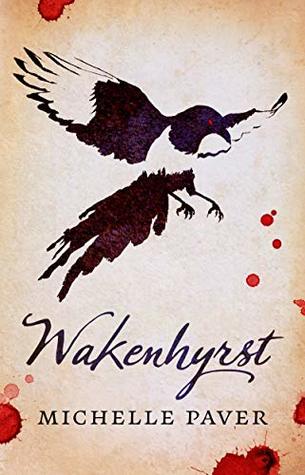
Thursday – I published my review of historical mystery Wakenhyrst by Michelle Paver. 

Friday – I shared an update on my progress with the #NetGalleyNovember reading challenge. 


New arrivals

The English FuhrerThe English Führer by Rory Clements (eARC, Zaffre via NetGalley)

Autumn 1945 – Off the east coast of England, a Japanese sub surfaces, unloads its mysterious cargo, then blows itself to pieces.

Former spy Professor Tom Wilde is enjoying peacetime in Cambridge, settling back into teaching and family life. Until a call from senior MI5 boss Lord Templeman brings him out of retirement.

A nearby village has been locked down by the military, its residents blighted by a deadly illness. No one is allowed in or out.

There are rumours the Nazi machine is still operational, with links to Unit 731, a notorious Japanese biological warfare research laboratory. But how could they possibly be plotting on British soil – and why?

What’s more, Wilde and Templeman’s names are discovered on a Gestapo kill list. And after a series of assassinations an unthinkable question emerges: could an Englishman be behind the plot?
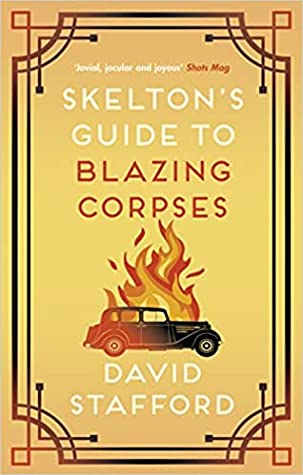
Skelton's Guide to Blazing CorpsesSkelton’s Guide to Blazing Corpses by David Stafford (Allison & Busby via NetGalley)

Guy Fawkes Night, 5th November, 1930. Bonfires are blazing, rockets burst. In a country lane, revellers discover a car that has been set on fire. At first, they assume that this is the work of vandals taking the Guy Fawkes spirit a little too far, sitting at the wheel is a body, charred beyond recognition.

The initial assumption is that the owner of the car, Mr Harold Musgrave, a successful travelling salesman has taken his own life in a particularly grisly act of self-immolation. The post-mortem, however, reveals that Mr Musgrave was either unconscious or dead before the fire was lit. When Tommy Prosser, a local criminal, is charged with the murder, barrister Arthur Skelton believes him to be innocent, so sets out to ensure justice is served. 
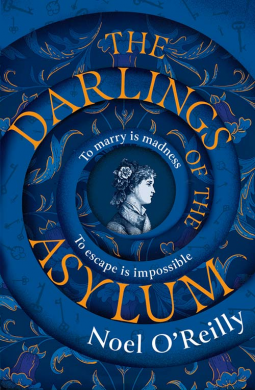
The Darlings of the AsylumThe Darlings of the Asylum by Noel O’Reilly (eARC, HQ via NetGalley)

‘She wakes in a strange, stark room. Through the bare walls she hears muffled cries and yells. The label on her unfamiliar, starched gown reads PROPERTY OF HILLWOOD GRANGE LUNATIC ASYLUM. Her heart thumps as a key rattles in the lock…’

In 1886, a respectable young woman must acquire a husband. Violet Pring’s scheming mother has secured a desirable marriage proposal from an eligible Brighton gentleman. But Violet does not want to marry. She longs to be a professional artist and live on her own terms.

Violet’s family believes she is deranged and deluded, so she is locked away in Hillwood Grange against her will. In her new cage, Violet faces an even greater challenge: she must escape the clutches of a sinister and formidable doctor and set herself free.


On What Cathy Read Next this week

Currently reading

Planned posts

  • Book Review: The Night Ship by Jess Kidd 
  • Book Review: Night-Time Stories by Yen-Yen Lu
  • Guest Post: The Case of the Emigrant Niece by David Cairns of Finavon

#BookReview Wakenhyrst by Michelle Paver

WakenhyrstAbout the Book

“Something has been let loose…”

In Edwardian Suffolk , a manor house stands alone in a lost corner of the Fens: a glinting wilderness of water whose whispering reeds guard ancient secrets. Maud is a lonely child growing up without a mother, ruled by her repressive father.

When he finds a painted medieval devil in a graveyard, unhallowed forces are awakened.

Maud’s battle has begun. She must survive a world haunted by witchcraft , the age-old legends of her beloved fen – and the even more nightmarish demons of her father’s past.

Format: ebook (359 pages)          Publisher: Head of Zeus
Publication date: 4th April 2019 Genre: Historical Fiction, Mystery

Find Wakenhyrst on Goodreads

Purchase links
Bookshop.org
Disclosure: If you buy a book via the above link, I may earn a commission from Bookshop.org, whose fees support independent bookshops

Hive | Amazon UK
Links provided for convenience only, not as part of an affiliate programme


My Review

Wakenhyrst is described by the publishers as ‘a darkly Gothic thriller’ and there are definitely Gothic elements although I had to keep reminding myself the book is supposed to be set in 1911.  The style in which Edmund’s journals are written, his misogynistic views and even the domestic routine of Wake’s End seemed to me to evoke the 19th century rather than the years running up to the First World War. Similarly, the odious Dr Grayson’s outdated medical notions didn’t seem to belong in the 20th century.

The main part of the book consists of chapters from Maud’s point of view, interspersed with entries from her father’s journal and, later, excerpts from the writings of a medieval mystic, Alice Pyett (who is based on the English Christian mystic, Margery Kempe).

Edmund comes across as a monster, a man unable to control his sexual appetites and who is exacting to the point of obsession about how the household at Wake’s End should be run. His treatment of Maud’s mother amounts to what we would today recognise as coercive control, seeking to manage every aspect of her life: what she wears, what she eats, even how she identifies herself. He is also disdainful of his daughter Maud, a fact she only discovers much later.  Given her father’s belief there is no benefit in educating a woman, Maud is forced to make surreptitious visits to his library to satisfy her quest for knowledge. Despite everything, she matures into an intelligent and independent-minded young woman, readily embracing the theories of Charles Darwin and becoming increasingly disenchanted with religion.

The author creates an eerie and unsettling atmosphere using the vast, lonely fen that surrounds Wake’s End particularly well. It becomes one of the manifestations of Edmund’s increasing madness. ‘I kept catching whiffs of the fen itself: a swampy rottenness that seemed to come and go, making it doublt distracting.’  We witness Edmund’s increasingly paranoid imaginings, namely that a devil, like that depicted in the so-called Doom painting uncovered in the local church (think Hieronymus Bosch’s ‘The Last Judgment’), has been set loose. ‘I could feel the demon’s presence in the grounds: watching, waiting. It wants to stop me. It shall fail.’  He becomes convinced the fen is home to this demon leading him to research arcane rituals associated with exorcism, some of which are extremely gruesome.

Those familiar with the ghost stories of M.R. James will feel at home with scenes describing some of the events that so disturb Edmund, such as the grotesque carvings in the church (‘The Stalls of Barchester Cathedral’) or his conviction that something is hidden in the ivy that cloaks the walls of Wake’s End (‘The Ash Tree’). ‘This morning when I sat down in my study with a book, I was disturbed by a furtive scrabbling at the windowpane. It wasn’t the tapping of a bird; this sounded more like claws. On raising the sash, I thought I glimpsed something scuttling off into the ivy.’ 

The reader witnesses Edmund’s deteriorating mental state which manifests itself in a kind of religious mania.  He increasingly sees parallels between his experiences and those of Alice Pyett and, later the life of St Guthlaf, to whom the local church is dedicated. He also has strange dreams and hallucinations. But are the displaced objects, the strange sounds or the obnoxious miasma evidence of the presence of supernatural beings or the work of human hands?

Having become her father’s secretary after her mother’s death – a death she holds her father reponsible for – Maud gains access to his journal, secretly reading his daily musings and, as a result, learning some shocking truths about his sister’s death and his increasingly deranged thoughts. She becomes fearful of what her father might be capable of and afraid for those around her, especially a young man employed in the household to whom she has become close.

Of course, the reader already knows what Edmund is capable of from the book’s prologue which describes the climactic event of the book, even if it does cast doubt on Maud’s role in it.  Only a few previously undisclosed details are saved for the end of the book, as Maud finally agrees to publication of the full story in order to counter the ‘lies’ contained in the newspaper article published in 1966 that opens the book, but also for the more practical reason that she needs to fund repairs to Wake’s End. For me, the framing device reduced the feeling of suspense that I hoped the book would deliver. I already knew what was going to happen and that it was the product of madness;  the next 300 pages were just about telling me why. However, I know  I’m in a minority here and many other readers have loved it.

I received a review copy via NetGalley.

In three words: Atmospheric, eerie, dark

Try something similar: The Bone Flower by Charles Lambert


Michelle PaverAbout the Author

Michelle Paver was born in central Africa but came to England as a child. After gaining a degree in Biochemistry at Oxford University, she was a partner at a City law firm, until she gave that up to write full time. She is the author of the bestselling, award-winning series that began with Wolf Brother. The series has sold over 3 million copies in 36 territories, with acclaimed audio editions read by Ian McKellen. Wolfbane is the final book in the series. Like the others it can be read as a standalone story. (Photo: Twitter profile)

Connect with Michelle
Website | Twitter | Facebook | Instagram