About the Book
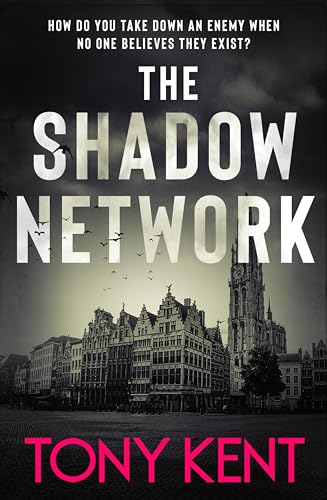
How do you take down an enemy when no one believes they exist?
When the lawyers of alleged war criminal Hannibal Strauss are caught up in a terror attack in The Hague, barrister Michael Devlin immediately suspects all is not what it seems. Teaming up once more with Agent Joe Dempsey, they must find who’s behind it all before any more innocent lives are lost.
With their key witness on the run and assassins on their tail, their only lead is a the Monk, a legendary and mysterious foreign agent with a fearsome reputation. But what is his stake in this dangerous game? And just who is part of his shadowy network of spies? Caught in a complicated web of lies, secrets and double agents, there’s no one Dempsey and Devlin can trust but themselves.
Format: Hardcover (464 pages) Publisher: Elliott & Thompson
Publication date: 15th February 2024 Genre: Thriller
Find The Shadow Network on Goodreads
Purchase The Shadow Network from Bookshop.org [Disclosure: If you buy books linked to our site, we may earn a commission from Bookshop.org, whose fees support independent bookshops.]
My Review
I was introduced to the formidable Joe Dempsey and his friend, lawyer Michael Devlin, when I read the previous novel in the series, No Way to Die. Dempsey, the perpetual loner, had the key role in that book, alongside the most trusted member of his hand-picked team, Eden Grace. I was pleased to see Eden return in this book and she proves herself just as accomplished and fearless as before.
The Shadow Network is the epitome of a page-turner: the short chapters give it real pace and the frequent shifts between different points of view make you feel you’re witnessing events in real time. The author is adept at ending a chapter with a killer last line meaning you’ve simply got to read on, and there are plenty of developments that I certainly didn’t see coming.
The storyline is cleverly constructed to reflect contemporary events – although I hope not too closely – incorporating global conspiracies, political extremism and media manipulation. The idea of a cunning, ruthless mind pulling strings to influence world events is pretty scary. (Since I can never pass up an opportunity for a John Buchan reference, there’s a similar concept in his early novel, The Power-House. It features a character who possesses an immense intellect that is unconstrained by common notions of morality, wielding the levers of power for malevolent ends.)
If I had to sum up the storyline of The Shadow Network in a phrase, it would be ‘don’t trust anyone’ – except, of course, Dempsey or Devlin. Another might be ‘never turn your back on someone’.
Tony Kent’s bio claims his previous experience brings ‘a striking authenticity to his thrillers’ and there’s certainly plenty of ‘striking’ in this one, with fist fights galore which make you wonder just how much more a body can take. A lot more is the answer when it comes to Dempsey. And even Devlin has to call on the darker, more violent instincts he’s long fought to suppress. (The source of these will be apparent if you’ve read earlier books in the series.)
The Shadow Network is what I like to call a ‘planes, trains and automobiles’ read. In other words, the ideal book to get you through a long journey. Actually, reading it on a train journey may not be a good idea as you might miss your stop. And thinking about it, listening to it while driving could be problematic since it will definitely make you want to steer clear of underground car parks. As a passenger, fine, although rather than ‘Are we there yet?’ you might find yourself asking ‘Are we there already?’. A beach read then? Definitely, although slap on the factor 50 in case you lose track of time.
My thanks to Emma at Emma Finnigan PR and Elliott & Thompson for my proof copy.
In three words: Action-packed, gripping, fast-paced
Try something similar: Hunter Killer by Brad Taylor
About the Author

Tony Kent is the author of Killer Intent, Marked for Death, Power Play and No Way to Die. As a practising criminal barrister and former boxer, he draws on his experiences to bring a striking authenticity to his thrillers. Ranked as a ‘leader in his field’, Tony has prosecuted and defended in the most serious trials during his twenty years at the Criminal Bar, and appears as a criminal justice expert on a number of TV shows, including Meet, Marry Murder; My Lover, My Killer and Kill Thy Neighbour.
Tony is the founder director of Chiltern Kills, which launched in October 2023. He lives just outside London with his wife, young son and dog.
Connect with Tony
Website | X | Instagram | Facebook