
Hosted by Taking on a World of Words, this meme is all about the three Ws:
- What are you currently reading?
- What did you recently finish reading?
- What do you think you’ll read next?
Why not join in too? Leave a comment with your link at Taking on a World of Words and then go blog hopping!
What I’m Currently Reading
Two of the books on the shortlist for the Walter Scott Prize for Historical Fiction and a book from my NetGalley shelf

Glorious Exploits by Ferdia Lennon (Fig Tree)
Ancient Sicily. Enter GELON: visionary, dreamer, theatre lover. Enter LAMPO: feckless, jobless, in need of a distraction.
Imprisoned in the quarries of Syracuse, thousands of defeated Athenians hang on by the thinnest of threads. They’re fading in the baking heat, but not everything is lost: they can still recite lines from Greek tragedy when tempted by Lampo and Gelon with goatskins of wine and scraps of food.
And so an idea is born. Because, after all, you can hate the invaders but still love their poetry.
It’s audacious. It might even be dangerous. But like all the best things in life – love, friendship, art itself – it will reveal the very worst, and the very best, of what humans are capable of. What could possibly go wrong?
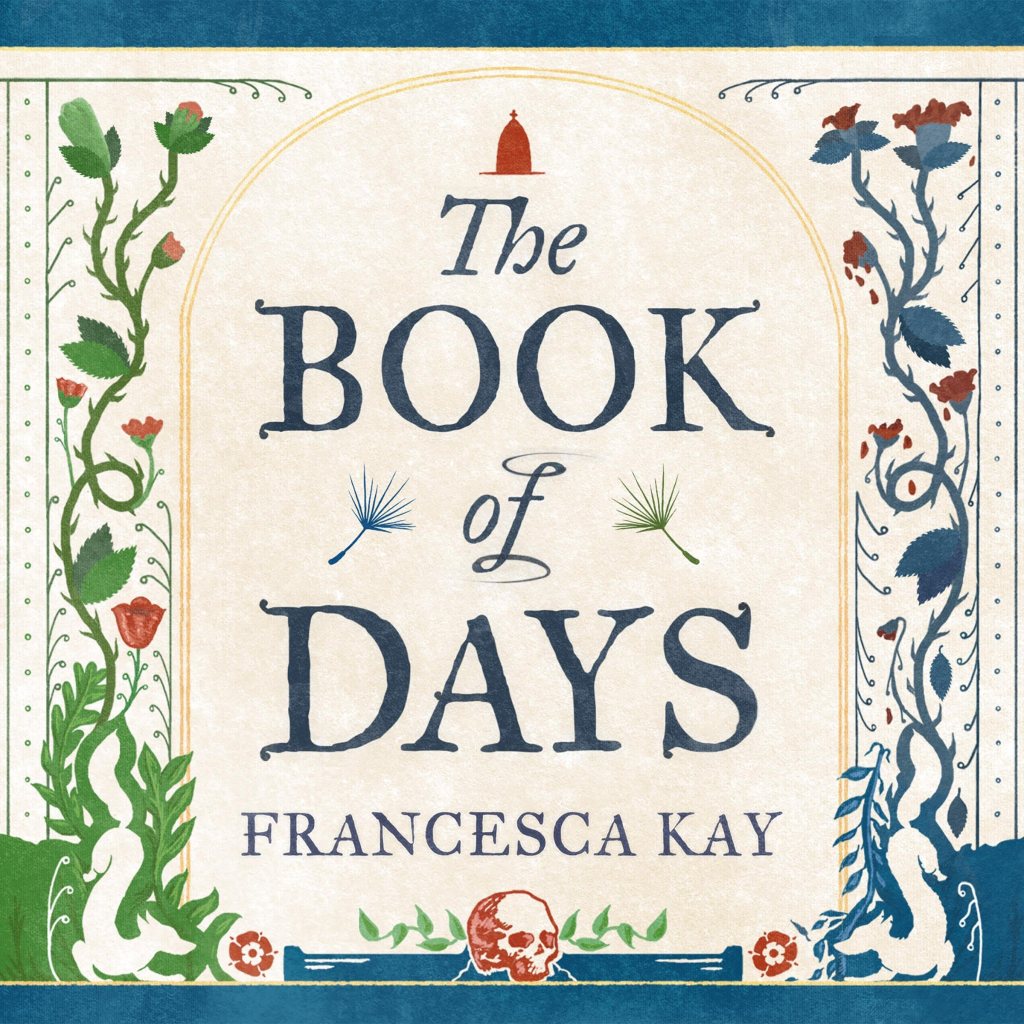
The Book of Days by Francesca Kay (Swift Press)
Anno Domini 1546. In a manor house in England a young woman feels the walls are closing round her, while her dying husband is obsessed by his vision of a chapel where prayers will be said for his immortal soul.
As the days go by and the chapel takes shape, the outside world starts to intrude. And as the old ways are replaced by the new, the people of the village sense a dangerous freedom.

Days of Light by Megan Hunter (Picador via NetGalley)
Easter Sunday, 1938. Ivy is nineteen and ready for her life to finally begin. In the idyllic Sussex countryside, her sprawling, bohemian family and their friends gather for lunch, awaiting the arrival of a longed-for guest.
It is a single, enchanted afternoon that ends in tragedy.
Days later, at a funeral, Ivy is kissed by the man she will marry, and grieves with the woman who will become the love of her life. And this is only the beginning . . .
Chronicling six pivotal days across six decades, Days of Light moves through the Second World War and the twentieth century on a radiant journey through a life lived in pursuit of love and in search of an answer.
What I’ve Just Read
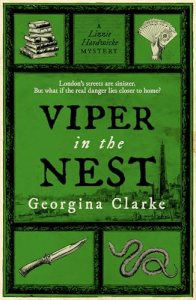
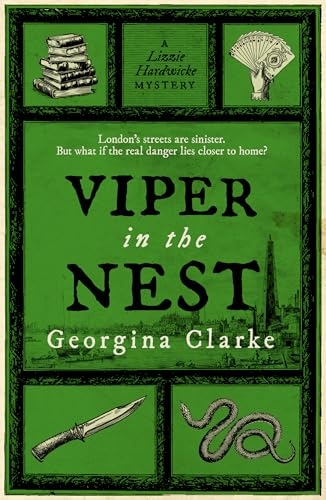
Viper in the Nest by Georgina Clarke (Verve Books)
Sister Rosa’s Rebellion (The Meonbridge Chronicles #6) by Carolyn Hughes (Riverdown)
How can you rescue what you hold most dear, when to do so you must break your vows?
1363. When Mother Angelica, the old prioress at Northwick Priory, dies, many of the nuns presume Sister Rosa – formerly Johanna de Bohun, of Meonbridge – will take her place. But Sister Evangelina, Angelica’s niece, believes the position is hers by right, and one way or another she will ensure it is.
Rosa stands aside to avoid unseemly conflict, but is devastated when she sees how the new prioress is changing from a place of humility and peace to one of indulgence and amusement, if only for the prioress and her favoured few. Rosa is terrified her beloved priory will be brought to ruin under Evangelina’s profligate and rapacious rule, but her vows of obedience make it impossible to rebel.
Meanwhile, in Meonbridge, John atte Wode, the bailiff, is also distraught by the happenings at Northwick. After years of advising the former prioress and Rosa on the management of their estates, Evangelina dismissed him, banning him from visiting Northwick again.
Yet, only months ago, he met Anabella, a young widow who fled to Northwick to escape her in-laws’ demands and threats, but is a reluctant novice nun. The attraction between John and Anabella was immediate and he hoped to encourage her to give up the priory and become his wife. But how can he possibly do that now?
Can John rescue his beloved Anabella from a future he is certain she no longer wants? And can Rosa overcome her scruples, rebel against Evangelina’s hateful regime, and return Northwick to the haven it once was? (Review to follow)
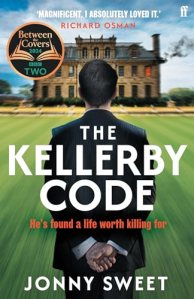
The Kellerby Code by Jonny Sweet (Faber and Faber)
Edward is living in a world he can’t afford and to which he doesn’t belong. To camouflage himself, he has catered to his friends’ fetching drycleaning, sorting flowers for premieres. It’s a noble effort, really – anything to keep his best pals Robert and Stanza happy. In return, his proximity to them might sponge the shame of his birth and violent past cleanly away.
But the chink in his armour is his painfully unrequited love for Stanza. When he realises Stanza and Robert are an item, Edward is pushed too far. His little acts of kindness take a sinister turn, giving way to the unspeakable brutality Edward fears is at his core.
Are there limits to what he will do for his friends? Are there limits to what he will do to them?

What I’ll Be Reading Next

My Name is Emilia del Valle by Isabel Allende, trans. by Frances Riddle (Ballantine Books via NetGalley)
In San Francisco 1866, an Irish nun, left pregnant and abandoned following a torrid relationship with a Chilean aristocrat, gives birth to a daughter named Emilia Del Valle. Raised by a loving stepfather, Emilia grows into an independent thinker and a self-sufficient young woman.
To pursue her passion for writing, she is willing to defy societal norms. At the age of sixteen, she begins to publish pulp fiction under a man’s pen name. When these fictional worlds can’t contain her sense of adventure any longer, she turns to journalism, convincing an editor at the San Francisco Examiner to hire her. There she is paired with another talented reporter, Eric Whelan.
As she proves herself, her restlessness returns, until an opportunity arises to cover a brewing civil war in Chile. She seizes it, along with Eric, and while there, begins to uncover the truth about her father and the country that represents her roots. But as the war escalates, Emilia finds herself in danger and at a crossroads, questioning both her identity and her destiny.
A riveting tale of self-discovery and love from one of the most masterful storytellers of our time, My Name is Emilia del Valle introduces a character who will never let hold of your heart.




 What Cathy Read Next...