Book Review – Clear by Carys Davies

About the Book

Book cover of Clear by Carys Davies

1843. On a remote Scottish island, Ivar, the sole occupant, leads a life of quiet isolation until the day he finds a man unconscious on the beach below the cliffs. The newcomer is John Ferguson, an impoverished church minister sent to evict Ivar and turn the island into grazing land for sheep.

Unaware of the stranger’s intentions, Ivar takes him into his home, and in spite of the two men having no common language, a fragile bond begins to form between them.

Meanwhile on the mainland, John’s wife Mary anxiously awaits news of his mission.

Format: ebook (149 pages) Publisher: Granta
Publication date: 7th March 2024 Genre: Historical Fiction

Find Clear on Goodreads

Purchase Clear from Bookshop.org [Disclosure: If you buy books linked to our site, we may earn a commission from Bookshop.org, whose fees support independent bookshops]


My Review

Clear is set on a remote Scottish island during the Highland Clearances, a period in which much of the rural population of the Scottish Highlands and Islands was forcibly evicted from the land to make way for the much more profitable large scale grazing of sheep.

John Ferguson accepts the task of travelling to the island to evict (‘clear’) its sole inhabitant, Ivar, who has lived alone there for many years. For John the task is borne out of financial necessity in order to earn the funds to establish a new church.

His wife, Mary, has doubts about the morality of the mission, mindful of the human impact of what John has been tasked to do. ‘Into her mind a picture came of this vast emptying-out – a long grey and never-ending procession of tiny figures snaking their way like a river through the country. She saw them moving away with quiet resignation, leading animals and small children, carrying tools and furniture and differently sized bundles, and when at last they disappeared she saw the low houses they’d left behind, roofless hearths open to the rain and the wind and the ghosts of the departed while sheep nosed between the stonework, quietly grazing’. She also worries for John’s safety, prompting her to embark on her own journey. I loved the little details the author gives us about her life, meaning she never feels like a character on the periphery.

When John is injured shortly after reaching the island and rendered unconscious, Ivar takes in what is a complete stranger and tends to him. There are moments of great intimacy as Ivar, who seems to sleep only rarely, keeps watch over John and cares for his bodily needs. Close proximity born out of necessity becomes companionship as John recovers his bodily strength, and then develops into something more for both men. John, though, is plagued with guilt that Ivar does not know his true reason for coming to the island, a mission that will uproot Ivar from everything he has known.

I loved the role that language plays in the book. Initially, John and Ivar cannot communicate; Ivar speaks little if no English and John knows nothing of the language Ivar speaks. (The author has based this on Norn, a long extinct language once spoken on the islands of Orkney and Shetland.) They have to communicate in gestures until, little by little, John begins to learn some words. He marvels at how, in Ivar’s language, a word can often have more than one meaning. It’s an immensely descriptive language with many words for different weather conditions, for example.

The writing is simply beautiful, especially the descriptions of the island. ‘There were days when the mist fell like a cloak on to the island’s shoulders; when rain fell in big, coarse drops, melting the soil into a soft brown soup; when a cold, light wind blew over the ground, making the bogs shiver.’

The author resists the temptation to provide an unambiguous resolution to the story, instead leaving the reader to imagine the future lives of the three characters.

Clear is a tender love story, a hymn to a lost way of life and to the raw beauty of the natural world.

I received a review copy courtesy of Granta Books via NetGalley.

In three words: Poetic, intimate, moving
Try something similar: The Lost Lights of St Kilda by Elisabeth Gifford


About the Author

Author Carys Davies

Carys Davies’s debut novel, West, was shortlisted for the Rathbones Folio Prize, runner-up for the McKitterick Prize, and winner of the Wales Book of the Year for Fiction. Her second novel, The Mission House, was first published in the UK in 2020 where it was The Sunday Times Novel of the Year.

She is also the author of two collections of short stories, Some New Ambush and The Redemption of Galen Pike, which won the 2015 Frank O’Connor International Short Story Award and the 2015 Jerwood Fiction Uncovered Prize. She is the recipient of the Royal Society of Literature’s V.S. Pritchett Prize, the Society of Authors’ Olive Cook Short Story Award, a Cullman Fellowship at the New York Public Library, and is a member of the Folio Academy. Her fiction has been translated into nine languages.

Born in Wales, she grew up there and in the Midlands, lived and worked for twelve years in New York and Chicago, and now lives in Edinburgh.

Connect with Carys
Website | Goodreads

Book Review – Hungry Ghosts by Kevin Jared Hosein

About the Book

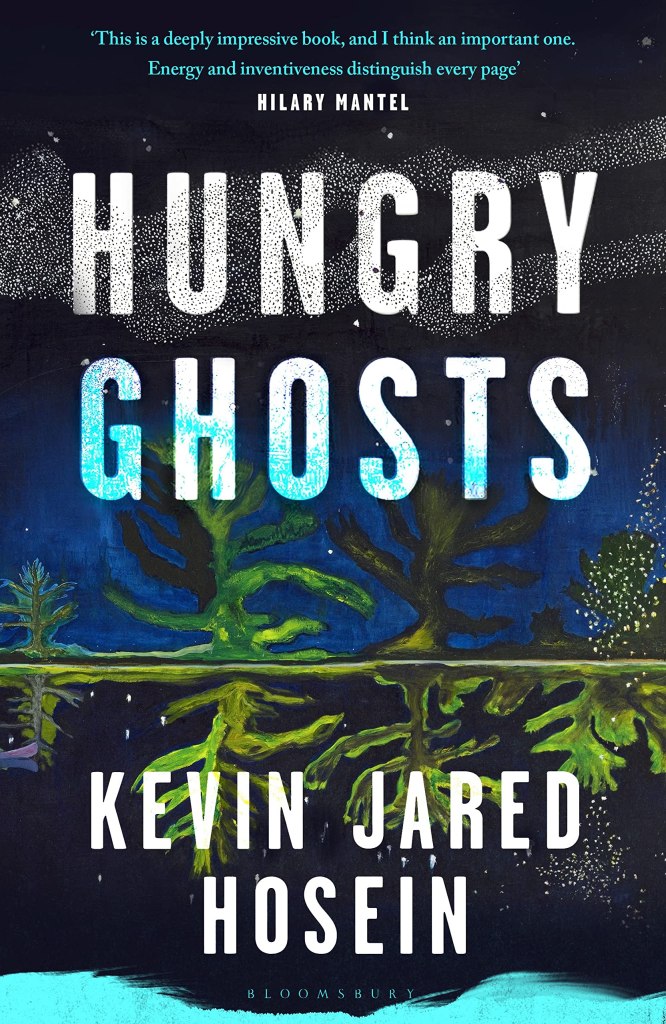
Book cover Hungry Ghosts by Kevin Jared Hosein

The music was still playing when Dalton Changoor vanished into thin air…

On a hill overlooking Bell Village sits the Changoor farm, where Dalton and Marlee Changoor live in luxury unrecognisable to those who reside in the farm’s shadow. Down below is the barrack, a ramshackle building of wood and tin, divided into rooms occupied by whole families. Among these families are the Saroops – Hans, Shweta, and their son, Krishna, who live hard lives of backbreaking work, grinding poverty and devotion to faith.

When Dalton Changoor goes missing and Marlee’s safety is compromised, farmhand Hans is lured by the promise of a handsome stipend to move to the farm as watchman. But as the mystery of Dalton’s disappearance unfolds their lives become hellishly entwined, and the small community altered forever.

Format: Hardback (352 pages) Publisher: Bloomsbury
Publication date: 16th February 2023 Genre: Historical Fiction

Find Hungry Ghosts on Goodreads

Purchase Hungry Ghosts from Bookshop.org


My Review

As well as being a BBC2 Between the Covers book club pick and being longlisted for The Walter Scott Prize for Historical Fiction 2024, Hungry Ghosts is one of the books on the longlist for the Swansea University Dylan Thomas Prize 2024. The shortlist will be announced on Thursday 21st March 2024.

Hungry Ghosts has been described as ‘a mesmerising novel about violence, religion, family and class’ and as ‘biblical in scope and power’. I wouldn’t disagree with either of these although the comparison that came to my mind was a Shakespearean tragedy such is the story of cruelty, revenge, betrayal, hate and lust that unfolds.

The novel focuses on four main characters: Hansraj Saroop and his wife, Shweta; their son, Krishna; and Marlee, the wife of rich businessman Dalton Changoor whose disappearance remains an unresolved mystery for much of the book but is also the catalyst for a chain of events that will bring far-reaching consequences. Other characters, such as Krishna’s cousin, Tarik, and Lata, the daughter of one of the families who share the Saroop’s cramped living space, play important roles in the story. They are not just shadowy figures in the background but are vividly brought to life. Robinson, one of the other workers on the Changoor estate, was a character that particularly stuck in my mind. If there’s anything close to ‘a good man’ in the book, he’s a candidate.

As we learn, many of the characters have experienced violence and cruelty in their lives, often as children at the hands of their fathers. They carry the legacy of those experiences in their actions: sometimes perpetuating them, sometimes seeking to rise above them. Loss – of parents, of children – is a persistent backdrop to the characters’ lives. One loss in particular is a source of grief that Shweta lives with daily but which Hansraj seems unwilling or unable to acknowledge. It’s a ‘hungry ghost’ that feeds upon her every day.

Many of the characters seek to better themselves and to get more from life than what fate has dealt them so far, which in most cases is not very much. Shweta longs for a house of her own that she doesn’t have to share with other families, that offers more privacy than a flimsy partition and that doesn’t leak when it rains. Krishna, an intelligent young man, knows the local school cannot provide the education that will allow him to forge a life beyond the village. He resents the prejudice directed at his family and is frustrated at his father’s seeming acceptance of it. Marlee is one person who has made a new life for herself but it has come at a cost. There will be a cost to others as well.

The story may be bleak but the writing is anything but. You get the sense that every sentence has been thought about and lovingly crafted. The author has an obvious love of language, including some unfamiliar words (‘rufescent’ ‘thaumaturgy’ ‘eutrophic’ ) that had me reaching for the dictionary.

Hungry Ghosts has scenes that are harrowing and difficult to read but the sheer power of the narrative propels you through them. I can see why it has garnered so much praise.

My thanks Henrietta at Midas PR for inviting me to be part of the blog tour celebrating the books on the Swansea University Dylan Thomas Prize 2024 longlist and to Bloomsbury Publishing for my review copy.

Swansea University Dylan Thomas Prize

In three words: Intense, powerful, moving
Try something similar: Fortune by Amanda Smyth


About the Author

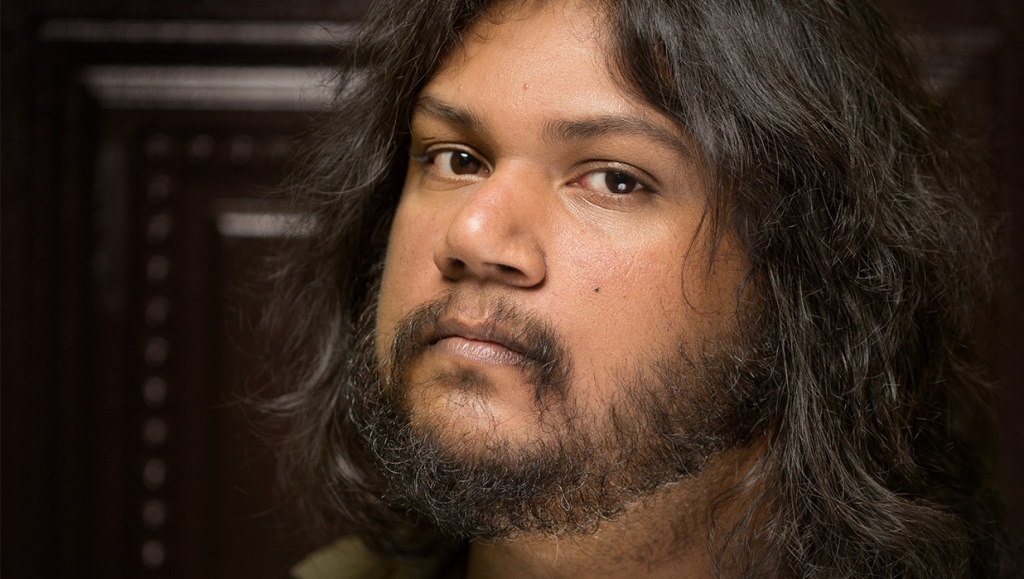
Author Kevin Jared Hosein
Photo credit: Mark Lyndersay

Kevin Jared Hosein is a Caribbean novelist. He has also worked as a secondary school Biology teacher for over a decade. He was named overall winner of the Commonwealth Short Story Prize in 2018, and was the Caribbean regional winner in 2015. He has published two books: The Repenters and The Beast of Kukuyo. The latter received a CODE Burt Award for Caribbean Young Adult Literature, and both were longlisted for the International Dublin Literary Award. His writing, poetry, fiction and non-fiction have been published in numerous anthologies and outlets. He lives in Trinidad Tobago.

Connect with Kevin
X | Instagram