Book Review: Bells of Avalon by Libbet Bradstreet

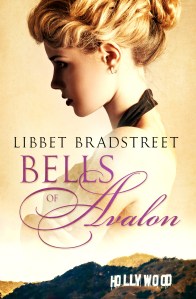
Bells of AvalonAbout the Book

Thrust into a limelight she never chose, Katie’s been paired with Danny for as long as she can remember. Films, roadshow tours, and drugstore appearances…post-war Hollywood can’t seem to get enough of the sweetheart team. They’ll even fall in love one day.  But young love seldom survives the fog wake of Los Angeles – a place of dreams and nightmares.

Format: ebook (298 pp)                    Publisher:
Published: 26th July 2015               Genre: Historical Fiction, Historical Romance

Purchase Links*
Amazon.co.uk  ǀ  Amazon.com
*links provided for convenience, not as part of any affiliate programme

Find Bells of Avalon on Goodreads


My Review

In my interview with the author last year (which you can read in full here), Libbet confessed, ‘I’ve been obsessed with the glamour of vaudeville and the golden age of Hollywood since I was young.’   In Bells of Avalon, the author certainly creates a convincing sense of the period but what comes to the fore is not so much the glamour as the seedier side of Hollywood.  The reader sees the vulnerability of young actors to exploitation (in spite of their chaperones), the manufactured nature of their personas (voice coaching, cosmetic dentistry) and the limited shelf life of child stars. ‘Those children faded away, one by one, irrelevant casualties of the clunking Hollywood machine.’

The traumatic event in Katie’s childhood revealed early in the book makes her possibly the easiest character to empathise with, even if not all her later decisions seem entirely rational.   Danny is also a troubled character and his relationship with Katie is definitely far removed from that depicted in their films and pedalled by the studios’ publicity teams. ‘None of it was real, of course.  They were told what to do and when to smile.’

The book has frequent changes of timeline and location and, even within a particular time period, characters are often recalling (either in a waking or dreaming state) events from years before.  In addition, key facts about the lives of the characters are revealed, often quite late in the book.  A degree of concentration is therefore required from the reader to keep track of events and sort them into some sort of chronology. I confess that I had to reread some earlier sections to make sense of the story and, even at the end of the book – despite careful reading – there were things I was left unsure about, such as the significance of Katie’s ‘real name’.

Bells of Avalon will appeal to fans of stories set in 1950s and 1960s America and in which ‘boy meets girl’ doesn’t necessarily lead to ‘happily ever after’.

I received a review copy courtesy of the author.

Follow my blog with Bloglovin

In three words: Intense, emotional, multi-timeline

Try something similar…Woman Enters Left by Jessica Brockmole (read my review here)


Libbet BradstreetAbout the Author

Libbet Bradstreet is a philanthropy writer currently residing in Austin, Texas. Since 2007, she has served as a fiction judge for the New York-based non-profit NYC Midnight. Her short fiction has been published by Ophelia Street Literary Arts Journal. Bells of Avalon is her debut novel. (Photo credit: Goodreads author page)

Connect with Libbet

Goodreads

Buchan of the Month: Introducing Memory Hold-The-Door by John Buchan

Buchan of the Month

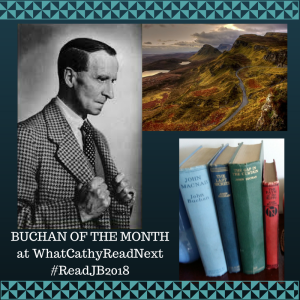
Memory Hold-The-Door is the eleventh book in my John Buchan reading project, Buchan of the Month.  You can find out more about the project and my reading list for 2018 here.  If you would like to read along with me you will be very welcome – leave a comment on this post or on my original challenge post.  Memory Hold-The-Door is also a book on my Nonfiction November 2018 reading list.

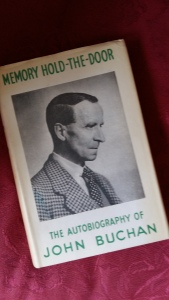
MemoryHoldTheDoorWhat follows is an introduction to the book.  It is also an excuse to show a picture of my lovely 1964 edition of the book complete with dust jacket*.  I will be posting my review of the book later in the month.

In her biography of John Buchan (created Baron Tweedsmuir of Elsfield in 1935 upon his appointment as Governor-General of Canada), Janet Adam Smith writes: ‘The end of a job is a time for stocktaking and looking back.  Tweedsmuir had been purposefully looking back on his life, for all through 1939 he was at work on his autobiography.’  Andrew Lownie, in his 1995 biography of Buchan, reports he had in fact started writing his autobiography in the spring of 1938, signing a contract for it with Hodder & Stoughton in July of that year.

Buchan told a correspondent the book was ‘not an ordinary autobiography or any attempt to tell the unimportant story of my life; but rather an attempt to pick out certain high lights and expound the impressions made upon me at different stages’.  Buchan made a deliberate choice not to write about anyone still alive, including family members.

On 5th February 1940, Buchan told his sister Anna, ‘I have finished my novel [Sick Heart River] and my autobiography’. The following day, Buchan suffered the cerebral thrombosis that ultimately proved fatal and he died on 12th February.

Memory Hold-The-Door was published in the UK by Hodder & Stoughton in August 1940 although excerpts first appeared in The Sunday Times in March, April and June of that year.  It was published in the US under the title Pilgrim’s Way by Houghton Mifflin on 27th August 1940, with excerpts first appearing in The Atlantic Monthly in May, June and July.

Janet Adam Smith reports that two extracts from Pilgrim’s Way were included in an article on the books President Kennedy liked in the ‘J. F. K. Memorial Issue’ of Look, published on 17th November 1964.  The article included a commentary by Mrs. John F. Kennedy: ‘Pilgrim’s Way, the memoirs of John Buchan, Lord Tweedsmuir, he once said was his favourite book.  He gave it to me before we were married.  The part for which he cared most was a portrait of the brilliant Raymond Asquith…who was killed in action in World War 1.  The poignancy of men dying young always moved my husband – possibly because of his brother Joe dying in World War II.  I think the first line [‘He disliked emotion, not because he felt lightly but because he felt deeply’] could have been written of John F. Kennedy.’

* The front flap of the dust jacket of my edition of Memory Hold-The-Door contains the following note: ‘It was known throughout his Governor-Generalship of Canada that Lord Tweedsmuir was working quietly at the autobiography which it was his intention  to publish immediately on his retirement.  One copy of the completed manuscript reached London only a fortnight before his death: the other with his final verbal corrections, was at that moment being re-typed in Ottawa; and it was from this type-script, unaltered, that the book was printed – with the addition of two peculiarly beautiful chapters entitled “Pilgrim’s Rest” which were found among his papers.’  [The two chapters referred to are from a book about fishing Buchan was planning to write at the time of his death.]


Sources:

Kenneth Hillier & Michael Ross, The First Editions of John Buchan: A Collector’s Illustrated Bibliography – A Complement to Robert G Blanchard (Avonworld, 2008 [1981])

Andrew Lownie, John Buchan: The Presbyterian Cavalier (Constable, 1995)

Janet Adam Smith, John Buchan: A Biography (OUP, 1985 [1965])