Blog Tour/Book Review: Once Upon A River by Diane Setterfield

I’m thrilled to be kicking off the blog tour for Once Upon A River by Diane Setterfield.  My grateful thanks to Doubleday and Henley Literary Festival for my (signed) proof copy of  Once Upon A River and to Anne at Random Things Tours for inviting me to participate in the blog tour and for giving me the honour of the first stop.  Do check out the tour banner at the bottom of this post so you can follow the other fabulous book bloggers taking part in the tour.

Once Upon A River is published tomorrow (4th December) in ebook format and in the US and Canada in hardback as well.  It will be published in hardback in the UK on 17th January 2019.
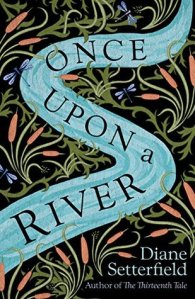

Once Upon A RiverAbout the Book

A dark midwinter’s night in an ancient inn on the Thames. The regulars are entertaining themselves by telling stories when the door bursts open on an injured stranger. In his arms is the drowned corpse of a little child.

Hours later the dead girl stirs, takes a breath and returns to life.

Is it a miracle? Is it magic? Or can it be explained by science?

An exquisitely crafted multi-layered mystery brimming with folklore, suspense and romance, as well as with the urgent scientific curiosity of the Darwinian age, Once Upon a River is as richly atmospheric as Setterfield’s bestseller The Thirteenth Tale.

Format: Hardcover, ebook (432 pp.)    Publisher: Doubleday
Published in UK: 4th December 2018 (ebook), 17th January 2019 (hardcover)
Genre: Historical Fiction, Mystery

Pre-order/Purchase Links*
Amazon.co.uk  ǀ  Amazon.com  ǀ Hive.co.uk (supporting UK bookshops)
*links provided for convenience, not as part of any affiliate programme

Find Once Upon A River on Goodreads


My Review

The dramatic moment early in the book when an injured stranger arrives at the riverside Swan inn with what seems to be the lifeless body of a child sets in motion a search for answers to many questions.  It’s a quest for the truth involving the weighing up of competing claims about the child’s identity, the resolution of previously unresolved mysteries and the seeming contradiction between scientific fact and perceived events.  More than anything, it’s a yearning for a story that makes sense.  Having witnessed the dramatic arrival, the regulars at the Swan, a place known for its storytelling, immediately begin to talk, ‘finding words to turn the night’s events into a story’.

The concept of story-telling forms a key part of the book.  The telling of stories is shown to be variously a source of entertainment, a skill, a tradition handed down through the generations, a way of making a living or impressing others.  The book explores how stories may be rooted in a geographical area or a period of history.  What also emerges from the book is that stories can be a means of trying to make sense of things but that the ownership of stories can be transitory as they travel, mutate or are embellished in the retelling.  And, who doesn’t crave to know how a story ends?

The richly drawn characters in the book embody all aspects of human nature – the good and the bad – and cleverly address the nature versus nurture debate.  My favourite character was Rita.  Independent minded and self-educated in nursing and midwifery, she has a logical, questioning approach to things using astute observation to analyse people and situations.  She proves herself to be brave, resourceful and daunted only by very particular fears about one aspect of life.

The river, described at one point as ‘majestic, powerful, unknowable’, plays a central role in the book – almost becoming a character in its own right.  I particularly loved the chapter ‘Tributaries’ in which the author cleverly uses the river as a model for introducing other characters into the story.

The river is frequently a source of metaphor too.  For example, at one point a character finds himself hemmed in by a crowd of people – a ‘throng thickened to stagnation’ – until he eventually finds space and ‘a sluggish current’ that allows him to progress.  A group of drinkers at the Swan, trying to make sense of events find their thoughts have ‘eddied round, discovered currents within currents, met counter currents.’  Another character, facing a moral dilemma, finds himself ‘no more able to direct the current of his life than a piece of debris can control the stream that carries it.’

The river is not the only elemental force in the book.  The changing seasons, particularly the points of the year marked by the solstices and equinoxes, are the backdrop to pivotal moments in the book.  Although set in the age of scientific discovery – Darwin’s theory of evolution, the dawn of the study of psychology and the human mind – the characters in the book come across things that seemingly can’t be explained by logic, facts or reason.  Some choose to fall back on the supernatural and stories older than the one they are currently living through.   At times, characters experience presentiments about future events which, as well as tapping into the supernatural aspect of the book, also create narrative tension.

In the breathless final chapters, a positive torrent of secrets is unleashed, the true nature of things becomes evident and natural instincts are proved correct.  At the end, everything feels perfectly in balance with the rhythms of life from birth to death.  Like the ebb and flow of the tide, if you like.  (Sorry, these water metaphors are catching.)

I was lucky enough to hear Diane Setterfield talk about Once Upon A River at this year’s Henley Literary Festival, as it happens whilst sailing up the River Thames that is such an important part of the story.  (You can read my write-up of the event here.)  Hearing her talk about the book gave me additional insight into the themes it explores and resulted in a few ‘Ah, yes’ moments of recognition while I was reading it.

I think you can probably tell that I absolutely loved this book.  To borrow a watery metaphor from the author, I was swept away by the story and the skill with which it was told.   I closed Once Upon A River with a sigh of satisfaction, if I’m honest a little teary-eyed, and certain in the knowledge this will be one of my favourite books of the year.  Right now, it’s definitely challenging for the top spot.

Follow my blog with Bloglovin

In three words: Magical, atmospheric, suspenseful

Try something similar…The Good People by Hannah Kent (read my review here)


Diane Setterfield Author PictureAbout the Author

Diane Setterfield’s bestselling novel, The Thirteenth Tale, was published in 38 countries, sold more than three million copies, and was made into a television drama scripted by Christopher Hampton, starring Olivia Colman and Vanessa Redgrave. Her second novel was Bellman & Black, and her new novel is Once Upon a River. Born in rural Berkshire, she now lives near Oxford, by the Thames.

Connect with Diane

Website  ǀ Facebook  ǀ Twitter  ǀ Goodreads
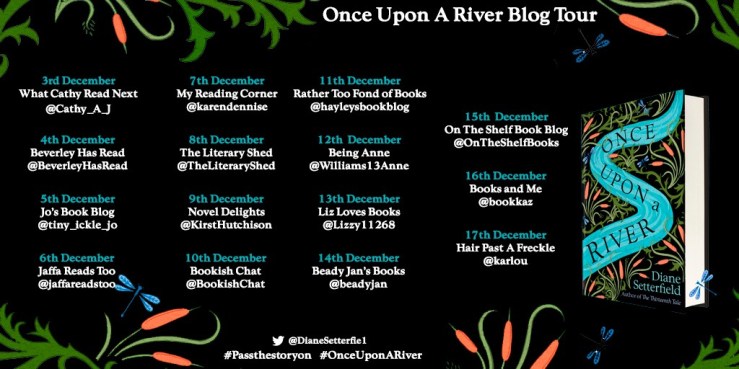
FINAL Once Upon A River BT Poster


Buchan of the Month/Book Review: Memory Hold-the-Door by John Buchan

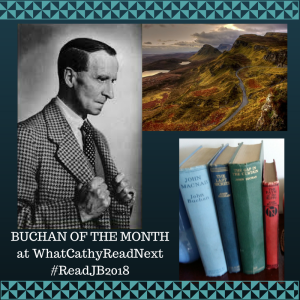
Buchan of the Month

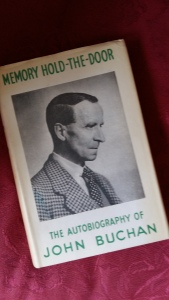
MemoryHoldTheDoorAbout the Book

John Buchan, 1st Baron Tweedsmuir (1875-1940) completed his autobiography not long before his death. A highly accomplished man, his was a life of note. Although now known by many chiefly as an author, he was also an historian, Unionist politician and Governor General of Canada. Although he stated that it was not strictly an autobiography, Memory Hold-the-Door provides a reflective, personal account of his childhood in Scotland, his literary work from his time at Oxford University to the famous Hannay and Leithen stories and his extensive public service in South Africa, Scotland, France in the Great War, and Canada. Known in the United States as Pilgrim’s Way, Memory Hold-the-Door was reportedly one of the favourite books of John F. Kennedy.

Format: Hardcover         Publisher: Hodder & Stoughton
Published: 1964 [1940]  Genre: Nonfiction, Memoir

Purchase Links*
Amazon.co.uk ǀ Amazon.com
*links provided for convenience, not as part of any affiliate programme

Find Memory Hold-the-Door on Goodreads


My Review

Memory Hold-the-Door is the penultimate book in my Buchan of the Month reading project for 2018.  You can find out more about the project plus my reading list for 2018 here and read my introduction to the book here.   Memory Hold-the-Door is also one of the books I read for Nonfiction November.

On 5th February 1940, Buchan wrote to his sister, Anna, ‘I have finished my novel [Sick Heart River] and my autobiography’. The following day, Buchan suffered the cerebral thrombosis that ultimately proved fatal and he died on 12th February.  Some time before Buchan had told a correspondent that Memory Hold-the-Door was ‘not an ordinary autobiography or any attempt to tell the unimportant story of my life; but rather an attempt to pick out certain high lights and expound the impressions made upon me at different stages’.

Buchan made a deliberate choice not to write about anyone still alive, including family members, so there are only a few passing mentions of his wife and children in Memory Hold-the-Door.  There is, however, this lovely sentiment: ‘I have been happy in many things, but all my other good fortune has been as dust  in the balance compared with the blessing of an incomparable wife.’

There are generous and astute pen pictures of contemporary figures of note with whom Buchan came into contact during a life and career that encompassed the law, colonial administration, publishing, journalism, work in military intelligence, service as an MP and as Governor-General of Canada, as well as the writing for which he is now best known.  Such figures include Lord Grey, Arthur Balfour, Lord Haig and King George V.

Of the latter, Buchan writes: ‘He did me the honour to be amused by my romances [by which Buchan means his adventure stories and historical novels], and used to make acute criticisms on questions of fact.  Of one, a poaching story of the Highlands [which I assume to be John Macnab], he gave me a penetrating analysis, but he approved of it sufficiently to present many copies of it to his friends.’

I particularly enjoyed Buchan’s portrait of his friendship with T. E. Lawrence which to me appears insightful despite Buchan’s own remark that ‘there is no brush fine enough to catch the subtleties of his mind, no aerial viewpoint high enough to being into one picture the manifold of his character’.   Buchan recalls, ‘He would turn up without warning at Elsfield [Buchan’s Oxfordshire home] at any time of the day or night on his motor-cycle Boanerges, and depart as swiftly and mysteriously as he came’.  Buchan remembers Lawrence’s ‘delightful impishness’ but also his depression following what he considered his failure on behalf of the Arabs.  Buchan writes: ‘In 1920 his whole being was in grave disequilibrium.  You cannot in any case be nine time wounded, four times in an air crash, have many bouts of fever and dysentery, and finally at the age of twenty-nine take Damascus at the head of an Arab army, without living pretty near the edge of your strength’.  Quite.

Most touching are the portraits of friends, many of whom sadly died in the First World War (as did one of Buchan’s brothers, Alastair) .  Some of these portraits also appear in Buchan’s book These For Remembrance, originally privately printed.

Elsewhere in Memory Hold-the-Door he writes about his student days (including some high jinks) at Oxford University, his admiration for America and its people, his love of fishing and mountaineering, and his experience of the absurdities of the House of Commons (which I suspect may be largely unchanged).  ‘There are seats for only about three-fourths of the members, and these seats are uncomfortable; the ventilation leaves the head hot and the feet cold; half the time is spent dragging wearily in and out of lobbies, voting on matters about which few members know anything; advertising mountebanks can waste a deal of time; debates can be as dull as a social science congress in the provinces…’  However, for balance, he does go on to say that ‘speeches are shorter and of a far higher quality than in any other legislative assembly’.

The book is written in Buchan’s customary effortless prose style and while some of the people he writes about may no longer be familiar to or of interest to the modern reader, it does give a fascinating insight into an admittedly elite stratum of society of that time and Buchan’s personal philosophy and beliefs or his ‘creed’ as he refers to it.  About his own writing, he describes himself as a ‘copious romancer’ and ‘a natural story-teller, the kind of man who for the sake of his yarns would in prehistoric days have been given a seat by the fire and a special chunk of mammoth’.

One of Buchan’s last acts as Governor-General of Canada was to sign that country’s entry into the Second World War.  With remarkable prescience, he writes in the final chapters of Memory Hold-the-Door of his fears for the future.  ‘We have lived by toleration, rational compromise and freely expressed opinion, and we have lived very well.  But we had come to take these blessings for granted, like the air we breathed. […] Today we have seen those principles challenged… We have suddenly discovered that what we took for the enduring presuppositions of our life are in danger of being destroyed.’   Indeed, Buchan had remarked earlier in the book that ‘the study of [history] is the best guarantee against repeating it’.

Next month’s Buchan of the Month is Sick Heart River, Buchan’s last novel which was published posthumously.  Along with Mr. Standfast, it is my favourite of his novels.  Look out for my introduction to the book next week and my review towards the end of the month.

Follow my blog with Bloglovin

In three words: Reflective, friendship, personal

Try something similar…Unforgettable, Unforgotten by Anna Buchan


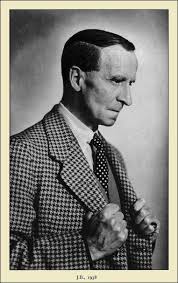
John BuchanAbout the Author

John Buchan (1875 – 1940) was an author, poet, lawyer, publisher, journalist, war correspondent, Member of Parliament, University Chancellor, keen angler and family man.  He was ennobled and, as Lord Tweedsmuir, became Governor-General of Canada.  In this role, he signed Canada’s entry into the Second World War.   Nowadays he is probably best known – maybe only known – as the author of The Thirty-Nine Steps.  However, in his lifetime he published over 100 books: fiction, poetry, short stories, biographies, memoirs and history.

You can find out more about John Buchan, his life and literary output by visiting The John Buchan Society website.