
Buchan of the Month/Book Review: The Path of the King by John Buchan

buchan of the month 2019 poster

The Path of the KingAbout the Book

The Path of the King offers a tapestry of historical episodes, from the Vikings through centuries of Norman and French, Flemish, English, Scottish and American social, economic and political life.

Format: Hardcover (283 pp.)    Publisher: Thomas Nelson & Son
Published: [1921]   Genre: Historical Fiction

Purchase Links*
Amazon.co.uk  ǀ  Amazon.com 
*links provided for convenience, not as part of any affiliate programme

Find The Path of the King on Goodreads


My Review

The Path of the King is the third book in my Buchan of the Month reading project for 2019.  You can find out more about the project and my reading list for 2019 here.  You can also read my spoiler-free introduction to The Path of the King here.

Kate Macdonald, author of John Buchan: A Companion to the Mystery Fiction (McFarland, 2009) describes The Path of the King as a ‘connected sequence of short stories’ and I think that is a very apt description.  The book certainly reads more like a collection of short stories than a novel but there is a thread that runs through all the stories, embodied in a gold ring handed down through the generations.  Beginning with a Viking’s son lost in a raid, the book traces the line of descent through the centuries to American President,  Abraham Lincoln.  It is essentially a series of historical vignettes, featuring characters who are often participants in or witnesses to great events and who rub shoulders with important individuals from history including Sir Walter Raleigh, Oliver Cromwell (both the subject of essays and biographies by Buchan), Daniel Boone and the aforementioned Abraham Lincoln.

In his biography of John Buchan, The Presbyterian Cavalier (Constable, 1995), Andrew Lownie argues that the novel reflects Buchan’s interest in the chance encounters in history and in kingship, noting that the latter would later be explored further in The Blanket of the Dark (September’s Buchan of the Month).  Two stories from the book were subsequently dramatised by John Buchan’s wife, Susan – ‘The Maid’ (published in 1933 under the title, The Vision at the Inn: A Play in One Act) and ‘The Wife of Flanders’ (published in The Bookman in 1934).  These happen to be the two stories in the book that most stood out for me.

Janet Adam Smith, author of John Buchan: A Biography (OUP, 1985 [1965]) describes The Path of the King as historical fantasy and there is certainly a mystical, spiritual element to many of the stories.  This is particularly evident in ‘The Maid’ in which a young noblewoman, plagued with doubt about her demand to her lover to make a choice between her or his support for Joan of Arc, has an encounter with another young woman facing her own moral dilemma.  There are some lovely touches in the description of the meeting between the two young woman.  As it turns out, it may not be their final meeting.

In ‘The Wife of Flanders’, Buchan shows his ability to create atmosphere as he describes the chamber in which the wife of a Flemish burgomaster lies dying.  ‘The small-paned windows of the great upper-room were filled with oiled vellum, but they did not keep out the weather, and currents of cold air passed through them to the doorway, making the smoke of the four charcoal braziers eddy and swirl… Hanging silver lamps, which blazed blue and smoky, lit it in patches, sufficient to show the cleanness of the rush-strewn floor, the glory of the hangings of cloth-of-gold and damask, and the burnished sheen of the metal-work.’  Spurning the ministrations of priests and doctors, the woman finds comfort in the thought that her son will achieve greatness only to find that fate intervenes in an unexpected way.

Those who have followed my reviews of previous books in my Buchan of the Month project will note that an appearance by John Bunyan’s The Pilgrim’s Progress can never be ruled out in a John Buchan book.  In the case of The Path of King it arrives in the story ‘The Last Stage’, also notable for giving the reader a glimpse of a young Abraham Lincoln. He will reappear in the last story in the book, ‘The End of the Road’ and in the book’s epilogue.
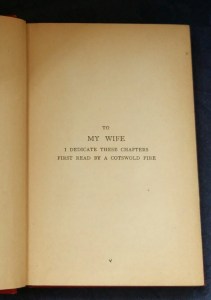
20190305_134701-1Although not all of the stories had equal appeal for me, The Path of the King is an interesting insight into Buchan’s use of the short story form and an indication of his interest in history, especially American history, at this point in his life.  I’m also touched by the dedication of the book to his wife, Susan.

Next month’s Buchan of the Month is another historical novel, Midwinter. Look out for my spoiler free introduction to the book shortly and my review towards the end of April.

Follow my blog with Bloglovin

In three words: Well-crafted, atmospheric, insightful

Try something similar:  Beautiful Star & Other Stories by Andrew Swanston (read my review here)
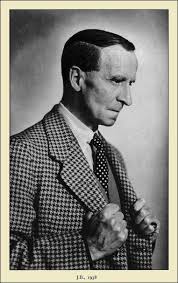

John BuchanAbout the Author

John Buchan (1875 – 1940) was an author, poet, lawyer, publisher, journalist, war correspondent, Member of Parliament, University Chancellor, keen angler and family man.  He was ennobled and, as Lord Tweedsmuir, became Governor-General of Canada.  In this role, he signed Canada’s entry into the Second World War.   Nowadays he is probably best known – maybe only known – as the author of The Thirty-Nine Steps.  However, in his lifetime he published over 100 books: fiction, poetry, short stories, biographies, memoirs and history.

You can find out more about John Buchan, his life and literary output by visiting The John Buchan Society website.

Reading The Walter Scott Prize 2019 Longlist: After the Party by Cressida Connolly

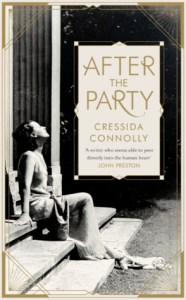
After the PartyAbout the Book

‘Had it not been for my weakness, someone who is now dead could still be alive. That is what I believed and consequently lived with every day in prison.’

It is the summer of 1938 and Phyllis Forrester has returned to England after years abroad. Moving into her sister’s grand country house, she soon finds herself entangled in a new world of idealistic beliefs and seemingly innocent friendships. Fevered talk of another war infiltrates their small, privileged circle, giving way to a thrilling solution: a great and charismatic leader, who will restore England to its former glory.

At a party hosted by her new friends, Phyllis lets down her guard for a single moment, with devastating consequences. Years later, Phyllis, alone and embittered, recounts the dramatic events which led to her imprisonment and changed the course of her life forever.

Format: Hardcover, ebook (272 pp.)    Publisher: Viking
Published: 7th June 2018                         Genre: Historical Fiction

Purchase Links*
Amazon.co.uk  ǀ  Amazon.com ǀ Hive.co.uk (supporting UK bookshops)
*links provided for convenience, not as part of any affiliate programme

Find After the Party on Goodreads


My Review

It’s 1938 and returning to England from abroad, Phyllis gets involved with helping her sister, Nina, organise the summer camp Nina runs as part of her ‘peace work’ for a political movement. For quite a while the identity of the charismatic individual who heads the movement, referred to only as ‘the Leader’, is not revealed, although readers will probably have their suspicions given some of the unpalatable views espoused and the period in which the events take place.  What the book does well is reflect the range of views that prevailed at the time.  How many people were fearful of the prospect of war not so much because they were advocates of appeasement or supporters of the Nazi regime but because they feared the upheaval of war, remembering only too well the carnage wrought by the First World War.

I really enjoyed the way the book explores the changing dynamics of the relationship between the sisters – Phyllis, Nina and Patricia – and their different characters.  Phyllis is the peacemaker of the trio, trying to accommodate other’s wishes.  ‘I always wanted to be friends with both my sisters.  Perhaps that was the source, really, of all the troubles of my life.’

It has to be said that the social circle the sisters move in, particularly Patricia, is not populated by the nicest of people.  It is made up of individuals who don’t really seem to like each other that much but preserve the social niceties whilst attending dinner parties and the like.  Gossipy anecdotes, cruel little asides, mockery and petty snobbery seem to be the order of the day.   It’s a picture of a section of society, with their cooks, parlour maids and drivers, which despite all the airs and graces seem removed from the everyday lives and experiences of most people.    The sort of people who live in houses with a ‘morning room’, such as the house Phyllis’s husband, Hugh, plans to build.  ‘In the mornings Phyllis would be able to take her coffee and write her letters there; perhaps they might install a nice little sofa too, where she might like to sew or read.’

The book opens in 1979 as Phyllis recounts her memories of the period just before the Second World War and during the War itself to an unnamed and unidentified individual researching the history of that time.  What follow are extensive flashbacks as Phyllis recalls events, both public and private.  Some of what she recalls, especially the circumstances of her imprisonment, was certainly new to me and rather an eye-opener.  These sections of the book have a real feeling of authenticity, albeit the events described are slightly bizarre at times.

The author is a skilful writer; I especially liked the imaginative descriptions and quirky similes.  A few of my favourites:
‘Nina’s house stood a little way along from the garage, set back from the road politely, like someone waiting to be introduced.’
‘The tide was out and little boats lolled on their sides in their sandy mud, like the tongues of overheated dogs.’
‘There were blackberries plumping in the hedgerows now and buddleia, giving off a faint scent like pencil sharpenings.’

Although there were elements of After the Party I very much enjoyed, overall I was left with a slight sense of disappointment; the feeling that the book was less than the sum of its parts.  For example, the ‘moment of weakness’ referred to in the blurb seems a minor misdemeanour on Phyllis’s part and one in which she is not really the most guilty party or responsible for what follows.  Yet it seems to weigh on her conscience for the rest of her life so much so that she treats her draconian imprisonment as justified punishment.  Later Phyllis experiences what she views as a ‘betrayal’ but which did not really to amount to anything like that, it seemed to me.

I learned a lot from reading After the Party and appreciated the skilful writing but wanted to feel more enthusiastic about the story than I did. In this respect I seem to be out of step with other readers given the book’s inclusion on the longlist for The Walter Scott Prize for Historical Fiction 2019.

I received a review copy courtesy of publishers, Penguin Books UK/Viking, and NetGalley.

Follow my blog with Bloglovin

In three words: Fascinating, well-researched, intimate


About the Author

Cressida Connolly is a reviewer and journalist, who has written for Vogue, The Telegraph, the Spectator, The Guardian and numerous other publications.

Cressida is the author of three books: The Happiest Days, which won the MacMillan/PEN Award, The Rare and the Beautiful and My Former Heart. Cressida is the daughter of writer Cyril Connolly. In 1985 she married Worcestershire farmer Charles Hudson. They have three children.

Connect with Cressida

Website  ǀ  Goodreads