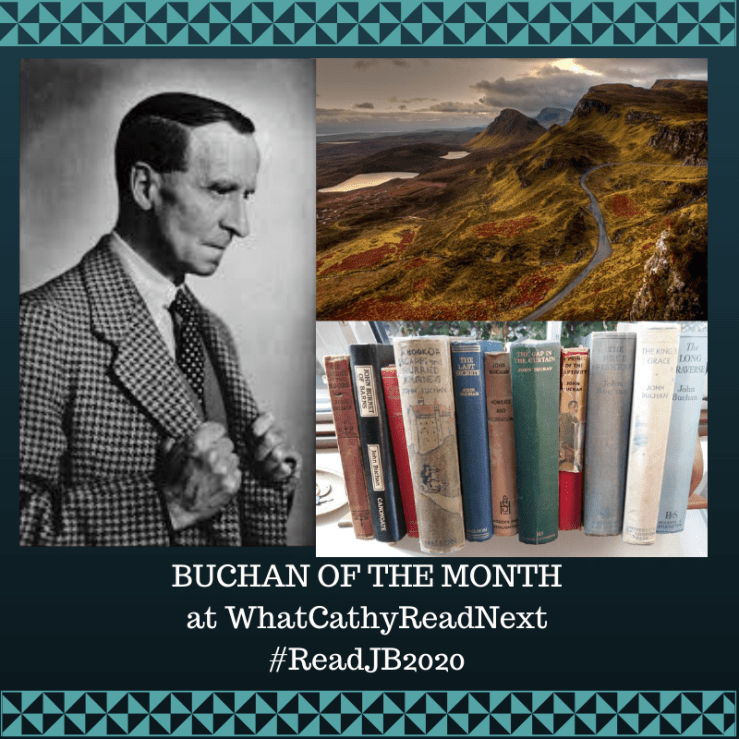
#BookReview Homilies and Recreations by John Buchan #ReadJB2020

20200620_095517-1About the Book

A collection of essays on literary, political and historical matters.

Format: Hardcover (316 pages)            Publisher: Hodder & Stoughton         Publication date: 1939 [1926]                     Genre: NonFiction


My Review

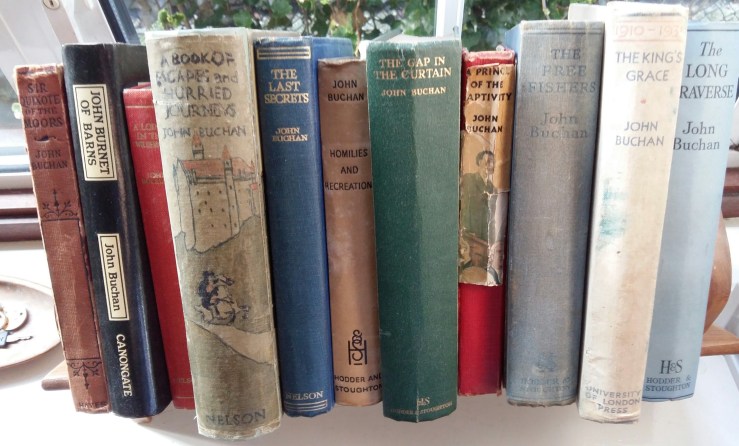
My Buchan of the Month for June is Homilies and Recreations which was published in September 1926 by Thomas Nelson & Sons.  My copy (pictured) is a later revised edition published by Hodder & Stoughton in 1939. You can read my earlier blog post introducing the book here.

I will admit to approaching the book with a degree of trepidation as the inclusion of the word ‘Homilies’ in the title suggested the prospect of a rather moralistic tone. In fact, I was pleasantly surprised by how interesting many of the essays were, especially those originally delivered as lectures or speeches. There were even one or two moments of humour.

John Buchan’s personal interests come through clearly in both the choice and content of the pieces. For example, his passion for the novels of Sir Walter Scott, his interest in history and education, his regard for the United States and his fondness for the countryside around Oxford.

In ‘Some Notes on Sir Walter Scott’, Buchan reveals himself as an amazingly prolific reader. Whilst convalescing in the spring of 1917, he reports he read (or reread) eight of Scott’s novels, several novels by Alexandre Dumas and Victor Hugo plus half a dozen by Balzac. Buchan rates Sir Walter Scott as the greatest of these novelists for his ability to see things on a grander scale, to clarify life and observe “justly and nobly”. Using examples from some of the author’s novels, he defends criticism of Scott’s verbal style, his construction of plots and lack of psychological depth in his characters. Admitting that at times Scott could write “abominably”, Buchan asks whether there is any great writer who does not sometimes, in his phrase, “nod”.

Staying with the literary theme, in ‘The Old and the New in Literature’, Buchan addresses the long-standing debate about the relative merits of classic and modern literature. As he says, “The strife of old and new, classic and modern, has been going on merrily since the caveman discovered a new way of making pictures on bone, and was snubbed by the elders of his tribe, who pointed to certain ancient daubs on the cave wall as the last word in art.” In defence of the modern novel, he praises the instinct of writers to try something different whilst stressing the need for the “shape and purpose” that he sees as a feature of classic works.

John Buchan was a long time student of American history, and had a particular regard for the political, military and strategic skills of Abraham Lincoln. (Lincoln has a starring role in the final story in The Path of the King, published in 1921.) In ‘Two Ordeals of Democracy’, Buchan observes, “Democracy as a form of government is subject to perpetual challenge, not from foreign enemies alone, but from foes in its own household. Liberty demands a close and unremitting guardianship.” Wise words that could equally apply to today’s world.

‘Literature and Topography’ brings together two of Buchan’s interests – history and the natural world. He argues that for a fictional place to seem real it is necessary for the author to create “a particularized landscape” which the reader can fix in their memory in order to follow the story. No surprise that he includes Sir Walter Scott in his list of writers who were masters of creating fictional landscapes, alongside Charles Dickens, Anthony Trollope and Thomas Hardy. For Buchan, an essential element of a “particularized landscape” are place-names, which he describes as “splendid things”. He writes, “They may have the flavour of ancient stateliness, or they may be harsh mementos of old passions or gnarled remnants of a forgotten humour, or they may reflect the poetry in the people’s heart and sing themselves to music”.

It has to be said that, despite the eloquence of Buchan’s prose, some of the subject matter has dated and is unlikely to be of interest to the general reader. I would include in that category ‘The Victorian Chancellors’, a series of pen portraits of (largely forgottable) men who held the office of Lord Chancellor, and ‘Lord Balfour and English Thought’.

One of my favourite essays was ‘Style and Journalism’ in which Buchan pulls no punches, describing much of modern writing as “careless, fantastic, shapeless and, to my conservative mind, undeniably bad“. English journalism, however, he believes has reached the highest level of competence. Nevertheless, he lists what he sees as common “pitfalls” in journalistic style, some of which may have you casting a nervous eye over your own output. His list includes mixed metaphors, split infinitives and misuse of adverbs such as ‘singularly’ or ‘literally’. He shows particular disdain for abstraction: “Unless your object is to avoid the law of libel do not say that a man has a ‘complex of misappropriation’ but that he is a thief.

elsfield-manor
Elsfield Manor, Oxfordshire

In ‘Thoughts on a Prospect of Oxford’, Buchan transports the reader to a ridge overlooking Oxford and describes how the view of the city would have changed over the centuries from the 4th century to the present day. In its role call of travellers on the road to Oxford, it recalls the opening chapter of his 1931 novel, The Blanket of the Dark. There’s even a reference to Elsfield, the manor house in Oxfordshire Buchan purchased as the family home in 1919.

In the final essay, ‘The Interpreter’s House’ (a reference to John Bunyan’s The Pilgrim’s Progress, an influential text for Buchan) he describes a university as not only “a seminary for the training of youth but a museum for record, a laboratory for discovery, a power-house for inspiration”. We’ll have to forgive his assumption that all the students will be male and his rather rosy view of the egalitarianism of Oxford colleges.

Next month’s Buchan of the Month is The Gap in the Curtain. Look out for my introduction to the book and my review.

Follow my blog via Bloglovin


John BuchanAbout the Author

John Buchan (1875 – 1940) was an author, poet, lawyer, publisher, journalist, war correspondent, Member of Parliament, University Chancellor, keen angler and family man.  He was ennobled and, as Lord Tweedsmuir, became Governor-General of Canada.  In this role, he signed Canada’s entry into the Second World War.   Nowadays he is probably best known – maybe only known – as the author of The Thirty-Nine Steps.  However, in his lifetime he published over 100 books: fiction, poetry, short stories, biographies, memoirs and history.

You can find out more about John Buchan, his life and literary output by visiting The John Buchan Society website.

20200205_130743-1

The English Wife by Adrienne Chinn #BookReview #BlogTour @0neMoreChapter_ @rararesources

The English WifeWelcome to today’s stop on the blog tour for The English Wife by Adrienne Chinn. And what a stop it is with so many fabulous book bloggers joining in! Do check out their reviews using the Twitter hashtag #TheEnglishWife.

My thanks to Rachel at Rachel’s Random Resources for inviting me to take part in the tour and to One More Chapter for my review copy via NetGalley.


The English WifeAbout the Book

Two women, a world apart. A secret waiting to be discovered…

VE Day 1945. As victory bells ring out across the country, war bride Ellie Burgess’ happiness is overshadowed by grief. Her charismatic Newfoundlander husband Thomas is still missing in action. Until a letter arrives explaining Thomas is back at home on the other side of the Atlantic recovering from his injuries. Travelling to a distant country to live with a man she barely knows is the bravest thing Ellie has ever had to do. But nothing can prepare her for the harsh realities of her new home…

September 11th 2001. Sophie Parry is on a plane to New York on the most tragic day in the city’s history. While the world watches the news in horror, Sophie’s flight is rerouted to a tiny town in Newfoundland and she is forced to seek refuge with her estranged aunt Ellie. Determined to discover what it was that forced her family apart all those years ago, newfound secrets may change her life forever…

Format: Paperback (400 pages)     Publisher: One More Chapter
Publication date: 23rd June 2020 Genre: Historical Fiction, Romance

Find The English Wife on Goodreads

Purchase links*
Amazon UK | Hive (supporting UK bookshops)
*links provided for convenience not as part of an affiliate programme


My Review

What sounds from the book description like a dual timeline story is actually a triple, if not quadruple, timeline story although most of the first part of the book takes place either in WW2 Norwich or in Newfoundland in 2001.  Some concentration is needed to keep track of the different storylines as the chapters switch frequently back and forth in time. However, it’s well worth the effort as you’re soon drawn into what is an increasingly multi-layered story.

In essence, all roads lead to the quaintly named Tippy’s Tickle in Newfoundland. Coincidence or fate? Ellen arrived there in 1946 as a war bride to join her husband, Thomas, and Sophie, Ellen’s niece, finds herself there when the plane in which she’s travelling to New York is rerouted to Newfoundland due to the 9/11 terror attacks. As to how Sophie ends up in Tippy’s Tickle, well, that’s less “of all the gin joints, in all the towns, in all the world, she walks into mine” from Casablanca as “of all the tea queues in all the world he ends up in mine”.

In dual time stories I sometimes find myself more invested in the story set in the past than in the present. This wasn’t the case with The English Wife. Not that the events that see young Ellen travelling across the world from her home in Norwich aren’t compelling, it’s just that the reader pretty much knows the trajectory of her story from the book description. Although, having said that, there are secrets to be discovered even there and the author keeps the reader waiting quite a while until these are revealed.

Sophie’s unplanned – and unwanted – stopover in Newfoundland in 2001 is an obstacle in her otherwise organised-to-the-last-detail life. (Her determination to get to New York for an interview reminded me of the wonderful 1945 film I Know Where I’m Going, in which Joan Webster, played by Wendy Hiller, is prevented by bad weather from making the crossing to the island of Kiloran.) Sophie soon falls under the spell of Tippy’s Tickle and who could blame her because there’s a lovely sense of community about the place and it is surrounded by beautiful, rugged landscape. Although outsiders are known as “Come-From-Aways”, its inhabitants are welcoming and hospitable as well as accepting of difference. It was good to see diverse characters playing such a part in the story. As it happens, Tippy’s Tickle isn’t the only thing to cast a spell on Sophie during her stay. However, sometimes things don’t work out the way you want.

Ten years later – to the day – Sophie is travelling back to Tippy’s Tickle on an assignment for the architectural practice for which she works. They are planning a lavish leisure development – hotel, golf course, the works. If you know the film Local Hero [Ed: that’s enough of the film references], you’ll have an idea that the plans may not be greeted with universal enthusiasm, especially as it affects people to whom Sophie has grown close. For some, it threatens their sense of security and a way of life that is all they have ever known; something they will do anything to prevent. How will Sophie negotiate this dilemma? You’ll need to read the book to find out.

I can’t finish this review without commenting on the fabulous insight into Newfoundland culture the book provides, including colloquialisms such as being “gut-foundered” (hungry).

The English Wife is a skilfully-crafted, multi-layered story about family secrets, missed opportunities, second chances and finding out what’s really important in life.

In three words: Sweeping, dramatic, emotional

Try something similar: The Sea Gate by Jane Johnson

Follow this blog via Bloglovin


The English Wife Author PhotoAbout the Author

Adrienne Chinn was born in Grand Falls, Newfoundland, grew up in Quebec, and eventually made her way to London, England after a career as a journalist. In England she worked as a TV and film researcher before embarking on a career as an interior designer, lecturer, and writer.

When not up a ladder or at the computer, she can usually be found rummaging through flea markets or haggling in the Marrakech souk. Her second novel, The English Wife – a timeslip story set in World War II England and contemporary Newfoundland – is published in June 2020. Her debut novel, The Lost Letter from Morocco, was published by Avon Books UK in 2019. She is currently writing her third novel, The Photographer’s Daughters, the first of a 3-book series, to be published in 2021.

Connect with Adrienne
Website | Twitter | Facebook | Instagram

The English Wife Full Tour Banner