
About the Book
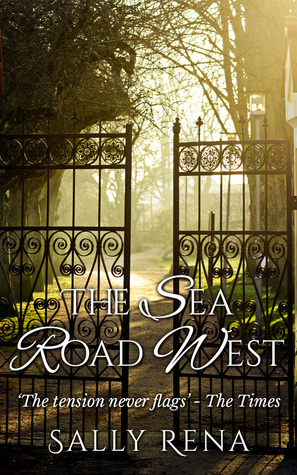
The road from the Scottish mainland to Kintillo lies across a ridge of craggy and forbidding hills, a natural barrier isolating the peninsular from the rest of the world and making Kintillo a place of both refuge and solitude. But trouble begins when Father Macabe dies, and Father James, a new, young man arrives.
Handsome and full of ideals, Father James is totally unprepared for the spell-binding beauty of the lonely country, and for the irrelevance of his philanthropic fervour to the lives of its inhabitants. For company, there is only a retired doctor, a charming and alcoholic wreck, and the inhabitants of the Hall – the Laird and his two pretty daughters.
Meriel Finlay is one of these daughters – a captivating 19 year old yearning for love and adventure. As mutual desire slowly ripens, can Father James continue to keep focus on his profession when it denies him his basic instincts?
Passions hidden below the surface, maturing in loneliness, erupt in a violent upsurge of love, hatred and jealousy which sweep through Kintillo like a storm…
Format: ebook (176 pages) Publisher: Endeavour Press
Publication date: 30th November 2014 [1975] Genre: Fiction
Find The Sea Road West on Goodreads
My Review
I came across this book when searching on my Kindle for short novels to read for Novellas in November, hosted by Cathy at 746 Books and Rebecca at Bookish Beck. As I started reading it a lot seemed familiar which means I’ve either read something very much like it or I’ve actually read it before. I think it might be the latter.
The blurb tells you pretty much all you need to know about the story but doesn’t give a sense of the simmering emotional and sexual tension that pervades the book.
Father James comes to Kintillo hoping to make a difference to the lives of its residents but finds them frustratingly unreponsive to his efforts. They prefer to live their lives the same way they always have, resisting change even although this is ultimately inevitable. Morag, the rectory housekeeper, was devoted to the late Father Macabe and resents the arrival of Father James finding, initially, petty ways to show it. Charles Finlay, son of the ageing Laird, rarely mixes with the villagers and is emotionally distant from his two daughters – Anne and Meriel. He finds comfort in a monotonous daily routine which, one suspects, is a way of restraining more violent instincts within. ‘Such a rage overwhelmed him that it was almost voluptuous.’
On the other hand, the free-spirited Meriel Finlay yearns for change of some sort. However as she admits, ‘The trouble is I don’t know what I want.’ The arrival of Father James conveniently offers an outlet for that frustration. Meriel is aware of her sexual attractiveness but unmindful of its effect on others and perhaps careless of the consequences of her actions. Father James finds himself unable to resist her youthful energy despite knowing a sexual relationship conflicts with his priestly vows. In pursuing a relationship with Father James, Meriel is the catalyst for events which build to an explosive and rather unexpected climax.
I enjoyed the wonderful descriptions of the Scottish landscape and the way the author evokes life in a small village in which it’s difficult for anything to remain hidden for long. But the ending I wasn’t so sure about. It left me with more questions than answers, although perhaps that was the author’s intention.
The Sea Road West was first published in 1975 and does not appear to be currently available to purchase.
In three words: Atmospheric, intense, dramatic
About the Author
Sally Rena was born in Scotland and lived there until the age of sixteen. She is convent educated and spent two years of further education in France and Italy. She is married with four children.



 What Cathy Read Next...