#BookReview The Geometer Lobachevsky by Adrian Duncan @serpentstail @waltscottprize

About the Book

‘When I was sent by the Soviet state to London to further my studies in calculus, knowing I would never become a great mathematician, I strayed instead into the foothills of anthropology …’

It is 1950 and Nikolai Lobachevsky, great-grandson of his illustrious namesake, is surveying a bog in the Irish Midlands, where he studies the locals, the land and their ways. One afternoon, soon after he arrives, he receives a telegram calling him back to Leningrad for a ‘special appointment’.

Lobachevsky may not be a great genius but he is not he recognises a death sentence when he sees one and leaves to go into hiding on a small island in the Shannon estuary, where the island families harvest seaweed and struggle to split rocks. Here Lobachevsky must think about death, how to avoid it and whether he will ever see his home again.

Format: Hardback (208 pages)         Publisher: Tuskar Rock Press
Publication date: 31st March 2022 Genre: Historical Fiction

Find The Geometer Lobachevsky on Goodreads

Purchase links 
Bookshop.org 
Disclosure: If you buy a book via the above link, I may earn a commission from Bookshop.org, whose fees support independent bookshops

Hive | Amazon UK 
Links provided for convenience only, not as part of an affiliate programme


My Review

I’m not sure I ever imagined myself reading a book that combines events in the life of a man who fears persecution if he returns to his homeland in the Soviet Union, the surveying of Irish bogland and seaweed farming. And I probably wouldn’t have had it not appeared on the shortlist for the Walter Scott Prize for Historical Fiction.

The Geometer Lobachevsky contains some wonderful descriptions of the wilder parts of Ireland and I liked the gentle rhythm of the life of the islanders described in the second part of the book. I also loved the amiable humour of Nikolai’s attempts to spell Irish names.

Nikolai arrives as an advisor but is happy to get stuck into the job of surveying the bog in preparation for large scale peat extraction even if he can’t get the team led by Rhatigan to understand the shifting nature of the area they’re trying to survey. Perhaps it’s in the nature of things to think you’re on solid ground even when you’re not? Having adopted a false identity in order to cover his tracks and fled to a small island on the Shannon estuary, Nikolai learns the secrets of seaweed harvesting from the families who live there. But although he might join in with things, he remains somehow always isolated from others.

There is a theme of old versus new that runs through the book. Old crafts are being lost, labour intensive tasks are gradually being mechanised and the landscape is being changed by the building of new factories and houses with modern amenities. You get a sense it’s being done to the local people not for them.

Many of the characters exhibit obsessionial traits. Rhatigan, the chief surveyor, is a perfectionist when it comes to the accuracy of surveying. One of the locals, French, has a ‘museum’ full of curiosities, such as many different types of hammer, that he has collected over the years. Nikolai himself becomes obsessed with observing the moon through a telescope in order to make precise topographical drawings of its surface. And once on the island he witnesses a prolonged and dangerous attempt, led by the son of one of the local families, to split a huge boulder seemingly for no other reason than to prove it can be done.

Right from the beginning of the book there’s an ominous sense that a bleak future in one form or another awaits Nikolai. Having seen friends (possibly lovers?) persecuted for their views, he’s afraid of what will happen to him if he returns to the Soviet Union. He describes himself as living every day ‘tired with fear’. The book’s dramatic ending proves he was right.

Given the title of the book it’s no surprise that Nikolai sees things in terms of shapes, angles and geometric patterns. I’m afraid this is where I struggled with the book because the geometrical stuff went over my head. No matter how hard I tried I could not envision the existence of a curve in a straight line or a straight line in a curve. Where Nikolai looks at the incoming tide and sees ‘plummeting curvatures’ I just see the incoming tide. Where he sees a wetland ‘mapped out with a constantly collapsing Cartesianism of intensities’ I have no idea what that is. I think this prevented me forming a stronger connection with the story. Although I admired the wonderful writing, I was left with the feeling that this is a book I was not quite clever enough to appreciate fully.

In three words: Evocative, elegaic, complex


About the Author
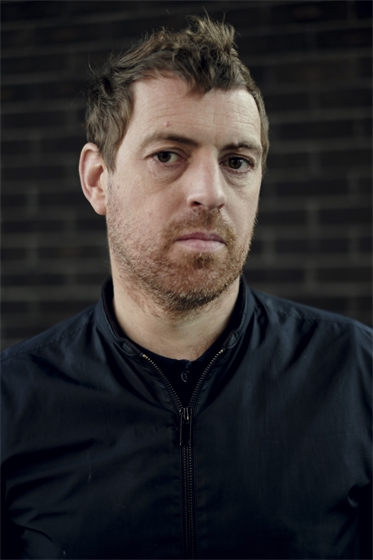
Adrian Duncan is an Irish artist and writer. His debut novel Love Notes from a German Building Site won the 2019 John McGahern Book Prize. His second novel A Sabbatical in Leipzig (2020) was shortlisted for the Kerry Novel of the Year. His collection of short stories Midfield Dynamo was published in 2021 and longlisted for the Edge Hill Prize. His third novel, The Geometer Lobachevsky, was published in April 2022. (Photo: Publisher author page)

Connect with Adrian
Twitter | Website

#BookReview #Ad The Last Lifeboat by Hazel Gaynor @HarperCollins

About the Book

1940, Kent: Alice King is not brave or daring — she’s happiest finding adventure through the safe pages of books. But times of war demand courage, and as the threat of German invasion looms, a plane crash near her home awakens a strength in Alice she’d long forgotten. Determined to do her part, she finds a role perfectly suited to her experience as a schoolteacher — to help evacuate Britain’s children overseas.

1940, London: Lily Nichols once dreamed of using her mathematical talents for more than tabulating the cost of groceries, but life, and love, charted her a different course. With two lively children and a loving husband, Lily’s humble home is her world, until war tears everything asunder. With her husband gone and bombs raining down, Lily is faced with an impossible choice: keep her son and daughter close, knowing she may not be able to protect them, or enroll them in a risky evacuation scheme, where safety awaits so very far away.

When a Nazi U-boat torpedoes the S. S. Carlisle carrying a ship of children to Canada, a single lifeboat is left adrift in the storm-tossed Atlantic. Alice and Lily, strangers to each other — one on land, the other at sea — will quickly become one another’s very best hope as their lives are fatefully entwined.

Format: eARC (368 pages)            Publisher: HarperCollins
Publication date: 8th June 2023 Genre: Historical Fiction

Find The Last Lifeboat on Goodreads

Purchase links 
Bookshop.org 
Disclosure: If you buy a book via the above link, I may earn a commission from Bookshop.org, whose fees support independent bookshops

Hive | Amazon UK 
Links provided for convenience only, not as part of an affiliate programme


My Review

The Last Lifeboat is inspired by the true story of the sinking of the SS City of Benares, a ship carrying child evacuees from England to supposed safety in Canada in September 1940.

Opening with a dramatic scene in the aftermath of the torpedoing of the ship (named the SS Carlisle for the purposes of the novel) by a German U-boat, the book follows a small group of people, including a number of children, who find themselves adrift in a lifeboat. Amongst the group is Alice King, a young teacher acting as one of the escorts to the evacuees, and the lone woman in the lifeboat. Over the next few days, we follow them as they encounter storms, endure hunger and thirst, and are gradually weakened by exposure to the elements. The scenes are so vividly imagined that you really do feel you are experiencing it all alongside them. As their hopes of rescue begin to fade, their experience becomes one of grim endurance and a daily struggle to survive that takes a mental and physical toll.

For Alice, delivering the children entrusted to her care to safety becomes a personal mission, something to cling to during the dark times, and one for which she is prepared to sacrifice herself if necessary. ‘Buoyed by the bright morning, she gathers up the tattered fragments of hope the storm had torn from her in the night, and stitches them together into a patchwork of determination and belief; a blanket of courage big enough to cover them all.’

Alternating with the dramatic and absolutely gripping scenes aboard the lifeboat, we witness the anguish of the recently widowed Lily who made the difficult – and lonely – decision to place her son and daughter aboard the ship thinking this was the way to keep them safe from the increasingly heavy bombing raids on London. It turns out to be anything but. When news of the disaster is made public, she remains determined not to give up hope that her children may have survived or to stop pressing the authorities to continue the search for that last lifeboat.

Like the author’s earlier book, The Bird in the Bamboo Cage, The Last Lifeboat shines a spotlight on the courageous exploits of women in wartime. But it doesn’t ignore the ‘ordinary’ women, those women described as ‘the quiet essential backbone of the war on the home front’. There are some interesting male characters in the book and I liked the fact that they display a heroism that is rooted in moral principles.

There are emotional scenes towards the end of the book and if you can read them without reaching for the tissues then you must have a heart of stone. Personally, I would have been happy for the book to end at the final chapter with its moving last paragraph. However, the epilogue’s message that relationships formed in times of disaster may have enduring bonds is an uplifting one.

The Last Lifeboat is an utterly immersive story that is at times heartbreaking. It also demonstrates, as if we needed reminding, of the horror of war and its indiscriminate nature. At one point a character asks, ‘What on earth are we doing to each other?’ But what also shines through is the resilience of the human spirit.

In three words: Emotional, dramatic, moving

Try something similar: The Bird in the Bamboo Cage by Hazel Gaynor


About the Author

Hazel Gaynor is an award-winning New York Times, USA Today and Irish Times bestselling author of historical fiction, including her debut The Girl Who Came Home for which she received the 2015 RNA Historical Novel of the Year award. The Lighthouse Keeper’s Daughter was shortlisted for the 2019 HWA Gold Crown award. She is published in thirteen languages and nineteen countries. Originally from Yorkshire, Hazel lives in Ireland with her family.

Connect with Hazel
Website | Twitter | Facebook | Instagram