About the Book
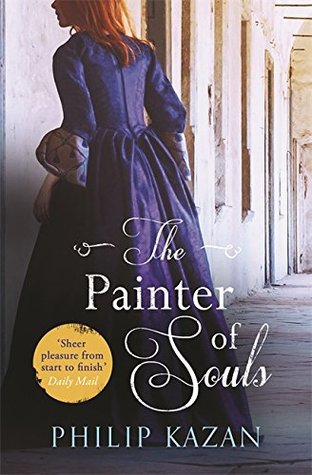
Beauty can be a gift…or a wicked temptation…
So it is for Filippo Lippi, growing up in Renaissance Florence. He has a talent – not only can he see the beauty in everything, he can capture it, paint it. But while beauty can seduce you, and art can transport you – it cannot always feed you or protect you.
To survive, Pippo Lippi, orphan, street urchin, budding rogue, must first become Fra Filippo Carmelite friar, man of God. His life will take him down two paths at once. He will become a gambler, a forger, a seducer of nuns; and at the same time he will be the greatest painter of his time, the teacher of Botticelli and the confidante of the Medicis.
So who is he really – lover, believer, father, teacher, artist? Which man? Which life? Is anything true except the paintings?
Format: Paperback (288 pages) Publisher: Orion
Publication date: 3rd November 2016 Genre: Historical Fiction
Find The Painter of Souls on Goodreads
Purchase links
Bookshop.org
Disclosure: If you buy a book via the above link, I may earn a commission from Bookshop.org, whose fees support independent bookshops
Hive | Amazon UK
Links provided for convenience only, not as part of an affiliate programme
My Review
The Painter of Souls is the first book on my 20 Books of Summer 2023 list which tells you everything you need to know about how this reading challenge is going. On the other hand, it’s made me read a book that has been sitting on my bookshelf for five years. I came to it with high expectations as the two other books by the author I’ve read – The Black Earth and The Phoenix of Florence – were both five star reads for me. (Links from the title will take you to my review.) I wasn’t disappointed because I loved The Painter of Souls.
In his Acknowledgments, the author notes that almost nothing is really known about Filippo Lippi the person. We have some bare facts about his life and, of course, his art but that’s about it. However I recall a comment made by author Robert Harris at last year’s Henley Literary Festival that when it comes to history, there are always gaps in our knowledge but those gaps are great things because after all if we knew everything there wouldn’t be any point in writing historical fiction. In this spirit, Philip Kazan has taken the known facts and used his imagination to fill in the gaps so Pippo (the name he is often referred by in the book) comes alive on the page as we witness his journey from street urchin to Carmelite friar to acclaimed painter. The book is peopled with other real life figures, from Cosimo de’Medici to the sculptor, Donatello.
In the author’s hands, Pippo’s journey is the result of a combination of a natural talent for drawing – as a young boy he survives by selling sketches of people in the market place – and good fortune. Having been taken in by the Carmelite monastery, his talent for art is gradually recognised and he is soon assisting the Florentine artist Masaccio to paint frescoes of religious subjects commissioned by wealthy individuals. Pippo finds a kindred spirit as well as a mentor in Masaccio whose paintings are notable for featuring lifelike figures, often based on real people observed on the streets of Florence, and realistic backgrounds. Pippo is truly a ‘painter of souls’ prioritising reality over tradition and artifice, and incorporating human emotions into the figures he paints. There is one particularly poignant scene where he sketches a destitute young mother with her child.
Despite Pippo’s reputation as a painter growing, he cannot escape his past. ‘This is who he is: a mongrel, a badly cooked dish of vagabond, friar, maker of pictures.’ His early life comes back to haunt him in the most profound way when a friend of his youth, now a young man living a dissolute lifestyle, falls foul of the ruling council of Florence.
I loved the evocative descriptions of fifteenth century Florence: its streets, buildings and squares; the sights, sounds and smells of everyday life. It is definitely now a city I am keen to visit to, as it were, walk in Pippo’s footsteps.
Even if you’re not that interested in art, I think you would be swept along by Pippo’s story, and his humanity. ‘The world is beautiful. We are beautiful. [… ] The trick is to see it. No . . . No. The trick is to look. Always to look.’
Having become thoroughly immersed in the details of Pippo’s eventful life, you can imagine my disappointment when I got to the end of the book and found it was only the first in a planned series – and the author has yet to write any more! I really wanted to find out what happens to Pippo to get himself into the situation we learn about in the Prologue set in 1469, the year of his death. (And while you’re at it, Philip, please can we also have a sequel to The Phoenix of Florence.)
In three words: Emotional, evocative, engrossing
Try something similar: The Birth of Venus by Sarah Dunant
About the Author

Philip Kazan was born in London and grew-up on Dartmoor. He is the author of two previous novels set in fifteenth-century Florence and the Petroc series following a thirteenth-century adventurer. After living in New York and Vermont, Philip is back on the edge of Dartmoor with his wife and three children. (Photo: Twitter profile)
Connect with Philip
Website | Twitter