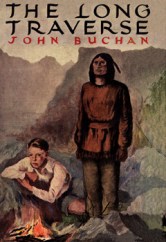
#BookReview The Long Traverse by John Buchan #ReadJB2020

Buchan of the Month Banner 2020.jpg

The Long TraverseAbout the Book

Negog, an old Native American Indian, uses his magic to provide Donald, a Canadian boy with visions of seven significant moments in the history and heritage of Canada.

Format: Hardcover (254 pages)                Publisher: Hodder & Stoughton
Publication date: 10th November 1941 Genre: Nonfiction, History

Find The Long Traverse on Goodreads


My Review

My Buchan of the Month for December is The Long Traverse. It was unfinished at the time of John Buchan’s death on 11th February 1940 so was completed by his wife Susan and published posthumously in 1941. The book was titled Lake of Gold in the US and Canada. It contains illustrations by John Morton-Sale, whose work also appeared in books by J. M. Barrie and Beverley Nicholls.

John Buchan described the book as a Canadian Puck of Pook’s Hill. The role of Puck in Rudyard Kipling’s original is played in The Long Traverse by Negog, a member of what we would today call the First Nations people. The book consists of eight stories, interspersed with poems, plus an epilogue added by Buchan’s wife based on notes he left for a final story.

20201202_142426-1The first story, ‘The Long Traverse’, introduces the reader to Donald, a young Canadian boy whose interests lie more in Hollywood movies and outdoor pursuits than in the study of Latin, Mathematics or History – as his recent school report shows! The reader also meets Negog, a Cree Indian whose people originated from the southwest corner of Hudson Bay but moved eastward towards Labrador. Negog reveals the concept of ‘the long traverse’, a journey into the past that can be viewed in the ‘Lake of Gold’ when conditions are right and by use of traditional magic.

The story ‘The Gold of Sagne’ captures Donald’s boyish enthusiasm for fishing and mineral collecting and describes his first experience of the visions conjured up by Negog in the Lake of Gold. Donald sees, reflected in the water, scenes showing how his treasured possession, a stone with flakes of gold in it, was passed from hand to hand through the centuries. “He was looking at a motion picture, one without captions. He did not need any explanatory words, for he seemed to recognize each scene and to know precisely what it meant.”

In ‘The Wonderful Beaches’, the setting sun on the water is transformed into a vision of Viking long-ships setting off from Norway, sailing across the Atlantic and arriving in Canada many centuries before Columbus. I liked that when Donald, a little confused, asks “What people came here first?”, Negog replies “My people have been here from the beginning”.

‘Cadieux’ is the thrilling tale of Cadieux de Courville, a coureur de bois or independent French-Canadian trader who travels up and down river trading furs. Donald witnesses an epic journey in which Cadieux and fellow traders are pursued downstream by Iroquois and only a heroic act allows some of them to survive.

In ‘The Man who dreamed of Islands’, Donald has a vision of one of his ancestors who, employed as a voyageurs by one of the trading companies, finds himself drawn to exploration rather than trading. He sets off to find a route through the mountains to the Pacific coast, travelling on foot and by canoe. Donald witnesses the previously unknown result of this expedition which, if true, would predate the exploits of a more famous Canadian explorer.

‘Big Dog’ depicts the skirmishes between two warring Indian tribes, one of which possess horses (the ‘big dogs’ of the title) and the other to whom horses are unknown and who are forced to seek out other means to defend themselves.

‘Whitewater’ is another action-packed story of adventure.  Whilst observing the log drive down river, Donald hears exciting tales from the loggers of navigating white water rapids by canoe or raft.  These trigger a vision of an Orkney man, Magnus Sinclair, who has to overcome his fear of water in order to take up a role as a voyageur.  Having learned to swim, the river is transformed for Magnus from a menace to a ‘playmate’ and he undertakes an epic river journey westward.

In the final story, ‘The Faraway People’, Donald listens avidly to dinner table stories of ‘secret and wonderful things in the very far North’ and witnesses evidence of the existence of a fabled ancient race.

In my earlier blog post introducing the book, I mentioned that one of Buchan’s reasons for writing The Long Traverse was his desire to improve upon what he considered the rather dull manner in which Canadian history was taught in schools. The book certainly contains lively scenes of adventure but it seemed to me the stories were more illustrative than factual. For example, I was left unsure which of the characters existed in real life and which were fictitious. Therefore, although The Long Traverse encapsulates the spirit of the country John Buchan had grown to love during his time as Governor-General of Canada, I’m not sure it would help a Canadian pupil pass a history examination! However, I’m sure it would have made an excellent companion to more traditional history books.

In three words: Spirited, imaginative, adventure

Try something similar: The Last Secrets by John Buchan

Follow this blog via Bloglovin
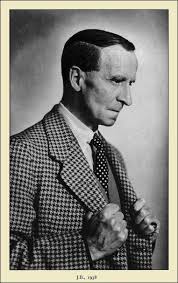

John BuchanAbout the Author

John Buchan (1875 – 1940) was an author, poet, lawyer, publisher, journalist, war correspondent, Member of Parliament, University Chancellor, keen angler and family man.  He was ennobled and, as Lord Tweedsmuir, became Governor-General of Canada.  In this role, he signed Canada’s entry into the Second World War.   Nowadays he is probably best known – maybe only known – as the author of The Thirty-Nine Steps.  However, in his lifetime he published over one hundred books: fiction, poetry, short stories, biographies, memoirs and history.

You can find out more about John Buchan, his life and literary output by visiting The John Buchan Society website.
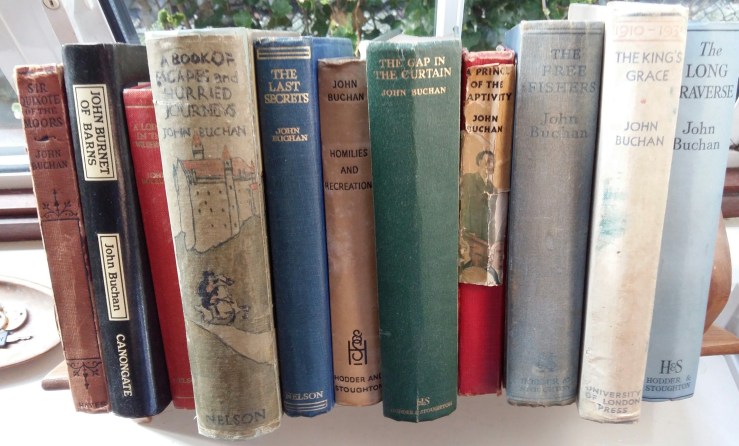
Buchan of the Month 2020

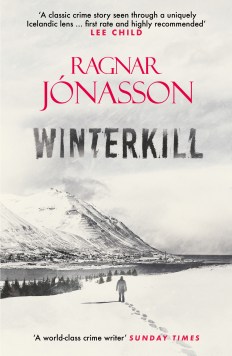
#BookReview Winterkill (Dark Iceland #6) by Ragnar Jónasson, trans. by David Warriner @OrendaBooks

Welcome to today’s stop on the blog tour for Winterkill by Ragnar Jónasson, the sixth – and sadly, final – book in his bestselling ‘Dark Iceland’ series, featuring Inspector Ari Thór Arason. My thanks to Anne at Random Things Tours for inviting me to take part in the tour and to Orenda Books for my digital proof copy. Winterkill was published as an ebook and in hardcover on 10th December 2020 and will be available in paperback on 21st January 2021.


WinterkillAbout the Book

Easter weekend is approaching, and snow is gently falling in Siglufjörður, the northernmost town in Iceland, as crowds of tourists arrive to visit the majestic ski slopes.

Ari Thór Arason is now a police inspector, but he’s separated from his girlfriend, who lives in Sweden with their three-year-old son. A family reunion is planned for the holiday, but a violent blizzard is threatening and there is an unsettling chill in the air.

Three days before Easter, a nineteen-year-old local girl falls to her death from the balcony of a house on the main street. A perplexing entry in her diary suggests that this may not be an accident, and when an old man in a local nursing home writes ‘She was murdered’ again and again on the wall of his room, there is every suggestion that something more sinister lies at the heart of her death…

As the extreme weather closes in, cutting the power and access to Siglufjörður, Ari Thór must piece together the puzzle to reveal a horrible truth …one that will leave no one unscathed.

Format: Hardback (240 pages)                Publisher: Orenda Books
Publication date: 10th December 2020 Genre: Crime, Mystery, Thriller

Find Winterkill (Dark Iceland #6) on Goodreads

Purchase links
Bookshop.org
Disclosure: If you buy a book via the above link, I may earn a commission from Bookshop.org, whose fees support independent bookshops

Hive | Amazon UK
Links provided for convenience only, not as part of an affiliate programme


My Review

Winterkill is only the second book I’ve read in Ragnar Jónasson’s Dark Iceland series (the other was the previous book in the series, Whiteout) but I’m sure even those who haven’t read any of the previous books will be able to enjoy this skillfully crafted crime thriller. And I can pretty much guarantee you’ll then want to go back and read the series from the beginning.

The book sees Inspector Ari Thór called to investigate the unexplained death of a young girl. Unfortunately, it coincides with the arrival for the Easter holiday of his ex-girlfriend Kristin and his young son, Stefnir. His attempts to balance the demands of the investigation with spending quality time with his son illustrate just one of the reasons for the breakdown of his and Kristin’s relationship.

Away from concerns about his private life, Ari Thór is feeling the pressure of his new rank and the absence of a sounding board in the shape of his former boss, Tomas. Ari Thór is also struggling to replicate that close working relationship with his new junior officer, Ögmundur. One of the many things that make Ari Thór such an engaging character is his strong sense of justice, meaning he feels an acute responsibility to the dead girl’s heartbroken mother to discover how and why she died.

As the investigation progresses, Ari Thór interviews a number of witnesses who knew the dead girl but none seem to fit the bill as suspects although, as he reflects, ‘appearances could be deceptive and nothing was ever completely black or white’.  Most significantly, the motive for her death – whether murder or suicide –  continues to elude him, this in a community where everyone knows everyone else or is related.

As well as constructing intriguing mysteries, the author is adept at creating an atmosphere of unease. Even amidst the beauty of the landscape and the tourists enjoying themselves on the ski slopes or indulging in hot chocolate and cinnamon rolls (mmm!) in one of the town’s cafes, there exists the threat a snowstorm could cut off the town from the outside world at any moment.

The snowstorm, when it arrives, coincides with Ari Thór getting closer to discovering the truth about the girl’s death.  Although the snow may have turned the streets of Siglufjörður white, there are black deeds to be uncovered beneath its snow-covered roofs. It all makes for a tense and dramatic climax to Ari Thór’s investigation.

Naturally, fans of the series will be sad to bid farewell to Ari Thór. However, they do say it’s good to go out on a high and Winterkill certainly delivers in that respect.

In three words: Gripping, dark, atmospheric

Try something similar: The Coral Bride by Roxanne Bouchard

Follow this blog via Bloglovin


Ragnar JonassonAbout the Author

Icelandic crime writer Ragnar Jónasson was born in Reykjavík, and currently works as a lawyer, while teaching copyright law at the Reykjavík University Law School. In the past, he’s worked in TV and radio, including as a news reporter for the Icelandic National Broadcasting Service. Before embarking on a writing career, Ragnar translated fourteen Agatha Christie novels into Icelandic, and has had several short stories published in German, English and Icelandic literary magazines.

Ragnar set up the first overseas chapter of the CWA (Crime Writers’ Association) in Reykjavík, and is co-founder of the International crime-writing festival Iceland Noir. Ragnar’s debut thriller, Snowblind became an almost instant bestseller when it was published in June 2015 with Nightblind (winner of the Dead Good Reads Most Captivating Crime in Translation Award) and then Blackout and Rupture following soon after. To date, Ragnar Jónasson has written five novels in the Dark Iceland series, which has been optioned for TV by On the Corner. He lives in Reykjavík with his wife and two daughters.

Connect with Ragnar
Website | Twitter

About the Translator

David Warriner translates from French and nurtures a healthy passion for Franco, Nordic and British crime fiction. Growing up in deepest Yorkshire, he developed incurable Francophilia at an early age. Emerging from Oxford with a modern languages degree, he narrowly escaped the graduate rat race by hopping on a plane to Canada – and never looked back. More than a decade into a high-powered commercial translation career, he listened to his heart and turned his hand again to the delicate art of literary translation. David has lived in France and Quebec, and now calls beautiful British Columbia home.

Winterkill BT 4