#6Degrees 6 Degrees of Separation: From Shuggie Bain to Imperfect Alchemist

It’s the first Saturday of the month which means it’s time for 6 Degrees of Separation!

Here’s how it works: a book is chosen as a starting point by Kate at Books Are My Favourite and Best and linked to six other books to form a chain. Readers and bloggers are invited to join in by creating their own ‘chain’ leading from the selected book.

Kate says: Books can be linked in obvious ways – for example, books by the same authors, from the same era or genre, or books with similar themes or settings. Or, you may choose to link them in more personal or esoteric ways: books you read on the same holiday, books given to you by a particular friend, books that remind you of a particular time in your life, or books you read for an online challenge. Join in by posting your own six degrees chain on your blog and adding the link in the comments section of each month’s post.   You can also check out links to posts on Twitter using the hashtag #6Degrees.
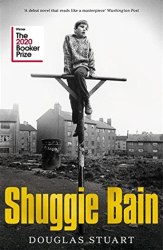

Shuggie BainThis month’s starting book is Shuggie Bain by Douglas Stuart. It’s a book I’ve not read but heard a lot about not least of which because it was the winner of the 2020 Booker Prize. Douglas Stuart was only the second Scottish writer to win the Booker Prize in its 51-year history.

The first was James Kelman in 1994 for How Late It Was, How Late. I haven’t read that one either but I know from the blurb that Sammy, its protagonist, becomes completely blind.

The leading character in Alis Hawkins’ historical crime novel None So Blind, Harry Probert-Lloyd, is also coming to terms with encroaching sight loss, putting paid to his career as a barrister.

The Great Darkness by Jim Kelly also features a leading character with damaged sight but in this case it hasn’t stopped him pursuing his career solving crimes in World War 2 Cambridge. Detective Inspector Eden Brooke’s experiences at the hands of the enemy during World War One has left him extremely sensitive to light.

Corpus by Rory Clements is also set in Cambridge, just before the outbreak of World War 2.  History professor, Tom Wilde, an expert on Tudor spymasters Sir Francis Walsingham and Sir Robert Cecil, finds himself drawn into the investigation of a murder.

Sir Francis Walsingham turns up in The Incendium Plot, the first in A. D. Swanston’s historical mystery series featuring lawyer, Christopher Radcliff.

Another real life historical figure to make an appearance in The Incendium Plot is Sir Philip Sidney. His sister, Mary Sidney Herbert, is the focus of Naomi Miller’s historical novel, Imperfect Alchemist.

This month my chain has embraced blindness, spies and alchemy.  Where did your chain take you this month?

#BookReview The Drowned City (Daniel Pursglove 1) by K. J. Maitland @headlinepg

The Drowned CityAbout the Book

1606. A year to the day that men were executed for conspiring to blow up Parliament, a towering wave devastates the Bristol Channel. Some proclaim God’s vengeance. Others seek to take advantage.

In London, Daniel Pursglove lies in prison waiting to die. But Charles FitzAlan, close adviser to King James I, has a job in mind that will free a man of Daniel’s skill from the horrors of Newgate. If he succeeds.

For Bristol is a hotbed of Catholic spies, and where better for the lone conspirator who evaded arrest, one Spero Pettingar, to gather allies than in the chaos of a drowned city? Daniel journeys there to investigate FitzAlan’s lead, but soon finds himself at the heart of a dark Jesuit conspiracy – and in pursuit of a killer.

Format: Hardcover (448 pages)  Publisher: Headline
Publication date: 1st April 2021 Genre: Historical Fiction

Find The Drowned City on Goodreads

Purchase links
Bookshop.org
Disclosure: If you buy a book via the above link, I may earn a commission from Bookshop.org, whose fees support independent bookshops

Hive | Amazon UK
Links provided for convenience only, not as part of an affiliate programme


My Review

The author has created an interesting character in Daniel Pursglove. I liked the way small details about his often troubled past were dropped in now and again, laying the groundwork for future books. I also liked that the book was set in Bristol – the ‘drowned city’ of the title – not only because it made a change from the oft-used setting of London but also because it made sense from the point of view of the plot.

The writing was of the quality I’ve come to expect from other books I’ve read by the author, most recently A Gathering of Ghosts. Some episodes that particularly stood out were the dramatic prologue, a scene in which a Protestant mob attacks the house of a cordwainer and his family, and the New Year’s Eve masque.

Like any good hero, Daniel has some narrow escapes from those out to stop him achieving his mission.  This includes an adversary from his younger days. However, he always miraculously manages to turn up safely in his bed at his lodgings in the Salt Cat tavern. He also acquires a useful helper along the way whose knowledge of the city and ability to pass unnoticed aids Daniel’s intelligence gathering efforts as he seeks to carry out his mission but also determine if there is any connection between it and a series of murders.

No historical novel set in the period is complete without an appearance by one of the Cecil family; in this case it’s Robert Cecil. I actually felt some sympathy for him having to deal with the petulant and easily influenced King James I the author presents in the book. Although, with the discovery of the Gunpowder Plot still within recent memory, perhaps the King can be forgiven for imagining assassins at every turn and being concerned that one of the conspirators may still be at large. (I confess that until I read the historical notes at the end of the book I hadn’t realised Spero Pettingar was a real historical figure. For much of the book, I was convinced his name was an anagram!) And there are still adherents of Catholicism to be dealt with as well as the Jacobean equivalent of fake news, spread via illicitly printed pamphlets or ‘broadsides’. As Cecil warns the King, “Sire, even a superstition, if it takes hold of the imagination of the people, can be as powerful a weapon as any truth.” Indeed.

The Drowned City has all the ingredients to make an absorbing historical thriller although at certain points I found it on the slow side. However, it certainly picked up pace towards the end. As Daniel confides, ‘The art of legerdemain is to make the audience look in the wrong place’. In my case the author didn’t quite manage that when it came to the identity of the culprit whom I’d had my suspicions about for a few chapters, but I found enough to enjoy in The Drowned City to make me look out for future books in the series.

I received an advance review copy courtesy of Headline via NetGalley.

In three words: Atmospheric, intriguing, dramatic

Try something similar: The Angel’s Mark by S. W. Perry

Follow this blog via Bloglovin


karen maitlandAbout the Author

Karen Maitland (writing as K. J. Maitland) is an historical novelist, lecturer and teacher of Creative Writing, with over twenty books to her name. She grew up in Malta, which inspired her passion for history, and travelled and worked all over the world before settling in the United Kingdom. She has a doctorate in psycholinguistics, and now lives on the edge of Dartmoor in Devon. (Photo/bio credit: Publisher author page)

Connect with Karen
Website | Facebook