
#WWWWednesday – 2nd February 2022

WWWWednesdays

Hosted by Taking on a World of Words, this meme is all about the three Ws:

  • What are you currently reading?
  • What did you recently finish reading?
  • What do you think you’ll read next?

Why not join in too?  Leave a comment with your link at Taking on a World of Words and then go blog hopping!


Currently reading
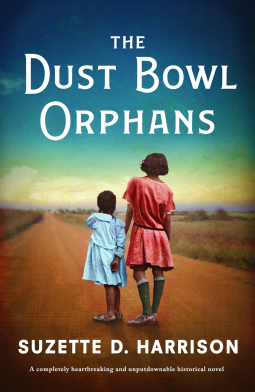
The Dust Bowl OrphansThe Dust Bowl Orphans by Suzette D. Harrison (eARC, Bookouture via NetGalley)

The dust cloud rolls in from nowhere, stinging our eyes and muddling our senses. I reach for my baby sister and pull her small body close to me. When the sky clears, we are alone on an empty road with no clue which way to go…

Oklahoma, 1935. Fifteen-year-old Faith Wilson takes her little sister Hope’s hand. In worn-down shoes, they walk through the choking heat of the Dust Bowl towards a new life in California. But when a storm blows in, the girls are separated from their parents. How will they survive in a place where just the color of their skin puts them in terrible danger?

Starving and forced to sleep on the streets, Faith thinks a room in a small boarding house will keep her sister safe. But the glare in the landlady’s eye as Faith leaves in search of their parents has her wondering if she’s made a dangerous mistake. Who is this woman, and what does she want with sweet little Hope? Trapped, will the sisters ever find their way back to their family?

California, present day. Reeling from her divorce and grieving the child she lost, Zoe Edwards feels completely alone in the world. Throwing herself into work cataloguing old photos for an exhibition, she sees an image of a teenage girl who looks exactly like her, and a shiver grips her. Could this girl be a long-lost relation, someone to finally explain the holes in Zoe’s family history? Diving into the secrets in her past, Zoe unravels this young girl’s heartbreaking story of bravery and sacrifice. But will anything prepare her for the truth about who she is…?

The Porcelain DollThe Porcelain Doll by Kristen Loesch (ARC, Allison & Busby) 

‘She was called Kukolka,’ he says. Little doll. It’s an unwelcome reminder of Mum’s porcelain prisoners back in London. Of all the things we could have brought with us from Russia – and we weren’t able to bring very much – she chose them.

Rosie’s only inheritance from her reclusive mother is a book of Russian fairy tales. But there is another story lurking between the lines.

Not so long ago, Rosie lived peacefully in Moscow and her mother told fairy tales at bedtime. But one summer night, all that came abruptly to an end when her father and sister were gunned down. Years later, Rosie is a doctoral student at Oxford, with a fiancé who knows nothing of her former life and an ailing, alcoholic mother lost to a notebook full of eerie, handwritten little stories.

Desperate for answers to the questions that have tormented her, Rosie returns to her homeland and uncovers a devastating family history which spans the 1917 Revolution, the siege of Leningrad, Stalin’s purges and beyond. At the heart of those answers stands a young noblewoman, Tonya, as pretty as a porcelain doll, whose actions reverberate across the century.


Recently finished

Late City by Robert Olen Butler (No Exit Press)

The Silver Wolf by J. C. Harvey (Allen & Unwin )

The Language of Food by Annabel Abbs (Simon & Schuster) 


What Cathy (will) Read Next
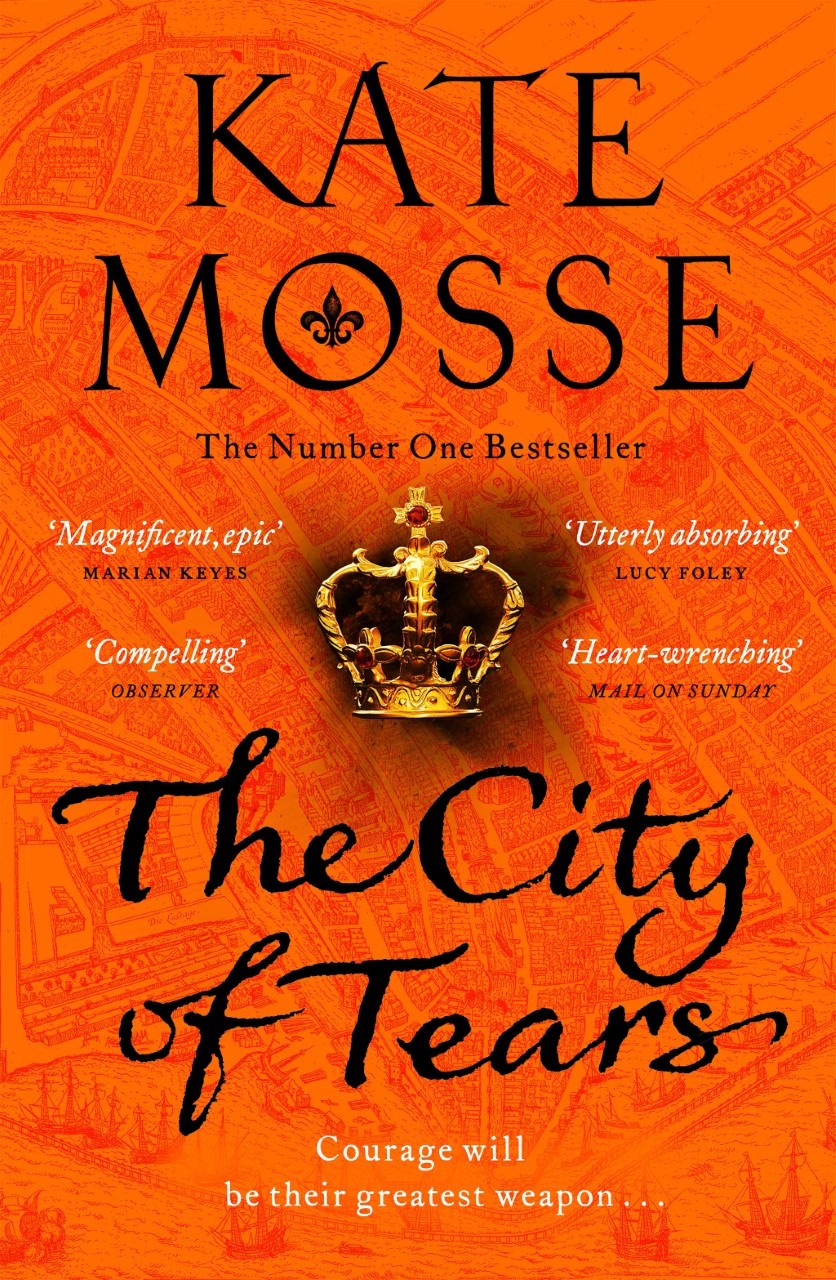
The City of TearsThe City of Tears (The Burning Chambers #2) by Kate Mosse (Pan Macmillan)

Paris, August 1572. Minou Joubert and her family are in Paris for a Royal Wedding, an alliance between the Catholic Crown and the Huguenot King of Navarre intended to bring peace to France after a decade of religious wars. So too is their oldest enemy, Vidal, still in pursuit of a relic that will change the course of history. But within days of the marriage, thousands will lie dead in the streets and Minou’s beloved family will be scattered to the four winds and one of her beloved children will have disappeared without trace…

A breath-taking novel of revenge, persecution and loss, sweeping from Paris and Chartres to the City of Tears itself – the great refugee city of Amsterdam – this is a story of one family’s fight to stay together, to survive and to find each other, against the devastating tides of history . . .

#BookReview The Manningtree Witches by A. K. Blakemore

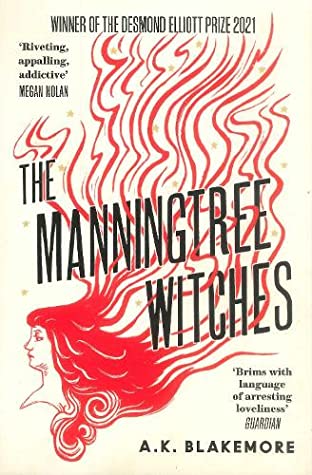
The Manningtree WitchesAbout the Book

England, 1643. Parliament is battling the King; the war between the Roundheads and the Cavaliers rages. Puritanical fervour has gripped the nation, and the hot terror of damnation burns black in every shadow.

In Manningtree, depleted of men since the wars began, the women are left to their own devices. At the margins of this diminished community are those who are barely tolerated by the affluent villagers – the old, the poor, the unmarried, the sharp-tongued. Rebecca West, daughter of the formidable Beldam West, fatherless and husbandless, chafes against the drudgery of her days, livened only by her infatuation with the clerk John Edes. But then newcomer Matthew Hopkins, a mysterious, pious figure dressed from head to toe in black, takes over The Thorn Inn and begins to ask questions about the women of the margins. When a child falls ill with a fever and starts to rave about covens and pacts, the questions take on a bladed edge.

The Manningtree Witches plunges its readers into the fever and menace of the English witch trials, where suspicion, mistrust and betrayal ran amok as the power of men went unchecked and the integrity of women went undefended. It is a visceral, thrilling book that announces a bold new talent.

Format: Paperback (295 pages)          Publisher: Granta
Publication date: 28th October 2021 Genre: Historical Fiction

Find The Manningtree Witches on Goodreads

Purchase links
Bookshop.org
Disclosure: If you buy a book via the above link, I may earn a commission from Bookshop.org, whose fees support independent bookshops

Hive | Amazon UK
Links provided for convenience only, not as part of an affiliate programme


My Review

Based on real events, The Manningtree Witches is a vivid account of the persecution of a group of women by the so-called Witchfinder General, Matthew Hopkins. Told partly from the point of view of one of the young women of the village, Rebecca West, the narrative is interspersed with transcripts of witness testimony and descriptions of Hopkins’ brutal interrogation of the women accused of witchcraft.

Driven by a combination of perverted religious zeal, misogyny and perhaps his own repressed sexual desire, Hopkins plays on the prejudices of the inhabitants of Manningtree, whipping them up into a frenzy of denunciation based on barely credible evidence. It’s notable that the women targeted are largely widows or single women, women regarded as ‘different’ or not conforming to societal norms. At one point, Hopkins observes, ‘When women think alone, they think evil, it is said.’  In a period in which the nation is riven by civil war – ‘the world turned upside down’ – food is scarce and fields lie untilled, it’s perhaps not surprising that people look for someone to blame for otherwise random events. ‘All can agree – things haven’t been right for a while. Our conjoint misfortune has been too rigorous, runs the tattle.’

The excerpt above gives a clue to one of the striking features of the book, the author’s imaginative and distinctive prose which certainly introduced me to words that had me reaching for the dictionary, such as ‘tumesce’ and ‘ceremental’. The author’s love of language can be seen in phrases such as ‘the sanguine wash of the sky’ or ‘the lacteal scum of her eyes’.

The women’s cruel treatment during their interrogation and in the months leading up to the trial is disturbing to read. One can’t help feeling there is a sexual element to the intrusive nature of the examinations they are forced to undergo. ‘Hopkins is excited. Excited in the way men get when they read about wars or Turkish dancing girls.’

The fate of the women accused along with Rebecca is a matter of historical record but the author takes advantage of the fact that nothing is known about Rebecca after the trial in 1645 to imagine what might have become of her.

The story of 17th century witch trials is one I’m familiar with from reading similar books but The Manningtree Witches manages to add a degree of originality to its depiction of events.

In three words: Authentic, dramatic, vibrant

Try something similar: Widdershins by Helen Steadman

Follow this blog via Bloglovin


A K BlakemoreAbout the Author

A. K. Blakemore is the author of two full-length collections of poetry: Humbert Summer (Eyewear, 2015) and Fondue (Offord Road Books, 2018), which was awarded the 2019 Ledbury Forte Prize for Best Second Collection. She has also translated the work of Sichuanese poet Yu Yoyo (My Tenantless Body, Poetry Translation Centre, 2019). Her poetry and prose writing has been widely published and anthologised, appearing in the The London Review of Books, Poetry, Poetry Review and The White Review, among others.

Connect with A. K. Blakemore
Twitter | Instagram