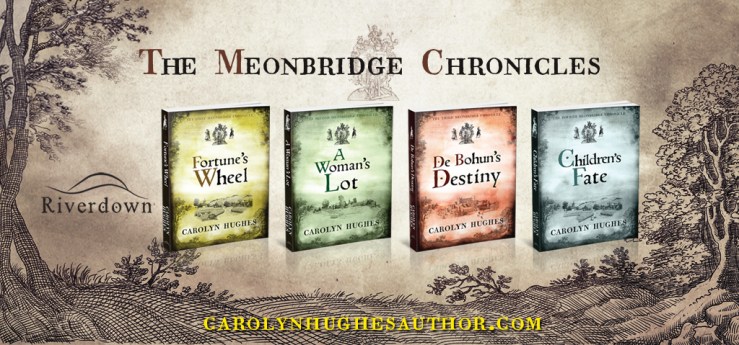
I was first introduced to The Meonbridge Chronicles series when I won a lovely signed copy of the first book, Fortune’s Wheel, in a giveaway. Opening in the aftermath of the Black Death (or the ‘mortality’ as it is referred to), the books are set in the fictional Hampshire village of Meonbridge and follow events in the lives of its inhabitants, with the emphasis on the female inhabitants. I’ve read all the books in the series – A Woman’s Lot, De Bohun’s Destiny and Children’s Fate – and very much enjoyed all of them. You can read full versions of my reviews by following the links from the titles however here are a few snippets…
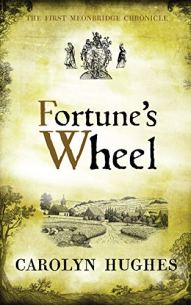 Fortune’s Wheel – I loved the detail of village life which gave the story a real feeling of authenticity and is clearly the result of an incredible amount of research. It introduced me to new terms – merchet, legerwite, heriot – and the many different roles necessary to village life – bailiff, steward, reeve and (my favourite) ale-taster. I thought it was an accomplished, fascinating historical fiction novel – and an impressive debut.
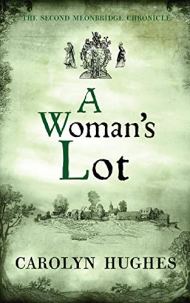 A Woman’s Lot – The book provides another fascinating insight into day-to-day life in a period when people lived without many of the things we now take for granted: being able to dry your clothes easily when they get wet; a house that doesn’t let in the wind and rain; a slice of bread that doesn’t involve a trip to the communal bakehouse; not having to exist only on what you can grow. And it brings to life the small joys of life such as the travelling market coming to the village green, Christmas and Midsummer festivities, music and dancing at a wedding feast.
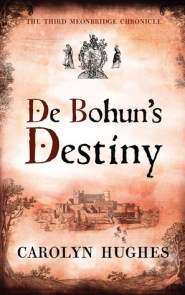 De Bohun’s Destiny – The focus in this book shifts from the villagers to the residents of the Manor – Sir Richard and Lady Margaret De Bohun – and to the future of the demesne with drama and intrigue a little more to the fore. Events move along apace and no sooner does it seem that one threat to Meonbridge’s future has been averted than another one appears in its place, if anything in deadlier form.
 Children’s Fate – The year 1361 sees the return of the plague and its indiscriminate nature causes the people of Meonbridge to search for answers as to why some live and others die. Some, fuelled by grief, despair and fear, look for scapegoats. As is often the case, suspicion falls on outsiders. Full of authentic detail of daily life, in Children’s Fate you don’t so much read about the folk of Meonbridge as dwell amongst them for a few precious hours.
 If my thoughts have piqued your interest in reading The Meonbridge Chronicles for yourself, you can find purchase links on Carolyn’s website where you can also sign up to her newsletter. If you do, you’ll receive e-copies of two free Meonbridge Chronicles novellas – Maiden’s Chance and Maiden’s Hap. You can also find a glossary of terms used in the books, blog posts from Carolyn about all things medieval and much, much more…
You can follow Carolyn on Facebook and Twitter.