
Hosted by Taking on a World of Words, this meme is all about the three Ws:
- What are you currently reading?
- What did you recently finish reading?
- What do you think you’ll read next?
Why not join in too? Leave a comment with your link at Taking on a World of Words and then go blog hopping!
What I’m Currently Reading

Butter by Asako Yuzuki, translated by Polly Barton (Fourth Estate)
There are two things that I can simply not tolerate: feminists and margarine.
Gourmet cook Manako Kajii sits in Tokyo Detention Centre convicted of the serial murders of lonely businessmen, who she is said to have seduced with her delicious home cooking. The case has captured the nation’s imagination but Kajii refuses to speak with the press, entertaining no visitors. That is, until journalist Rika Machida writes a letter asking for her recipe for beef stew and Kajii can’t resist writing back.
Rika, the only woman in her news office, works late each night, rarely cooking more than ramen. As the visits unfold between her and the steely Kajii, they are closer to a masterclass in food than journalistic research. Rika hopes this gastronomic exchange will help her soften Kajii but it seems that she might be the one changing. With each meal she eats, something is awakening in her body, might she and Kaji have more in common than she once thought?
Inspired by the real case of the convicted con woman and serial killer, “The Konkatsu Killer”, Asako Yuzuki’s Butter is a vivid, unsettling exploration of misogyny, obsession, romance and the transgressive pleasures of food in Japan.
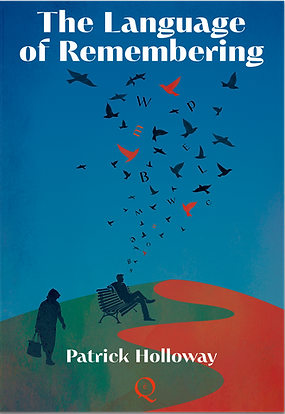
The Language of Remembering by Patrick Holloway (eARC, epoque press)
Returning from Brazil with his wife and daughter, Oisín is looking to rebuild a life in Ireland and reconnect with his mother, Brigid, who has early onset Alzheimer’s. As her condition deteriorates she starts to speak Irish, the language of her youth, and reflect on her childhood dreams and aspirations.
Mother and son embark on a journey of personal discovery, and as past traumas are exposed they begin to understand what has shaped them and who they really are.
The Language of Remembering asks how we connect to the people we love and how we move on from the past to find meaning in the present.

A Year in a Small Garden by Frances Tophill (BBC Books)
A Year in a Small Garden follows Frances Tophill as she creates her new garden in a terraced house in Devon. Working in a small space, the book documents her journey to bring life to her garden, including tips and tricks for you to achieve similar results in whatever spaces you have at home.
The book is structured around the stages of building her small garden, and branches out to include small community gardens Frances works with, as well as projects to create in small spaces at home – with a focus on growing food and planting in a sustainable, environmentally friendly way.
Featuring new photography shot throughout the year, as well as Frances’s own journal and garden notebooks, this book will not only give you an insight into Frances’s journey creating her first garden – but will help you create a beautiful, productive, garden at home.
What I’ve Just Read

A Cold Wind From Moscow by Rory Clements (Zaffre)
Winter, 1947. Britain’s secret services have been penetrated. The country is more vulnerable than ever – and Soviet leader Joseph Stalin knows it. He decides it is time to send his master of ‘Special Tasks’ to create extra chaos.
But Stalin has a more important motive than mere disruption. He has a man on the inside who must be protected at all costs – a communist super-spy who has the secrets of the atomic bomb at his fingertips.
Freya Bentall, a senior MI5 officer, no longer knows who to trust and is left with one to bring in an outsider whose loyalty is beyond question – Cambridge professor Tom Wilde. His task: to find the traitor in MI5.
Bentall has three main suspects and Wilde must get close to them all. That means delving deep into the criminal underworld, attaching himself to the cultural elite of the arts and finding a way into the extreme reaches of British politics.
As winter bites and violence erupts, Wilde faces an uphill battle to protect those he loves from merciless killers. And he knows that one slip will spell disaster for the country – and his family. (Review to follow)
What I’ll Be Reading Next

The Paris Dancer by Nicola Rayner (eARC, Aria via NetGalley)
Paris, 1938. Annie Mayer arrives in France with dreams of becoming a ballerina. But when the war reaches Paris, she’s forced to keep her Jewish heritage a secret. Then a fellow dancer offers her a lifeline: a ballroom partnership that gives her a new identity. Together, Annie and her partner captivate audiences across occupied Europe, using her newfound fame and alias to aid the Resistance.
New York, 2012. Miriam, haunted by her past, travels from London to New York to settle her great-aunt Esther’s estate. Among Esther’s belongings, she discovers notebooks detailing a secret family history and the story of a brave dancer who risked everything to help Jewish families during the war.
As Miriam uncovers Esther’s life in Europe, she realises the story has been left for her to finish. Grappling with loss and the possibility of new love, Miriam must find the strength to reconcile her past and embrace her future.



 What Cathy Read Next...