A Q&A with George Alexander, author of Twilight of Evil

My guest today on What Cathy Read Next is George Alexander, author of historical thriller Twilight of Evil. Published on 10th January 2025, Twilight of Evil is available to purchase as an ebook or paperback from Amazon and other online retailers. Read on as I chat with George about the inspiration for the book and the challenges of writing alternate history.


About the Book

Front cover of Twilight of Evil by George Alexander

What if Adolf Hitler cheated death in the ruins of Berlin? Did the Fuhrer truly perish in the crumbling capital, or did he evade capture and flee to the distant shores of South America?

Twilight of Evil delves into the controversial and intriguing tale of Adolf Hitler’s escape from Berlin during the closing days of the Third Reich and his post-war life. Join David Hazel, a young Jewish researcher, as he probes into the shocking truth behind Hitler’s disappearance through the work of the renowned American scholar, Dr. Peter Alex.

The novel transports readers to the chaotic final days of the Nazi regime, depicting the crumbling empire and the desperate measures taken by its leaders. The book probes into the dramatic exploration of Hitler’s ultimate fate, revealing the truth behind his disappearance and the people who crossed his path. From secret alliances to deadly betrayals, this novel takes you on a journey through the escape and post-war life of some of history’s most notorious figures.

Find Twilight of Evil on Goodreads


Q & A with George Alexander, author of Twilight of Evil

You’ve published a number of nonfiction books. What made you decide to turn to fiction?

I have authored/co-authored twelve nonfiction books. Most of these were written while I was working with a Christian NGO (Non-governmental organisation) to promote and propagate its objectives, or in the field of social science. When I left the NGO a couple of years ago, I started exploring other areas of interest. I wanted to try my hand at fiction, as I had never done so before. It was a kind of challenge I undertook – something new, something fresh.

How and when did the idea for the novel first come to you?

My first exposure to the topic of Hitler’s fate was in the book Grey Wolf: The Escape of Adolf Hitler by Gerrard Williams and Simon Dunstan. I enjoyed the book immensely due to its presentation style and wealth of information. Subsequently, I watched all episodes of Hunting Hitler on the History Channel, repeatedly. I also watched many YouTube videos on the topic as I was fascinated by the mystery, conspiracy and controversy surrounding Hitler’s fate. During the COVID period, I read Eyewitness to Hitler’s Escape by Peter David Orr, followed by a couple of his other books. After joining his Facebook community and interacting extensively with Peter, the idea of writing a novel sparked in my mind.

You describe Twilight of Evil as a historical thriller. What do you believe are the essential elements of a thriller and how did you incorporate these into the book?

Twilight of Evil is not a purely edge-of-your-seat thriller, but rather a mix of genres. For me, a thriller novel should have suspense, unexpected twists and turns, and good pacing. However, these elements shouldn’t be included gratuitously. When I wrote Twilight of Evil I was careful to ensure any thrilling or suspenseful moments, like chases or gunfights, logically aligned with the premise. So, I had to write and rewrite such aspects until I found them to be logical and matching the flow of the novel. I’ve tried my best, and I leave it to the readers and reviewers to determine the rest. 

Your book includes real-life figures. Did this pose particular challenges?

Since Twilight of Evil reimagines the final days of Adolf Hitler, it incorporates historical characters alongside fictional ones. The challenge lay in seamlessly integrating the historical and fictional elements, particularly in constructing the post-war lives of Hitler, Eva Braun, and others. Given their notoriety, portraying these figures was not easy.  Twilight of Evil isn’t about rewriting history, but about exploring the enduring fascination with this dark period and the unsettling possibility that even the most monstrous figures can evade accountability.

What are you working on next?

I am in the final stages of completing another historical fiction novel, this time with Jesus of Nazareth as the central character. It will be published in Malayalam, a South Indian language. Also a nonfiction work exploring the identity crisis of the indigenous Malankara Nasrani community of India. I plan to write more fiction in the future.


About the Author
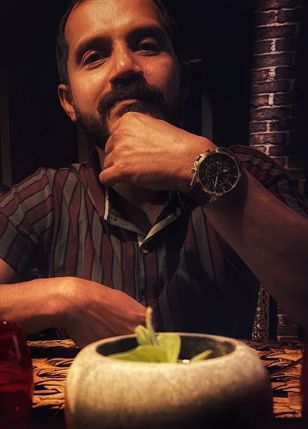
Author George Alexander

A seasoned writer, orator, and trainer, George boasts a career spanning over 16 years in the dynamic realm of human resources and management. His extensive experience has been honed across various organizations, including corporate, government agencies, academic institutions, and non-profit entities.

Alexander holds two master’s degrees: one in social work specializing in urban and rural community development, and another in philosophy focusing on social transformation and empowerment. This unique blend of academic pursuits has equipped him with a deep understanding of human behavior, societal dynamics, and the power of transformative change. Beyond his professional endeavors, Alexander is a dedicated advocate for social justice and community development. 

As a board member of the Occidental Studies Institute (OSI), he actively fosters intellectual discourse and promotes progressive social change. 

His prolific literary career has resulted in the authorship and co-authoring over 12 books and numerous articles. His writings explore various topics, including human resources, leadership, social justice, and personal development.

Connect with George
Website | Instagram | Goodreads

Author Interview – Our Silent Footsteps by Rachel Healey @RachelHealey20 @matadorbooks

My guest today on What Cathy Read Next is author Rachel Healey whose debut novel, Our Silent Footsteps, was published on 5th February 2024. Our Silent Footsteps is described as ‘a love story transcending the trauma of war’ and is based on the true story of Mary, an Egyptian Copt and Jozef, a Polish Jew. I hope once you’ve read Rachel’s fascinating answers to my questions, including her motivation for writing the book, you’ll be tempted to pick up a copy.


About the Book

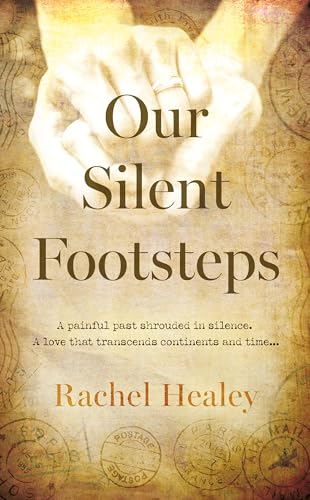
Book cover Our Silent Footsteps by Rachel Healey

They say that to really know a person you need to understand their past. If that is true, then Mary Beker did not know her husband, Jozef, at all…

Warsaw, 2005. An elderly Mary is searching for clues regarding her late husband’s pre-war life: the first wife and children he had to leave behind; the siblings who vanished. There’s a danger the answers she finds could ruin the memory of the man she adored, memories of their time together.

When unravelling his past causes her to revisit uncomfortable memories of her own, Mary must reach a new understanding of the events that brought them together.

Find Our Silent Footsteps on Goodreads

Purchase Our Silent Footsteps from Amazon [link provided for convenience not as part of an affiliate programme]


Q&A with Rachel Healey, author of Our Silent Foosteps

Q. Welcome, Rachel. Our Silent Footsteps is based on true events. How did you first come across the story of Mary and Jozef?

A. I came across their story a few years ago when I was asked by the family to document Mary’s memoirs. Jozef had died in 1960 and Mary was in the last weeks of her life. The family didn’t want Mary’s memories of the extraordinary life she and Jozef led to be forgotten.

Q. What was it about their story that made you want to write a novel about it?

A. When I first started interviewing Mary about her life, she was understandably very guarded but as soon as I mentioned Jozef, her eyes lit up. The bond they shared was still as strong 50 years after his death as it was on their wedding day. But I found it fascinating that she still knew very little about his life before they met. In all the time they’d spent together, she’d never wanted to ask. In the world within which we now live, we are so accustomed to people posting often intimate details of their lives across social media it called to mind the question: do we need to know everything about those we hold close in order to maintain a close relationship?

Q. You’ve described the book as dealing with ‘difficult’ subjects such as persecution, prejudice and poverty. What makes them ‘difficult’ and what challenges did this pose when writing the book?

A. The fact that the book is based on real events sometimes makes for difficult reading. Mary grew up in Egypt in the 1920s in the minority Coptic faith. When her father died suddenly at a young age, Mary’s mother had no rights to her husband’s wealth and business. The young family were catapulted into poverty. These hardships went someway in shaping Mary’s strong determination in life. She chose a career in nursing against her family’s wishes (at that time, nurses were considered as little more than prostitutes in Egyptian culture) and made a life for herself in England, miles from home, despite being subjected to racism due to the colour of her skin. To put myself in Mary’s shoes and try to imagine how her life had evolved and the ways she dealt with the prejudices associated with her gender in Egypt and then racism in post-war Britain was a challenge.

I found Jozef’s story particularly difficult to write in that, a few aspects of what had happened to him prior to 1943 remained elusive. Mary had found a lot of information whilst journeying to his country of birth, Poland, but details such as what his first wife, Rozia, was like in terms of character were lost with Jozef’s death long ago. As a parent myself, I also found it incredibly emotional to put into words the details of the effects of the Holocaust on Jozef’s young family. When I completed the first draft of the book, I must admit to shedding a tear or two…  

Q. You’re a historian by profession. In what way has this influenced how you approach writing fiction?

A. In Our Silent Footsteps I chose to write Mary and Jozef’s story as a work of historical fiction in order to get close to the characters. However, I also chose to weave the seismic events of the twentieth century into the narrative as I felt it important to show how these world events shaped individual lives.

The horror of the Holocaust is well-documented but how well known in popular culture is the treatment of the Poles at the hands of the Russians even after the Russians changed sides? Similarly, how much is really understood about the challenges faced by women within a culture such as the one that prevailed in Egypt in the first half of the twentieth century?

I think we are also only now beginning to understand the problems for refugees settling in post-war Britain. As a historian, I wanted to bring these facts to the reader’s attention in a tangible way. I undertook a lot of research in the making of this book which is probably due to my love of history.

Q. Our Silent Footsteps is your debut novel. Based on your experience, what tips would you offer other first time writers?

A. Believe in yourself and never underestimate the importance of editing your work! There’s nothing worse for a reader to find themselves jolted out of a story because of a small thing like a spelling error!

Q. What are you working on next? 

A. I currently run a memoir writing service, Pages Of My Life, so I am always on the lookout for the next potential manuscript! I am also fascinated by the years succeeding World War Two and how life returned to ‘normal’ after so many years of upheaval for so many people. In that respect, I am currently working on a new work of fiction that looks at the lives of a group of individuals in the months and years from 1945 onwards.


About the Author

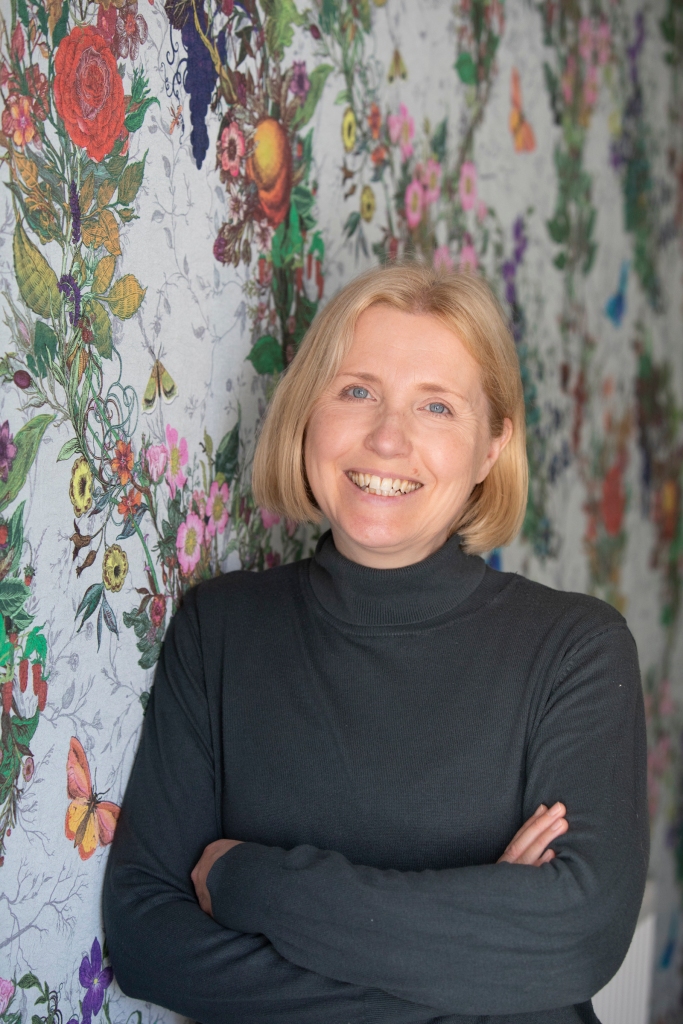
Author Rachel Healey (Credit: Jo Scott)

Rachel is passionate about history, having worked at both Windsor Castle and English Heritage. She now lives in Berkshire running her own memoir writing business, preserving family stories for subsequent generations. She feels spoilt by the beautiful countryside on her doorstep and when she is not writing, she spends her time trying to wear out her energetic dog and two kids.

Connect with Rachel
Website | X | Instagram