Interview/Giveaway: Megan Easley-Walsh, author of Flight Before Dawn

Today’s guest on What Cathy Read Next is Megan Easley-Walsh, author of Flight Before Dawn. Megan has kindly agreed to answer some questions about the book, its inspiration and her approach to writing.
And…Megan is offering three lucky people the chance to win a digital copy of Flight Before Dawn. You can find the link to the giveaway below.  The giveaway runs until  22nd April 2017.


FlightBeforeDawnAbout the Book

Before there was D-Day… For over two years, she’s watched him. Now he’s on her doorstep. This is life in the Resistance. In Normandy in 1943, Victoire leads a band of the Resistance. When Leal, the man she’s had watched for over two years, arrives at her doorstep, she’ll have to face new challenges in war and in love. Robberies, a kidnapping and clandestine night adventures were not at all what Victoire planned for her life. And she most certainly never planned to be betrayed. But war — and love — are unpredictable. Joined by her friend Rainier who is mistrusted by Leal, the mysterious Voleta, and Father Pierre, Victoire and Leal must struggle for survival, the grounds of France, and the material of their souls. When Leal unearths a twenty-five-year-old secret, with Victoire at the center, her whole life is shaken. As the Allies approach, the past, present and future hang in the balance. Can anyone be trusted when the world spins upside down?                                              Watch the trailer here

Purchase links
Amazon.co.uk
Amazon.com
Barnes & Noble
*links provided for convenience, not as part of any affiliate programme

Follow my blog with Bloglovin


Interview with Megan Easley-Walsh

Hi Cathy and readers! Thanks so much for having me on the blog today.

Without giving too much away, can you tell us a bit about Flight Before Dawn?

Flight Before Dawn is the story of a female French Resistance leader, Victoire, in WW2, in Normandy France. History remembers D-Day on June 6, 1944, but Flight Before Dawn begins in the autumn of 1943 when there is still a lot of uncertainty about what will happen. In the opening chapter, Leal arrives on her doorstep. For over two years, the Resistance has watched him, but he believes that Victoire is a stranger. Victoire and her friends must navigate what they are willing to do for freedom and whom they can trust. Victoire believes that the Resistance is the biggest secret of her life, but when Leal unearths a twenty-five-year-old secret, with Victoire at its center, her whole life is shaken.

What made you choose WW2 Occupied France as the setting for the book?

I grew up in an Air Force family and lived in Germany from the ages of 9-18. I have firsthand experience of walking the beaches of D-Day and visiting the museums. I also participated in a yearly service project that decorated the largest American cemetery from WWII in Europe: the Lorraine American cemetery in St.-Avold, France, each May for eight years and so I was present with the veterans and history became incredibly palpable. At its heart, my writing through all of my novels is about hope. If there can be hope in the midst of war, there can be hope anywhere.

How did you approach the research for the book? Do you enjoy the process of research?

Part of my research came from my firsthand experience. In addition, I read several books. I still have the little yellow sticky notes stuck into them. My educational background is history-focused International Relations and I enjoy researching and piecing together why things happen. It was definitely difficult to read some of the research for Flight Before Dawn, as war is truly horrible. That’s also why I write about war, though, to encourage peace.

What was the biggest challenge you encountered when writing the book?

Flight Before Dawn was my first novel and so everything was new. I had previously written short stories, but never a full length novel. Adding in enough layers to make a full novel was interesting to learn.

You have explored many different periods of history in your books. If you could travel back in time to one of them, which would you choose and why?

Wow, that’s a great question! It might be fun to spend a day with Francesco, the painter in Renaissance Venice, from What Edward Heard. I love Venice and art! If I were to time travel to the characters in Flight Before Dawn, I’d want to rescue them and bring them out of the war with me!

If Flight Before Dawn was made into a film, who would you love to see play Victoire?

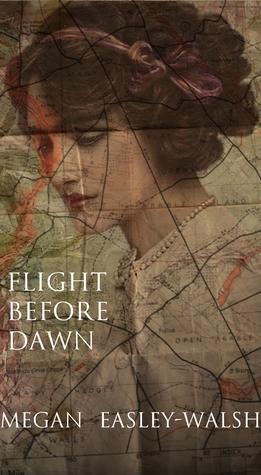
Another great question! I hadn’t thought of this before, but when I read the question Audrey Tautou immediately came to mind. One, she’s French. Two, she’s wonderful in the film The Very Long Engagement, which is actually in WWI rather than WWII, but tells a compelling story of perseverance and love. I also think she looks a bit like Victoire on the cover of Flight Before Dawn.

What is your favourite and least favourite part of the writing process?

I really love all of the writing process. Beginnings are thrilling, because it’s the start of something new. Ends are exciting, because the book reaches completion. Finding the perfect way to weave together the middle is also really interesting. I don’t think I have a least favourite part. I’ll say that the part I find the most challenging is that when I’m in the middle of a manuscript, the characters need to have their stories told and I feel bad if I leave them in peril for too long, so I tend to write a lot at once. (Which isn’t a negative thing!)

What other writers do you admire?

I love reading. I really believe that the more you read, the better you write. I’m a Shakespeare fan and have read all of his works. Some of my novels (although not Flight Before Dawn) feature a Shakespeare allusion. I also like Sherlock Holmes. For more contemporary, I recently began reading Jacqueline Winspeare’s Maisie Dobbs series. I also read a lot of non-fiction, for research and just for personal interest. I really enjoyed reading Margaret MacMillan’s historical works, Paris 1919: Six Months that Changed the World and The War that Ended Peace: The Road to 1914. As mentioned previously, my degrees are in history-focused International Relations, so I love understanding why things that happened continue to impact the world today.

What’s your favourite way to engage with your readers?

I love hearing from readers. Emails at Megan@MeganEasleyWalsh.com are great. You can also connect with me on Twitter, Facebook, Pinterest, Youtube, Goodreads, my blog and my websites. Basically, I’m happy to hear from you! And if you’ve read something that I wrote and enjoyed it, I greatly appreciate if you write a review on a retail website, so other readers can find me.

What are you working on next? Will it be more historical fiction?

More historical fiction, yes, definitely! I have several books in the works that I’m looking forward to sharing with my readers. I also continue to be a writing consultant and editor at www.ExtraInkEdits.com.

My best to you all, Megan.

Thank you so much, Megan, for such fascinating answers. I’m really excited to start reading Flight Before Dawn

WinNow, enter the giveaway by clicking on this link….a Rafflecopter giveaway



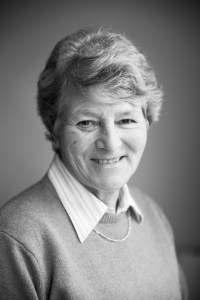
MeganEasleyWalshAbout the Author

Megan Easley-Walsh is an author of historical fiction, a researcher, and a writing consultant and editor at www.ExtraInkEdits.com. She is an award-winning writer and has taught college writing in the UNESCO literature city of Dublin, Ireland. Her degrees are in history-focused International Relations. She is American and lives in Ireland with her Irish husband.

Connect with Megan
Websites http://www.meganeasleywalsh.com/
http://www.newhistoricalfiction.com/
Pinterest https://uk.pinterest.com/easleywalsh/
Twitter https://twitter.com/MEasleyWalsh
Facebook https://www.facebook.com/MeganEasleyWalshAuthor
Sign up to Megan’s newsletter https://tinyletter.com/MeganEasleyWalsh
Goodreads https://www.goodreads.com/author/show/16004855.Megan_Easley_Walsh

Interview: David Boyle, author of Regicide

Today’s guest on What Cathy Read Next is David Boyle, author of the historical mystery, Regicide: Peter Abelard and the Great Jewel.   David has kindly agreed to answer some questions about the book, its inspiration and his approach to writing.

regicideAbout the Book

England, 1100. King William Rufus is killed with an arrow on a hunt. Rumours start immediately that he was murdered.

Nineteen years later in France, Hilary the Englishman is dismissed from his position as tutor when his student, Alys, a young girl with whom he has fallen in love, dies of fever. Turned out in the street Hilary meets a strange man offers to buy Hilary a meal if he does him a favour. He gives Hilary a pouch of silver, and a message to be delivered to Count Fulk in Anjou. But by morning the man is dead, and the crows feasting on his body. Fearing he will be accused of murder, Hilary flees. But he owes a debt of honour to deliver the message. Hilary knows only one man can help him. His former teacher, the brilliant Peter Abelard.

Much has happened to Abelard in the years since Hilary knew him. Although he may not be the man he was, he comes to the aid of his former student, deciphering the message… A message about the death of King William Rufus all those years before. A message about who benefited from that death and about the Great Jewel of Alfred the Great… a jewel which rested in the crown used at the coronation of kings, but has been missing since 1066. Hilary and Abelard’s journey will take them through France, England, and Jerusalem as they race against time to save their own lives, and the fate of the monarchy. For there is a mysterious Saxon claimant to the throne.

To purchase Regicide from Amazon.co.uk click here (link provided for convenience, not as part of any affiliate programme)


Q&A with David Boyle

Without giving too much away, can you tell me a bit about Regicide?

Regicide starts in 1118 and is about a not very successful poet and clerk in holy orders, Hilary the Englishman, who is sacked from his tutor job, and finds himself – through no fault of his own – caught up in a medieval espionage murder, which appears to be related to the death, 18 years before, of William Rufus, the King of England, while out hunting. Chased across France by both sides, and himself accused of murder, Hilary begs for help from the one man who he believes can help him, his old teacher, Peter Abelard in Paris. He finds Abelard gone, chastened and beaten after his affair with Heloise – but they manage to escape for Jerusalem, knowing that they must return and find out who killed the King, to clear Hilary’s name…

Your previous books have been largely non-fiction: history, economics, politics, biography. What tempted you to enter the world of historical fiction?

I’ve always written fiction but tended in the past to keep it to myself! But I fell in love with the 12th century – its tolerance and relative openness and its art (and Abelard is key to that too) – when I was writing about Richard the Lionheart and I couldn’t resist trying to bring it alive.

How did you get the idea for Regicide?

I think the first thought was that the mystery about the death of William Rufus would lend itself well to detective fiction. The second thought was that Abelard – his great near contemporary – would make an excellent Sherlock Holmes figure. The third was that, as I researched Abelard’s life, I found he had a friend called Hilary the Englishman, a minor poet. Six of Hilary’s poems survive: three love poems to nuns and three to young monks. Immediately I discovered them, a picture of Hilary rose into my mind.

Peter Abelard is an interesting figure, a medieval philosopher best known for his affair with Heloise d’Argenteuil. What made you decide to make him a central character?

Abelard was an extraordinary man out of his own time. He is famous now for his affair but he was a brilliant teacher and thinker, a great controversialist, arousing rage and delight in equal measures. If he could have solved the Rufus mystery, I felt sure he would have done so!

How did you approach the research for the book? Do you enjoy the process of research?

I love it but have to be careful not to lose myself in it. I read around the characters and the period. It is important to me that everything I have in the book is consistent with history as we know it.

What was the biggest challenge you encountered when writing the book?

The danger if you do too much research is that you lose the story in atmosphere. I think I’ve managed to avoid that but it was a close run thing!

If you could travel back in time, what period would you choose to visit and why?

Definitely the twelfth century in Europe, perhaps in the troubadour courts of southern Europe – I managed to include the first troubadour as a character in Regicide. But I would make sure I would go to the dentist before I started my journey there!

Do you have a special place to write or any writing rituals?

I try and write in a hut surrounded by papers at the bottom of my garden. But I also have two children and a dog who require constant attention, so it is difficult.

What other writers do you admire?

I’m a huge admirer of William Boyd. Also, two generations back, of Henry Williamson.

What are you working on next? Will it be more historical fiction?

As a matter of fact I have been working on a novel, set during the Brexit debate but involving the Pilgrim’s Way – a late 12th century development. So that is rather the other way around.  I have also been commissioned to write three short historical novels about the Enigma code and there is no obvious link there with the 12th century at all…

Thank you, David, for answering my questions. I can’t wait to read Regicide and find out how the mystery is resolved.

Follow my blog with Bloglovin


DavidBoyleAbout the Author

David Boyle is the author of The Troubadour’s Song: The Capture and Ransom of Richard the Lionheart and a series of books about history, social change and the future. His book Authenticity: Brands, Fakes, Spin and the Lust for Real Life helped put the search for authenticity on the agenda as a social phenomenon. The Tyranny of Numbers and The Sum of Our Discontent predicted the backlash against the government’s target culture. He lives in Crystal Palace, in south London, with Sarah and Robin (two years old).

Connect with David

Website
Twitter