
I’m delighted to host today’s stop on the blog tour for Surviving the Fatherland by Annette Oppenlander and to bring you a fascinating interview with the author about the inspiration for the book.
 Also, there’s a fantastic giveaway with a chance to win one of two signed copies of Surviving the Fatherland.
To enter, click here
 About the Book
Spanning thirteen years from 1940 to 1953 and set against the epic panorama of WWII, Surviving the Fatherland is a sweeping saga of family, love, and betrayal that illuminates an intimate part of history seldom seen: the children’s war. Surviving the Fatherland tells the true and heart-wrenching stories of Lilly and Günter struggling with the terror-filled reality of life in the Third Reich, each embarking on their own dangerous path toward survival, freedom, and ultimately each other. Based on the author’s own family and anchored in historical facts, this story celebrates the resilience of the human spirit and the strength of war children.
| Format: | ebook | Publisher: | Pages: | 355 | |
| Publication: | 15th March 2017 | Genre: | Historical Fiction |
Purchase Links*
Amazon.co.uk ǀ Amazon.com ǀ Barnes & Noble ǀ Kobo
*links provided for convenience, not as part of any affiliate programme
Find Surviving the Fatherland on Goodreads
Interview with Annette Oppenlander, author of Surviving the Fatherland
Surviving the Fatherland is based on the experiences of your own family. When did you first learn of their story?
Growing up I always felt there were a lot of stories hidden in my family. I’d hear bits and pieces, quick references or watch my parents nod at each other in silent understanding. As my interest in history grew, my curiosity grew with it. So in 2002 I asked my parents to share their stories. I spent several weeks visiting them in Germany and recording their memories. I remember one afternoon we were in the basement while my mother ironed. I’d ask questions and she’d tell me about the way her mother treated her. I still have those tapes though it’s hard for me to hear my mother’s voice. She passed away in 2004. My mother always insisted that my father was the better storyteller. And while I agree that his activities were quite adventurous, my mother’s quieter side offered a lot of depth. And so I think the two characters balance each other out nicely.
Initially, I had planned to write short stories so my children could remember their grandparents. But then I realized there were few if any stories about Germany’s war children and the civilian side of WWII. Of course, we have excellent and moving stories about the Holocaust and the soldier’s war. There is no shortage of battle scenes. Yet, many battles were fought at home. They weren’t drawing as much attention, but they were just as heroic. I wanted to add complexity to the stereotypical portrayal of Germany in the Third Reich.
What made you decide to tell the story in the form of historical fiction?
It’s difficult to create a biography when you weren’t there to record actual conversations. My parents were young when the war started and much of what they experienced is shown through their eyes. I also wanted some freedom to create characters the reader could identify with and I wanted to tell a story with a message. So, while almost everything in the book is true, I added some characters and plot points that I felt enhanced the story.
The story is told from the point of view of two children, Lilly and Günter. What made you decide on this approach?
This novel went through dozens of revisions and rewrites. In earlier drafts I also had some chapters depicting Wilhelm, Lilly’s father in Russian gulags, her mother meeting the Baroness the first time and Günter’s father in Norway trading with Enar, the Norwegian shopkeeper. In the end I condensed to the two main characters with slightly more emphasis on Lilly. While she had the less adventurous part, she endured a lot of cruelty.
How did you go about your research for the book?
I recorded hours of interviews with my parents in 2002. After that I studied WWII and post-war Germany in detail, particularly as it pertained to Solingen. I visited the city archives several times, even found a newspaper reference to my grandfather, Wilhelm – Lilly’s father – returning home in September 1953. I read a number of books about WWII and about Russian gulags. None of the Russian experience made it into the novel, but I’m currently working on a new story about Wilhelm. I also found a lot of personal photos in my father’s cupboards.
What was the most surprising fact you came across during your research?
I had a pretty good handle on wartime Germany, but I found out some interesting information about the post-war era. For instance, between 1945 and 1948 Germany’s currency, the Reichsmark, went into free fall with runaway inflation. At the same time, people still starved which caused the need for black markets and cross-country hamster/bartering trips. Stores remained empty until June of 1948 when the Deutsche Mark (DM) was introduced. But even the night before, stores still showed signs like “out of stock, sold out or closed for remodeling.” The next morning, all stores were filled with goods of all imaginable kind: flour, butter, sugar, chocolate, camera equipment, undergarments and household goods. You name it—it was there. The introduction of the DM ended the ration system in Germany and it also ended starvation.
What was the biggest challenge you encountered when writing the book?
I think one reason why it took me 15 years to finish the novel was that I was too close to the story and quite emotionally involved. It took time to step back, hone my craft, and arrive at Lilly’s and Günter’s voices. I also struggled with the structure, i.e. whether to go chronologically or back and forth. I tried all sorts of arrangements, but ended up going with the chronological order.
When you look back on what your own family experienced during WW2, what is your overriding feeling?
I’m amazed they made it through and didn’t go crazy in the process. Especially my mother had such a horrific time. She should’ve been a basket case, but she was a very caring mother. The other feeling I experience now is gladness that I was able to get their stories told. So many readers comment how they never realized the plight of the German war children and that they learned a lot.
What is your favourite and least favourite part of the writing process?
One of the challenges is to know when to start writing. As a historical novelist one has to have a good grasp of the era, the world the story takes place in. I find myself wanting to write before I’ve done all the necessary research. It is a fine line to walk.
Which other writers do you admire and why?
I admire many authors for various reasons. Some are/were quite prolific, others have written profound stories, even classics. Reading these stories has somehow informed my life and my writing. Many have touched me emotionally. Here are a few in no particular order: Stephen King, Ken Follett, Harper Lee, James Alexander Thom, Mark Twain, Jane Austen, Charles Dickens.
What are you working on next?
As I mentioned I’m currently researching WWII from the German soldiers’ perspective. I’m getting in touch with the German military government to see if any records exist of my grandfather. This way I could place him exactly in the right unit. If I find what I’m looking for, I’ll write a novel about Wilhelm in the war and his nine years as a POW in Russia. I recently finished Broken Journey, a story set during the American Civil War. It is about a boy’s choice to protect his best friend, a slave, from a brutal attack which forces both on separate journeys: one escapes into war, the other is sold into slavery. Told from alternating viewpoints, one black and one white, the story examines the power of hope and friendship, and the endurance of the human spirit to find a way home. I’m hoping to get Broken Journey published later this year.
Thank you, Annette, for sharing those fascinating insights into your very personal connection with this book.
 About the Author
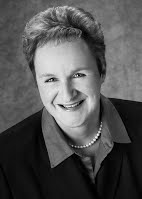
Annette Oppenlander is an award-winning writer, literary coach and educator. As a bestselling historical novelist, Oppenlander is known for her authentic characters and stories based on true events, coming alive in well-researched settings. Having lived in Germany the first half of her life and the second half in various parts in the U.S., Oppenlander inspires readers by illuminating story questions as relevant today as they were in the past. Oppenlander’s bestselling true WWII story, Surviving the Fatherland, was elected to IWIC’s Hall of Fame and won the 2017 National Indie Excellence Award. Her historical time-travel trilogy, Escape from the Past, takes readers to the German Middle Ages and the Wild West. Uniquely, Oppenlander weaves actual historical figures and events into her plots, giving readers a flavor of true history while enjoying a good story. Oppenlander shares her knowledge through writing workshops at colleges, libraries and schools. She also offers vivid presentations and author visits. The mother of fraternal twins and a son, she lives with her husband and old mutt, Mocha, in Bloomington, Ind.
Connect with Annette
Website ǀ Facebook ǀ Twitter ǀ Pinterest ǀ Blog ǀ Goodreads


 About the Author

