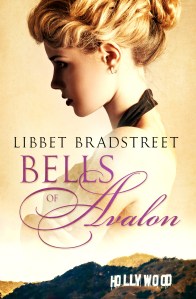
Interview with Libbet Bradstreet, author of Bells of Avalon


Today’s guest on What Cathy Read Next is Libbet Bradstreet, author of Bells of Avalon. I love my historical fiction and I’m a sucker for anything set in Hollywood. So I’m very much looking forward to reading Bells of Avalon just as soon as it reaches the top of my review pile.  In the meantime, I’m delighted that Libbet has agreed to answer some questions about Bells of Avalon, the inspiration for the book, and her approach to writing.
Follow my blog with Bloglovin


Bells of AvalonAbout the Book

Thrust into a limelight she never chose, Katie’s been paired with Danny for as long as she can remember. Films, roadshow tours, and drugstore appearances…post-war Hollywood can’t seem to get enough of the sweetheart team. They’ll even fall in love one day. But young love seldom survives the fog wake of Los Angeles – a place of dreams and nightmares.


Format: ebook (260 pp.), Audiobook                   Publisher:
Published: 26th July 2015                                       Genre: Historical Fiction

Purchase Links*
Amazon.co.uk ǀ Amazon.com
*links provided for convenience, not as part of any affiliate programme

Find Bells of Avalon on Goodreads


Q&A: Libbet Bradstreet, author of Bells of Avalon

Without giving too much away, can you tell me a bit about Bells of Avalon?

I would say it’s tale about old Hollywood – and friendship. There’s something about the relationships that we form in our youth; they carry a certain intensity – a certain weight. They have the ability to haunt you for the rest of your life. That can be both a good and a bad thing. There’s a wonderful line at the end of Stephen King’s short story, The Body, that says, “I never had any friends later on like the ones I had when I was twelve. Jesus, did you?” I thought about that a lot while writing the book.

How did you get the idea for the book?

I’ve been obsessed with the glamour of vaudeville and the golden age of Hollywood since I was a young. Over the years, I devoured pretty much everything I could find on the subject. Soon I began to discover that – beneath all that sharp glamour – there was a darkness that lay just as deep. So many actors from the early days of film have tragic stories. Many paid a dehumanizing price for fame – for survival within the industry. And despite their contributions to film, many have been forgotten. I think that’s a harsh reality that most of us can relate to, regardless of our occupation. I guess this book was written, partially, as sort of tribute to those forgotten actors who inspired me so much as teenager.

Bells of Avalon is your first novel, so can you tell us a bit about your writing journey?

I’ve had an interest in writing since I was very young. I think my focus sharpened, however, as a result of having some amazing creative writing teachers in college. Two in particular, who are amazing authors in their own right, were Diana Joseph and Jeff Conine. Their influence over my writing sensibility feels almost incalculable to me. I’m lucky to feel their guidance and support whenever I sit down to write anything.

Bells of Avalon is set in the Hollywood of the 1950s. What were the challenges in creating an authentic picture of life in that period?

It was extremely important to me that the period setting ring true. That meant if Katie wore a particular dress, piece of jewellery, or brand of makeup – it all had to be creditably related to her time period. Likewise with the rest of the characters. It was also important that the cultural habitats of WWII-era London and, eventually, the late 60s vibe of Greenwich Village be very reliable. That was sometimes challenging as I obviously have no sense memory of those time periods. Writing those passages felt daunting and technical, at times.

How did you approach the research for the book? Do you enjoy the process of research?

By virtue of my interests, I guess you could say I’ve been informally researching the material since I was young. There were definitely times, though, that I had to do a great amount of new research depending on the direction of the plot. Some days I alternated writing days with research days. That was beneficial because sometimes you can get into this gridlocked state, where you aren’t sure where to go next. A lot of the time, the research will lead you down a completely new, creative pathway. My ultimate goal was that someone who spent their formative years during the 1940s and 50s could pick up the book and feel reminiscent – or at least, see elements of own lives within the setting.

If Bells of Avalon was to be made into a film, who would you love to see play Katie and Danny?

That’s a great question! Danny, in my mind, will always look like Richard Beymer from West Side Story. Katie will always be Esther Ralston. Max came to look a lot like Eric Dane to me…but that could have been due to my mass consumption of Grey’s Anatomy at the time!

Libbet Bradstreet is a pen name. Why did you decide to use a pen name and how did you come up with it?

I guess I’m a bit of a private person, so using a pen name felt more comfortable. I did want the name to mean something, though. Bradstreet is an old family surname – and it serves as a dual allusion to my favourite comedian and indie filmmaker, Brad Jones. Libbet is a nickname I stole from a close high school friend (don’t worry…she gave me permission!)

Which other writers do you admire?

Christine Fletcher, Carole Radziwill, Sarah Dessen, Stephen King, Lloyd Alexander, Ann Brashares, Daphne Du Maurier, Nora Roberts, Zoa Sherburne, Ernest Hemingway, Vladimir Nabokov, Cindy Bonner, Dodi Smith, Clarissa Pinkola Estes, Helen Maslin, Charlotte Bronte, Bette Greene, Joyce Carol Oates. Too many to count!

What a great list!  What would be your favourite Hollywood movie to curl up in front of the TV with?

Postcards from the Edge with Meryl Streep and Shirley MacLaine

What are you working on next?

I’m finishing up a collection of YA short stories. The stories share a common, coming-of-age sentiment, but they also exist within vastly different genres/settings/time periods. I’m experimenting a bit with sci-fi and horror, so it’s a bit different from what I’ve done in the past.

Thank you, Libbet, for those fascinating answers. I’m sure reading about the book and its inspiration has created a lot of interest in Bells of Avalon.  Who can resist the glamour of the Golden Age of Hollywood?


LibbetBradstreetAbout the Author

Libbet Bradstreet is a philanthropy writer currently residing in Austin, Texas. Since 2007, she has served as a fiction judge for the New York-based non-profit NYC Midnight. Her short fiction has been published by Ophelia Street Literary Arts Journal. Bells of Avalon is her debut novel.

Connect with Libbet

Website ǀ Facebook ǀ Twitter ǀ Goodreads


Interview: The Last Thread by Ray Britain

Today’s guest on What Cathy Read Next is Ray Britain, author of The Last Thread. The Last Thread is Ray’s first novel and, given his highly successful police career, it should be no surprise that it’s a crime investigation story.  I’m very much looking forward to reading The Last Thread just as soon as it reaches the top of my review pile.  In the meantime, I’m delighted that Ray has agreed to answer some questions about The Last Thread, the inspiration for the book, and his experience of being a first-time author.

Follow my blog with Bloglovin


TheLastThread2About the Book

Accused of pushing a boy to his death in a failed suicide intervention, DCI Doug Stirling is suspended from duty. Attacked in the media and haunted by the boy’s smile as he let go of Stirling’s hand, he must look on helplessly as the incompetent Chief Inspector Ballard, intent on destroying him, investigates the boy’s death, supported by the vindictive Deputy Chief Constable, McDonald. Weeks later, an anonymous call leads the police to a remote location and the discovery of a burnt-out car containing the body of an unidentified man who has been savagely murdered. Short of experienced senior investigators, Assistant Chief Constable Steph Tanner has no choice but to take a professional risk.  Throwing Stirling the lifeline he needs to restore his reputation, Tanner appoints him to lead the investigation.

But with no witnesses, no forensic evidence and more theories than investigators, Stirling’s investigation has far too many ‘loose threads’ as he uncovers a complex, interwoven history of deception, betrayal and sadistic relationships. Was the victim connected to the crime scene? Is the murder as complex as it appears? Or is there a simpler explanation? Still traumatised by the boy’s death and with time the enemy, does Stirling still have what it takes to bring the killer, or killers, to justice before McDonald intervenes? Things are already difficult enough when DC Helen Williams joins the investigation; a determined woman who seems intent on rekindling their past relationship. And is Ayesha, the beautiful lawyer Stirling has grown fond of, connected to the murder somehow?

Format: ebook (536 pp.)                   Publisher:
Published: 17th September 2017    Genre: Crime

Purchase Links*
Amazon.co.uk ǀ Amazon.com
*links provided for convenience, not as part of any affiliate programme

Find The Last Thread on Goodreads


Q&A: Ray Britain, author of The Last Thread

What has surprised you most about the journey from first draft to publication of your book?

How long it took – over thirty years! Writing a book had been an unfulfilled ambition for much of my adult life but with a busy career and a young family, it had to sit on the back burner. After leaving the police service I drafted a few chapters but, between being busy working in London and losing a little confidence in the writing process, I didn’t touch it again until 2015. What was the catalyst for starting again? I read a popular crime fiction novel and was so irritated at its many inaccuracies and its unrealistic plotline that I thought I should either put up, or shut up. Hence, The Last Thread and my protagonist, DCI Douglas Stirling.

How did you go about balancing your desire to represent police procedure accurately with the need to tell an exciting story?

I had two objectives. Firstly, and most importantly, that the story engaged the reader’s imagination, keeping their attention and them guessing to the end. Secondly, that it accurately reflected the realities of investigation in the UK.  I’ve endeavoured to provide sufficient information that will interest and inform my readers without, I hope, detracting from the story.

Is there a scene in the book you found particularly challenging to write? If so, why?

Not so much a single scene as the elements of the storyline intended to make the reader work and to think about who the culprit is.  Providing sufficient information and hints without giving it away then how to wrap it up and still leave a final decision with the reader.

Why did you decide to make Doug Stirling a Detective Chief Inspector, as opposed to any other rank?

As part of my motivation to write was to portray modern investigations accurately and authentically, I needed someone who has sufficient rank to lead complex investigations but is not so far up the hierarchy to be completely detached from the fray. Like many organisations, the higher one travels up through the ranks in the Police, the more distanced one is from day to day investigative practice.

Is the Doug Stirling the reader encounters in the book as you originally envisaged him or did his character change during the process of writing? If so, in what way?

Broadly, yes. In terms of his physique and looks, he’s drawn from memories of a young version of my Father, but that’s as far as the likeness goes. Doug is a bit of a dark horse with an intriguing, untold back story who enjoys the company of intelligent, interesting women and, if they’re attractive too, then even more so. As for the other characters in The Last Thread, they’re drawn from my imagination but with characteristics informed through experience. There are several strong female characters in the book, such as exist in policing and professional life generally, and many other interesting characters. I look forward to readers’ feedback.

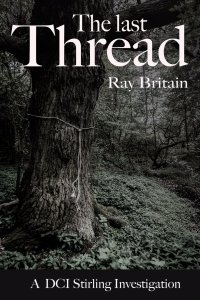
The cover of The Last Thread has a very sinister feel to it. How did you arrive at the jacket design?

I’m delighted that people have commented favourably on the cover photography. I wanted something that was different to a lot of self-publishing imagery, hinted at a sinister element to the storyline and, of course, intrigued people enough to pick it up and want to find out more. Working with a semi-professional photographer – acknowledged – we spent some time early one morning doing the shoot, hoping no one would walk by!

Prequels seem to be popular – Endeavour for Inspector Morse, Prime Suspect 1973 for Jane Tennison. Would you be tempted to write about Doug Stirling’s early days in the police force?

I think I should establish Douglas Stirling’s reputation first before I consider that. And as he’s only half way through his career, there’s plenty of life, investigations and love affairs left in him yet!

Will your next book be crime fiction or would you like to explore a different genre?

The next DCI Stirling investigation is underway, with the prologue drafted and the first murder committed! I use mind-mapping software to capture my thinking, to develop story lines and timelines and define my character profiles to ensure consistency. I want readers to become immersed in the story without the irritation of inaccuracies or inconsistency.

I know you enjoy reading crime fiction. Do you find yourself more interested in the ‘whodunit’ or the ‘whydunit’?

Both. All crime is motivated by something and why people do terrible things is important and fascinating to understand. Consequently, my storylines aim to make the reader work, to understand why things happened and, ultimately, decide who did what, and why.

With the benefit of hindsight, what advice would you give an author embarking on their first book?

If you intend to self-publish, do a lot of research, such as the ‘ideal’ length of a popular fiction novel (100k words approx.) and Kindle Publishing’s format requirements. I got to the better part of 200k words before I thought to have a look! I would have prepared the formatting of my manuscript better too if I’d known a few things in advance, which would have saved a lot of time in editing. There are some excellent blogs where writers’ have generously shared their experiences.

Finally, what’s your favourite tune for ‘Dad dancing’ to? Well, you do list that as one of your hobbies!

Ah, thank you for reminding me about that, Cathy! Anything with a good rhythm but generally any of the ‘classic’ dance songs of the last three decades. I’m hopeless at remembering lyrics but enjoy a good tune and can throw some great moves. Well, I think so, anyway. My family would argue otherwise, of course.

Thank you, Ray for those fascinating answers. I know crime fiction fans are going to love the combination of accurate police procedure and gripping story lines in The Last Thread and future DCI Stirling books.


RayBritainAbout the Author

Gaining promotion to a high rank, Ray built his police career in the Midlands region of the UK, working in both uniform and investigative roles, but the investigation of crime and the camaraderie of investigators remained his first love. As a Senior Investigating Officer (SIO) he led many investigations, some of which engaged specialist, national capabilities. For fifteen years he was a Hostage & Crisis Intervention Negotiator and responded to hostage situations, many firearms incidents and numerous suicide interventions, not all of which ended happily. Ray attended the FBI’s hostage negotiator programme at Virginia, USA as a UK police representative and other responsibilities took him to India, Europe and elsewhere. He received several Commendations in recognition of his work.  Since leaving the police Ray has worked with other criminal justice sector organisations, including HM Government’s Home Office.

Ray’s idea of a good day out is mountain walking or skiing, but most definitely not at the same time! His interests include rugby, an eclectic taste in music but currently keen on modern jazz. He’s a great Dad dancer too – his family might argue to the contrary – who enjoys reading and occasionally acts as incompetent crew for a friend’s sailing yacht.

Connect with Ray

Website ǀ Facebook ǀ Twitter ǀ Goodreads