
Today’s guest on what Cathy Read Next is Gary Corbin, author of Lying in Vengeance, the follow-up to the award-winning courtroom thriller, Lying in Judgment. I’m delighted that Gary has agreed to talk about Lying in Vengeance, how the idea for a sequel to Lying in Judgment came about and his approach to writing in general.
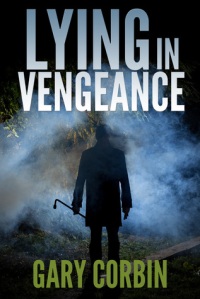 About the Book
Peter Robertson, 33, once fought a man on a remote forested road and left him to die. Six months later, he served on the jury that freed a wrongfully accused man – and let his own secret slip to a beautiful but manipulative fellow juror, Christine Nielsen. Two months later, Christine wakes him in the middle of the night with a threat: kill Kyle, the man who stalks and abuses her, or have his own murderous past exposed. Peter pretends to go along as he seeks another, less violent solution, and his best friend Frankie threatens to expose the conspiracy to the police. But Kyle makes his move, breaking into her house in the middle of the night and then later kidnapping her at gunpoint. Peter’s daring rescue gives him the opportunity to fulfil her request—and he walks away, consequences be damned. The next morning, Kyle turns up dead, and the police arrest Frankie, of all people. Peter knows he’s innocent, but can he prove it without directing the finger of blame at himself—for both murders?
Format: eBook (281 pp.), paperback (306 pp.) Publisher: Double Diamond Publishing Published: 13th September 2017 Genre: Thriller
Purchase Links*
Amazon.co.uk ǀ Amazon.com
*links provided for convenience, not as part of any affiliate programme
Find Lying in Judgment and Lying in Vengeance on Goodreads
Interview: Gary Corbin, author of Lying in Vengeance
Gary, without giving too much away, can you tell us a bit about Lying in Vengeance?
It tells the story of Peter Robertson, a good man with a dark secret: he once killed a man in a fight on a remote forested road. The beautiful and charming Christine Nielsen discovers his secret and wakes him in the middle of the night with a threat: kill Kyle, the man who stalks and abuses her, or have his own murderous past exposed. Peter must choose between two horrible options. Both involve death and revenge.
Lying in Vengeance picks up the story from Lying in Judgment. Was it always your intention to write a series and, if so, what considerations did you have to bear in mind?
I did not have a sequel in mind when I published Lying in Judgment. The sequel came about in response to my readers’ requests and in response to their questions about “What happens NOW?” At first I didn’t even see how a sequel could happen, but as I thought about the questions readers asked me, it became clear that the characters’ next adventures would be sequel-worthy.
Both Lying in Judgment and Lying in Vengeance explore the notion that a single action can have long-term consequences. What is it about that idea that interests you?
Everything! We all live so close to the edge of catastrophe, really. When I see random tragic occurrences – say, a crashed car on the side of a highway – I often think about how life-changing, yet unexpected, such events can be. How would it change my life, and the lives of random strangers who just happened to be there at the time? Life seldom goes as planned, and the different ways that people respond to the unexpected is what makes for great storytelling.
How did you go about making Peter Robertson a sympathetic character despite his obvious flaws?
Everyone has flaws — and even the villain in a story has virtues. Peter, like everyone else, has both. He loves his wife and is very faithful to her, even as he knows she is cheating on him. He is devoted to his sick mother and sacrifices quite a bit for her. He’s honest, thus torn about his situation, and works toward the goal of a not guilty verdict for the innocent man accused of the crime. Other people like him because of his loyalty to his friends and family, his steadfastness, and his responsible character, and readers tend to like characters that other sympathetic characters like. He’s also the point of view character, which naturally tends to lead the reader to root for him.
You’re an actor as well as a writer so to what extent are you writing yourself a great part when working on your books?
Ha! If only I were a good enough actor (or screenwriter). Maybe if I had a little more hair and a body 25 years younger…Levity aside, being an actor helps when creating characters, because I can put myself in their skin in a scene and take action from their perspective. It also helps with creating sharp, concise dialog – long soliloquies are tough on actors.
You’re a man of many talents because you’re also a published playwright. How do you think the demands of the stage have influenced the writing in your novels?
There’s quite a bit of overlap between the two forms, but also some key differences. Story structure is essentially the same, although the length and the level of detail are much different. Stage plays focus on dialog and action, and those are important to novels as well, but mystery/thriller novels also tend to emphasize the psychological side quite a bit – a character’s “inner thoughts” — which doesn’t work as well in plays. Playwriting also helps keep me focused on the “stage picture” – what the reader “sees” in a scene — and with keeping scenes short and focused. But novels give me a lot more freedom to play with location and motivation, and I try to take advantage of that in my mystery writing.
Is there a scene in the book you found particularly challenging or rewarding to write? If so, why?
The opening scene probably took me the most rewrites, so I’d probably say that one. While the imagery and the basic events were clear in my head before writing it, I found it challenging to balance the need to set up the story and get right into the action against the need to hold back and not reveal too much too soon. I wanted the reader hooked, but didn’t want to spill too much of the story too fast.
You’ve also worked as an editor – see, I said you were a man of many talents! What’s your top piece of advice to budding authors?
Don’t edit your own work! While I do editing for others, I can’t do my own, and I don’t think anyone can. There’s nothing quite as valuable an objective second or third opinion on your work before it gets published. A good editor will help spot the weaknesses not only in your prose but also in your story – things we’re blind to in our own work.
Which other writers do you admire?
I love the work of Phillip Margolin, John Irving, Scott Turow, Barbara Kingsolver, Toni Morrison, Bob Dugoni, Elmore Leonard, and Stephen King (though I’m not much of a horror fan). Poe was an early inspiration, along with Chandler and Doyle. Among playwrights I’m most influenced by Neil Simon and Sam Shepard. I also love the early 19th century romantic writers – Coleridge, Blake, Wordsworth, and Byron.
What are you working on next?
I’m currently working on the third book in The Mountain Man Mysteries, entitled The Mountain Man’s Badge, which I expect to publish in 2018. I’m also working feverishly on finishing a full-length stage play called “Voodoo Snowball,” a full-length comedy about cancer, family, and healing through (or in spite of) voodoo.
Thank you, Gary, for those fascinating answers. I’m really looking forward to reading Lying in Vengeance just as soon as it reaches the top of my review pile.
 About the Author
Gary Corbin is a writer, actor, and playwright in Camas, WA, a suburb of Portland, OR.
His debut novel, Lying in Judgment, released in March 2016, is a courtroom thriller about a man who serves on the jury of a murder trial for the crime he committed. It was selected as Bookworks.com “Book of the Week” for July 11-18, 2016, and was the feature novel on Literary Lightbox’s “Indie Spotlight” in February 2017. Gary’s second novel, The Mountain Man’s Dog, came out in June 2016. The sequel, The Mountain Man’s Bride, was released in February 2017.
An award-winning playwright, several of his plays have been produced in the Portland, OR area, some of them multiple times. In addition to his own scripts, Gary writes, ghost-writes, and edits scripts. He specializes in tight, realistic dialogue involving sharply drawn, interesting characters in complex relationships. As well as writing and editing for private sector, government, individuals, and not-for-profit clients, his creative and journalistic work has been published in BrainstormNW, the Portland Tribune, The Oregonian, and Global Envision, among others.
A home brewer as well as a maker of wine, mead, cider, and soft drinks, Gary is a member of the Oregon Brew Crew and a BJCP National Beer Judge. He loves to ski, cook, and garden, and hopes someday to train his dogs to obey.
Connect with Gary
Website ǀ Facebook ǀ Twitter ǀ Goodreads

 About the Book
 About the Author
 What Cathy Read Next...