Blog Tour/Q&A: The Girl on the Doorstep by Lindsey Hutchinson

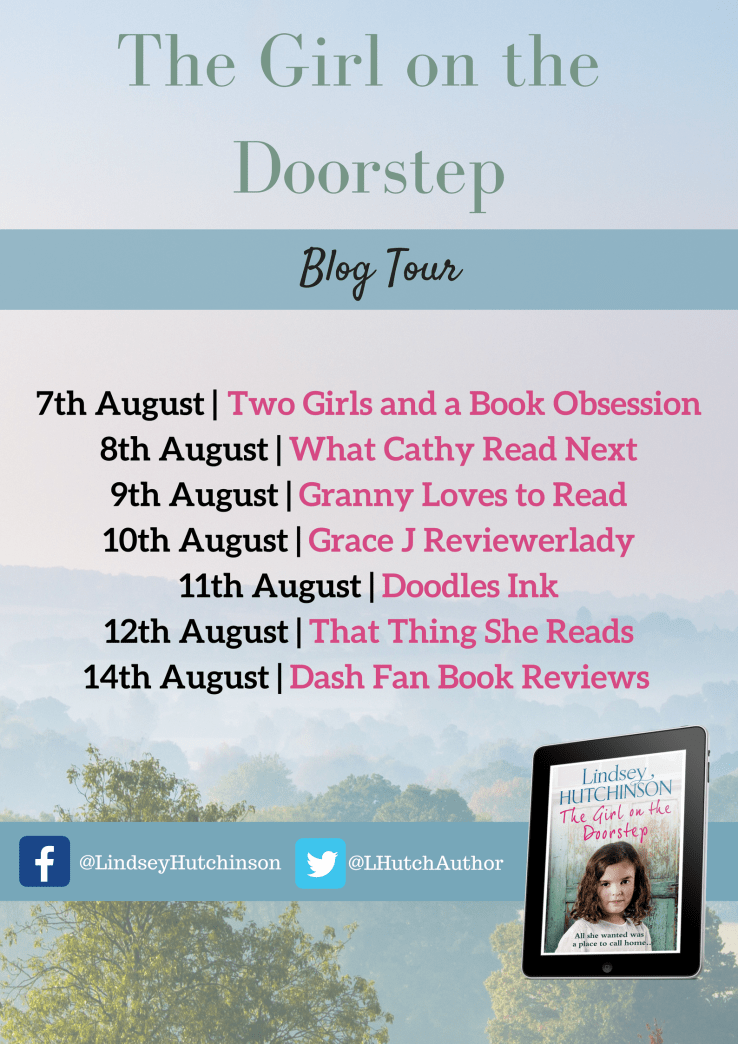
The Girl on the Doorstep Blog tour poster

I’m thrilled to be hosting today’s stop on the blog tour for The Girl on the Doorstep by Lindsey Hutchinson – many thanks to Victoria at Head of Zeus for inviting me to take part in the tour.  I’d have loved to find time to read and review Lindsey’s book but unfortunately my reading schedule didn’t permit it.  However, I’m delighted to bring you a Q&A with Lindsey in which, amongst other things, she reveals how a Christmas present provided the inspiration for the book and the essential tools of her craft.
Follow my blog with Bloglovin


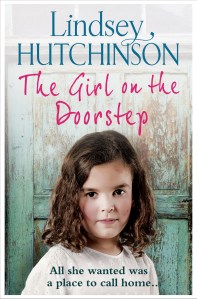
The Girl on the DoorstepAbout the Book

Left an orphan, five-year-old Rosie Harris is found and raised by Maria, a Romany gypsy. Life on the road is hard, but the little girl soon feels one of the tribe with the travellers.

As she grows older, Rosie realises she has ‘second sight’ and is able to read people’s palms and see into their futures. Needing to make a living of her own, she befriends the canal folk, known as the ‘cut-rats’ traversing the Black Country waterways with their cargo, and so offers readings to anyone who can pay.

Pursued by Jake Harding, a Romany bandolier who wants her for his wife, Rosie instead finds herself falling in love with a married man. And despite growing ominous signs that her future may be cursed, Rosie can’t quite break away from the dream of a happily ever after…

Lindsey Hutchinson is a master storyteller, and her Black Country sagas are heart-breaking, uplifting and truly addictive.

Format: Paperback, ebook (494 pp.)    Publisher: Aria
Published: 7th August 2018            Genre: Historical Fiction

Purchase Links*
Amazon.co.uk  ǀ  Amazon.com
*links provided for convenience, not as part of any affiliate programme

Find The Girl on the Doorstep on Goodreads


Interview: Lindsey Hutchinson, author of The Girl on the Doorstep

Welcome to What Cathy Read Next, Lindsey.  Without giving too much away, can you tell me a bit about The Girl on the Doorstep?

Rosie Harris, an orphan, is raised by gypsies and realises she has ‘second sight’. She is befriended by the canal people and reads palms to make a living. Finding herself in all sorts of predicaments, Rosie battles her way through them. All she wants is a ‘happy ever after’ life – will she achieve this?

How did you get the idea for the story?

My sister, Kim, bought me a book for Christmas on ‘Black Country’ canals which I thoroughly enjoyed reading. It sparked an idea so I grabbed my pen and began to write. The Girl on the Doorstep was the result.

I was intrigued by the reference to the ‘cut-rats’, the canal folk Rosie befriends who travel the Black Country waterways.  Can you tell us any more about them?

The ‘cut-rats’ were hard working folk who lived and worked on the canals. They were looked down upon by town folk, unfairly in my opinion, as being rough and ready. The women swore like navvies and the men drank like it was going out of fashion. Working long hours at back-breaking work took its toll and many died at a fairly young age.

In the book, Rosie reads palms to make a living.  Do you believe in ‘second sight’ yourself?

I do believe in ‘second sight’ – I’ve had too many experiences not to. I also think there are a lot of charlatans out there, so beware before you part with your money.

Were there particular scenes in the book you found especially challenging – or rewarding – to write?

When I write I think about my readers. Will this scene make them chuckle? Will another bring them to tears? Writing a book as a whole is challenging, but then it makes us authors work harder.

What is it about the Black Country that inspires you to make it a location for your books?

The ‘Black Country’ is where I was born and brought up. Although I live in the country now, my heart will forever be in Wednesbury.

As a writer of historical fiction, what do you think is the key to creating an authentic picture of a particular period?

Senses. I endeavour to draw the reader into the place and time with smells, sounds, etc., as well as historical facts.

Do you have a favourite place to write or any writing rituals?

I sit in my easy chair to write and I always use a fountain pen. I write longhand as I find it easier to glance back at the pages should I need to. Once the draft is complete I then type it up before reading through it thoroughly.

Which authors do you admire and enjoy reading?

I have an eclectic mix of books on my Kindle and in the bookcases. I enjoy Mary Wood, Linda la Plante, Lyn Andrews, I also enjoy John Lyman, Dan Brown – anything to do with ancient Egypt or ancient Rome.

What are you working on next?

My next project is set around an orphanage in 1890. A family in abject poverty sell two of their children to an orphanage, which is not council run, for five shillings. The boy knows that to protect himself and his younger sister he has to learn to fight. So he manages to convince a pugilist to teach him bare-knuckle boxing. We will all have to wait and see where these two youngsters end up!

Thank you for those fascinating answers to my questions, Lindsey.  Your many fans will be thrilled by your answer to my last question!
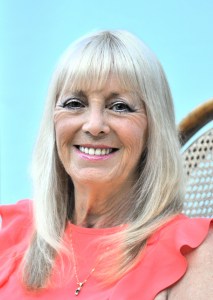

Lindsey Hutchinson Author ProfileAbout the Author

Lindsey lives in Shropshire with her husband and dog.  She loves to read and has recently discovered photography.  Lindsey is the daughter of million-copy bestselling author Meg Hutchinson.

Connect with Lindsey

Website  ǀ  Facebook  ǀ  Twitter  ǀ  Goodreads

Blog Tour/Q&A: Blood and Ink by D. K. Marley

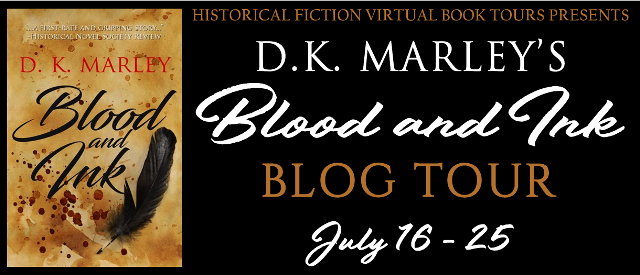
Blood and Ink_Blog Tour Banner_FINAL

I’m delighted to be hosting today’s stop on the blog tour for historical mystery, Blood and Ink by D. K. Marley.  I have a fabulous interview in which, amongst other things, the author shares her fascination with research, the challenges of achieving historical authenticity and her own favourite authors.

WinThere’s also a giveaway (open internationally) running until the end of the tour with a chance to win one of two copies of Blood and Ink. To enter and view the rules, visit the tour page here and complete the Gleam form at the bottom of the page.
On the tour page you can also see the other fantastic book bloggers taking part in the tour and follow links to reviews of Blood and Ink.

Follow my blog with Bloglovin


Blood and InkAbout the Book

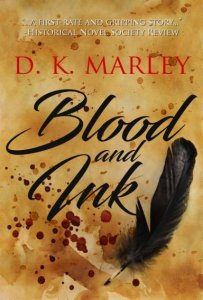
Blood and Ink tells the story of Christopher “Kit” Marlowe, the dark and brooding playwright of Queen Elizabeth’s court. Marlowe sells his soul to gain the one thing he desires: to see his name immortalized.

Inspired at an early age on the banks of the Stour River, his passion for a goose quill and ink thrusts him into the labyrinth of England’s underworld – a secret spy ring created by the Queen’s spymaster, Sir Frances Walsingham.  Kit suffers the whips and scorns of time as he witnesses the massacre of Paris, the hypocrisy of the church, the rejection from his ‘dark lady,’ the theft of his identity as a playwright, and wrenching loss breathing life into many of his unforgettable characters.

As he sinks further into the clutches of Walsingham, a masque is written by his own hand to save his life from shadowing betrayers, from the Queen’s own Star Chamber, and from the Jesuit assassins of Rome, thus sending him into exile and allowing an unknown actor from Stratford-upon-Avon, William Shakespeare, to step into his shoes.

And so begins the lie; and yet, what will a man not do to regain his name?

Format: Audiobook, paperback, ebook (438 pp.)    Publisher: The White Rabbit Publishing
Published: 28th March 2018  Genre: Historical Fiction

Purchase Links*
Amazon.co.uk  ǀ  Amazon.com  ǀ
*links provided for convenience, not as part of any affiliate programme

Find Blood and Ink on Goodreads


Interview: D. K. Marley, author of Blood and Ink

Without giving too much away, can you tell me a bit about Blood and Ink?

Blood and Ink is the story of the playwright, Christopher Marlowe, and his association with the underground world of Walsingham’s spy ring, how he became a playwright, the possibility he did not die in 1593 and is the suspected true author of Shakespeare’s plays.

How did you get the idea for the story?

In 2000, I visited the Globe Theatre in London. At the time, there was a display in the museum about the different men who might have written or co-written the plays of Shakespeare. One of them was Kit Marlowe. When I got back home from that trip, I started researching since it was always my desire to write a historical fiction novel. Something about the idea struck me as an incredible premise for an alternate history, so I spent the next few years researching and plotting out my novel.

How did you approach your research for the book? Do you enjoy the process of research?

I love the process of research, but sometimes I have to remind myself that I am a writer, or else I get really absorbed in history. My process is: 1) read and read and read; 2) take lots of notes and start arranging them on note cards or files; 3) plot out my story and characters and see how to fit in the history; 4) start writing.

What was the most surprising fact you came across during your research?

So much! Even though I am a staunch Stratfordian and believer in William Shakespeare as the author, I was surprised at how much of the sonnets reflected Marlowe’s life. I found myself baffled at times at the evidence of Marlowe’s death – the inquest, the grave, the suspicions, the trumped-up charges against him, and the secret identity of Monsieur LeDoux. Very intriguing!!

What do you think is the key to creating an authentic picture of a particular historical period?

To me, to take a reader back to the time period, you must stay true to the setting, the language (as far as it does not turn your reader off), the clothes, the smells, the poor living conditions, everything! Tudor England or Medieval England was not the romantic setting so often portrayed today on television or film…especially to the poor. Even to the nobility, you were dealing with dark, dank, sometimes sweltering, sometimes frigid estates or castles; so to stay authentic to historical fiction, all of these elements give your reader honesty.

Readers (me included) seem fascinated with the Tudor period of English history.  Why do you think this is?

I love it, as well. Tudor history is fascinating because it represents a time of incredible change, in thinking, in art, in religion, and all backed by one of the most interesting Queens in history. True, the history has been glamorized in television and film, but for me, there is something so relatable, as well as fantastical, about these people’s lives. Love, passion, betrayal, greed, suffering, ambition, death, marriage, feminism, bullying, machismo, friendship, lust, secrets, politics, religion… the stuff of life, even our life today, except flavoured with grand gowns, men with swords, and imposing castles. Somehow, I think (speaking as a reader myself) we imagine the aforementioned list manageable if we wore a corset and our hero swept in wearing a doublet. We seek to escape and what better century to escape than the seemingly magical world of the Tudors!

Were there particular scenes in the book you found especially challenging – or rewarding – to write?

I found the scenes of the massacre in Paris difficult to write. I rewrote the scene several times, sometimes more violent, sometimes less violent, but ended with trying to focus more on how the scene affected Kit as a young boy instead of the gory details of what happened in the streets of Paris. I loved writing the scene between Marlowe and the Countess of Pembroke. When I first read Venus and Adonis, I thought to myself…”this happened, the writer of this poem is speaking from experience, just the same as when he wrote the poem of a young shepherd boy to his secret love”… so the entire scene developed from the poem. Mary Herbert was an incredible poetess in her own right and very well could have been a match for Marlowe, so the entire scene just flowed from my mind as I wrote.

Do you have a favourite place to write or any writing rituals?

This may sound funny, but I have a loveseat covered with a Toile slipcover where I sit to write. The scenes on the slipcover depict English country scenes with women in flowing skirts and men on horseback, so maybe it gives me inspiration. Plus, my daughter, who was killed 3 1/2 years ago by a drunk driver, used to sit in this very seat and read her favourite books when she would come to visit me. She was my reading buddy, so I feel close to her when I sit here.

Which authors do you admire and enjoy reading?

I have so many and continue to add to my collection. My first and foremost is Carlos Ruiz Zafon, who wrote The Shadow of the Wind and The Angel’s Game. Next in my list is in order: William Shakespeare (of course), Ken Follett, Jane Austen, Rosalind Miles, Marion Zimmer Bradley, Toni Morrison, and Margaret George.

What are you working on next? 

My second novel, Prince of Sorrows, a historical fiction adaptation of the play Hamlet is now available on Amazon. I am working on a breakaway novel, meaning breaking away from my normal Shakespearean vein, with a historical novel titled Child of Love and Water set in the islands of Coastal Georgia in the 1700s, involving a Creek Indian warrior, a Gullah slave girl, a British soldier, and an Irish immigrant girl, due out in December of 2018. My next in the Shakespeare series is A Winter’s Fire which adapts the story of Lady Macbeth and is set for release in the spring or summer of 2019.

Thank you for those fascinating answers and insight into your busy writing life!


DK MarleyAbout the Author

D. K. Marley is a historical fiction writer specializing in Shakespearean themes. Her grandmother, an English Literature teacher, gave her a volume of Shakespeare’s plays when she was eleven, inspiring DK to delve further into the rich Elizabethan language. Eleven years ago she began the research leading to the publication of her first novel Blood and Ink, an epic tale of lost dreams, spurned love, jealousy and deception in Tudor England as two men, William Shakespeare and Kit Marlowe, fight for one name and the famous works now known as the Shakespeare Folio.

She is an avid Shakespearean/Marlowan, a member of the Marlowe Society, the Shakespeare Fellowship and a signer of the Declaration of Intent for the Shakespeare Authorship Debate. She has travelled to England three times for intensive research and debate workshops, and is a graduate of the intense training workshop “The Writer’s Retreat Workshop” founded by Gary Provost and hosted by Jason Sitzes.

She lives in Georgia with her husband and a Scottish Terriers named Maggie and Buster.

Connect with D. K. Marley

Website ǀ  Facebook ǀ  Twitter  ǀ  Goodreads