
I’m delighted to be celebrating publication day of Those Who Fear Us with its author, Anthony Estrada. You can read an extract from the book below followed by Anthony’s fascinating answers to my questions about his book and his writing journey. Find out about the inspiration for the story, its protagonist, his research for the book, his writing heroes and why he may be doing a happy dance on publication day.
But first let me tell you some more about it – and how you can get your hands on a copy!
About the Book

Sergeant Carlos Lopez patrols the streets of the isolated, sleepy California farming community of San Eugenio. Searching for meaning, purpose, and dignity, Sgt. Lopez finds it at the expense of the town’s Latino migrant population.
“I knew I was going to die. And somehow, I knew it’s exactly what I needed most.”
A prisoner of his circumstances, Sgt. Lopez believes the only possible escape is putting his department-issued Beretta 9mm to his head. In the midst of a case that has divided the nation, a call from headquarters to hold a high-profile murder suspect for the evening threatens to upend every story Carlos has created in his life and forces him to confront the demons of his past, his family, career legacy, and racial identity.
A tale of family, identity, redemption, and the meaning of truth, Those Who Fear Us asks the question, “Are the ones we’re afraid of most, the ones staring back at us in the mirror?”
Praise for Those Who Fear Us
“In the pages of Those Who Fear Us you’ll find a most sympathetic and memorable protagonist who does the best he can to find peace in a world that can be so resistant to those who are different. Anthony Estrada’s writing is lyrical and all-consuming. Get a copy of this lovely novel.” – De’Shawn Winslow, author of In West Mills and Decent People, Center for Fiction First Prize Novel Winner, LA Times Book Award Winner, and American Book Award Recipient
Find Those Who Fear Us on Goodreads
Purchase Those Who Fear Us from Amazon [link provided for convenience not as part of an affiliate programme]
Extract from Those Who Fear Us by Anthony Estrada
The high beams of the gangbanger’s bullet-riddled, dirt-covered white 1994 Grand Caravan made the shooter a shadowy figure, from which he unleashed death at 600 rounds a minute.
All we could do was launch a volley of what might as well have been David slinging pebbles at Goliath.
David had God. We didn’t. He wouldn’t have survived at the intersection of Cesar Chavez and Kern that night, or any night for that matter. God wasn’t coming to save us. Grocery store candles on street corners with Jesus and Mary on the front of them lit the way for some poor soul’s journey home.
East LA made us all doubt the very existence of God.
Us? We were the beacon of hope.
To think this is what Cesar Chavez fought for—these tattoo-ladened, wife beater-wearing, dope-slingin’, sorry excuses for Latinos. They’re not like us. Those of us who worked hard to gain respect in society. These are the ones who gave us bad names. They tried to bring Mexico to America. They’re the reason why all these activists still think we get no respect in society. We all know the truth of the world. Some just make more excuses than others. I worked to get everything I wanted.
I earned my beautiful lawn and the Craftsman mower I mowed it with. I earned the right to take my kid to Little League.
They had bottles of Olde English in their hands and their kids were smoking weed at age six. I saw it every time I walked into one of those houses to serve a warrant—the kids sleeping on the floor—God, it pissed me off. They had to. It was sleep on the floor or risk not waking up from a stray bullet through their window. No decency. How could you let your family live like that?
Muzzle flashes created a yellowish-white light and gave me a glimpse of what lay beyond. The cracks were reverberating through the night air, sending any clear thoughts out the window.
I could only fall back on my training. “Drop behind the engine block, throw down covering fire, and pray!” I shouted to Jimmy.
Jimmy took one to the thigh. Garcia couldn’t move out of his car fast enough. The 7.62 ripped through his door and then his carotid artery. I wished I had been the one who was taken. Garcia’s family actually loved him.
Q&A with Anthony Estrada, author of Those Who Fear Us
Q. What attracted you to writing a thriller?
A. The idea came from wanting to tell a Latino father/son story about the two of them having to survive their way through Latino gang infested neighborhood. I have a love for genre movies. This book originally started as a first draft of a script I had written a few years ago. By chance, I rewatched Assault on Precinct 13 (1976), and a lightbulb went off and finally the story started to take shape. Not too long after, I happened to re-watch First Blood and Shawshank Redemption. All three of these movies had a big inspiration on what I believed the story should be. All of which are hard action/thrillers or have elements of it.
In my perspective, genre provides a magnificent inlet into a story that audiences feel comfortable with. In those genre conventions, I was then able to play with characters and “say something” without it feeling like audiences are being talked down to or preached at. It’s the “peanut butter with the pill” idea that I love – providing great entertainment, with a pathway toward helping myself, and hopefully, audiences/readers, reflect on some way on their own lives to provide a path to greater understanding of themselves and others. Genre serves as a great framework to help build deeper connection with one another.
Q. How did you go about creating your main character, Sergeant Carlos Lopez?
A. Sergeant Carlos Lopez is an amalgamation of so many different things and people. The two primary people that come to mind are my dad and myself.
My dad was an L.A. County Sheriff for over 20 years and he worked at the East LA station. He saw so many things that human beings shouldn’t experience on a regular basis. A few of the stories in the book are experiences that he lived through (the AK-47 opening is based on a real event that happened to him). Additionally, some of the emotions and feelings that Carlos shares about policing are reflective of the many interviews I did with my dad, asking him about his experiences, what he was thinking at certain moments, and emotions that he had to come to terms with after he retired. I am so appreciative with how open he was to share.
I am so lucky to have a father who was/is an incredible father. In my time creating the character, I then asked myself the questions, “If my dad was an asshole, not a good father, a bad husband, and acted like a victim all the time what was one way that he could have turned out and why?” As I answered the question, it opened up so many other questions for me, that I wanted to explore about how I viewed father/son relationships, my parents’ incredible and long marriage, and perhaps, the biggest question, “What is one of the core reasons I believe we’ve become so divided about so many things in this country?” Answering those questions, laid the foundation for Carlos.
The primary emotional turmoil and heart of Carlos’ arc came from the personal struggles I was having. My obsession with my work, and my view of its importance began to take over my personal life. One day my sister said to me, “If you had not come to see who you were becoming, I was going to tell you to take some time away from seeing your nieces. I don’t want them around people like that.” For someone who thought he was doing everything right, this shook me to my very core, and led me on a journey of finding true peace for myself. So much of it came from feeling like I was a prisoner to my own circumstances, and not seeing a way out. Part of my path to forgiving myself for how I had pushed people away was in owning up to the truth around my life, and to take full ownership of my life and every mistake, success, and way of thinking that I had. As I looked for a path in my own life to “redemption” and “inner peace,” that’s when I finally figured out who Carlos Lopez really was.
Q. How important to the story is the book’s setting?
A. Absolutely vital. For this concept to exist the police station had to be isolated. One of the initial triggers that started the process of this story was traveling up to Santa Barbara from LA to visit family. In between, I passed rows of strawberry fields in the predominantly Latino populated city of Oxnard, where my grandpa was born and raised. I would look at these Latino field workers in the blazing hot sun and think about the incredibly difficult work they were doing. Alongside that, there’s also been known White Nationalist pockets around these communities. To me, I started to think, “Where can we be isolated? And what can serve as a metaphor for the tension of the US surrounding immigration and racial relationships? As I have a passion for telling stories about all aspects of the Latino community, I couldn’t think of a better place than these migrant farming communities throughout Central California. These places are the backbone of America’s agriculture industry, and it is catalyzed by the work these migrant farmworkers do, as they look for the opportunity at a better life.
Q. Were there any scenes that were particularly challenging to write? If so, why?
A. Lupe’s chapter was the hardest one to write. It was probably the quickest one I wrote. I felt just awful for a day or two after. It was hard as I had to tell a brutal story of a survivor of domestic violence, and recount horrific stories to share that I had heard during my research.
Since I have no experience with domestic violence in any way, I went to Long Beach Women’s Shelter and spent the day hearing stories from these incredible women who were working with survivors and who were survivors themselves. It fundamentally changed me as a man, and most of all as a person. Telling this particular story so it was not exploitative of these women, yet did not turn away from the brutality of both the emotional and physical aspects, was difficult. As the story continued, Lupe very quickly became my favorite character because of who she becomes, and how reflective she is of the incredible strength of these women that were able to get out of these situations and find a path back to themselves.
Q. What has been your favourite and least favourite part of the writing process?
A. It’s all so beautiful to me. I love digging deep and confronting old beliefs of mine or trying to understand my own personal growth. I love observing people around me and the events of the world, and trying to understand them from a thirty and fifty thousand foot view. If I had to say I had a “least favorite part,” it might be proofreading, but at the same time re-reading and editing so many times triggered new ideas and more depth to the story many times.
Q. Who are your writing heroes?
A. Most of them come from the film/script writing world, as that’s where I’m more of an expert. Billy Wilder is hands down, top of the list. I love Eric Roth’s writing as well. Philosophically: Macus Aurelius and Brené Brown. Fiction: Cormac McCarthy’s writing, and Stephen King’s Rita Hayworth and The Shawshank Redemption was a big influence on this book.
Q. How will you be celebrating publication day?
A. I’ll likely call my family to give a verbal high fives/hugs, and then maybe go eat a favorite meal of mine – spaghetti, tacos or a steak and potato. Maybe, I’ll get crazy and do them all. Honestly, I hadn’t really thought about it, until this question. Perhaps, it’s time to take a step back and do a little happy dance.
Q. What are you working on next?
A. I’m really excited to switch to some lighter fare. I’m a naturally, very happy, light hearted person so living in the intensity of the themes and actual writing of Those Who Fear Us over the last few years, I’m ready for a slight reprieve. On the writing front, I have a stage musical that is currently deep in development and will be ready to shop in April, called Labor of Love. I’m also working on a set of children’s/young adult graphic novels, called The Revolutionary Kids, based on an anti-bullying short film I made a few years ago. I’m producing a film that will be shooting in April, and am currently in the midst of preparing Those Who Fear Us for active pre-production for a film fund, along with three other films.
As far as next novels, I have a few ideas percolating in three different genres – epic romance, thriller, and a Don Quixote adventure that I’m still digging through to get to the core of. Whatever it is, you can believe that it’s going to have lots of heart, some belly laughs, probably have a little something to say, and as always be rooted in genre.
About the Author

Anthony Estrada is a Los Angeles-based producer and writer. A native of Southern California, and a third generation Latino, he has been working in the entertainment industry for the past ten years. Currently, Estrada is developing the stage musical, Labor of Love, and a series of YA graphic novels called The Revolutionary Kids as a multi-series set of young adult graphic novels. In his spare time, Estrada enjoys time with his family and friends, going to the movies, hiking, traveling, rooting for the Los Angeles Dodgers and Michigan Wolverines, and practicing martial arts, yoga, and ballet.
Connect with Anthony
Instagram | Facebook | TikTok

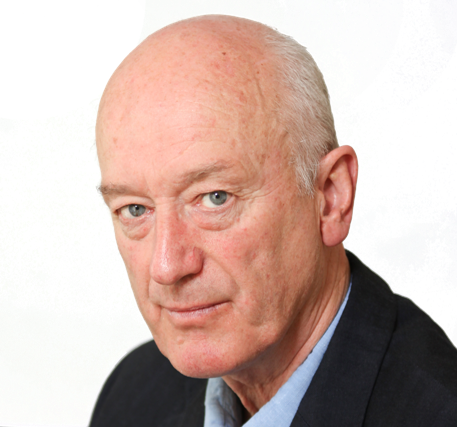
 I’m pleased to say Glynn bravely agreed to take part in my ‘Lucky Dip Q&A’ which involves picking five numbers between 1 and 30 and seeing what questions that produces. (Full disclosure: On this occasion I chose Glynn’s numbers for him.)
 About the Book
 About the Author

